So you mean to tell me that I’m already a senior and that I’ll be graduating in a few months? No, I don’t believe you. I swear it felt like it was yesterday when I was sitting in my eighth grade math class listening to my teacher waste twenty minutes talking about something that had nothing to do with math.
Well, even though now it feels like it all went by really quickly, I did cherish every moment I have spent in MSA so far. Since being here, I’ve learned to be a lot more self confident and I have had an amazing opportunity to further my talent as an artist. I know it sounds cheesy, but I swear it’s true.
I know that this year promises to be the busiest as we prepare for events like preview day, portfolio day, showcases, graduation, not to mention applying for colleges and scholarships, but I have a feeling that it’ll be a great year.
Since we’ll only be posting once a month, I think it’ll be good for me to use this as just something to use to write about something silly, random, fun, etc. Like last year, I posted a lot about Marvel, my love for reading, other nerd stuff. I’ll probably be doing a lot of that again and maybe just to let off some steam.
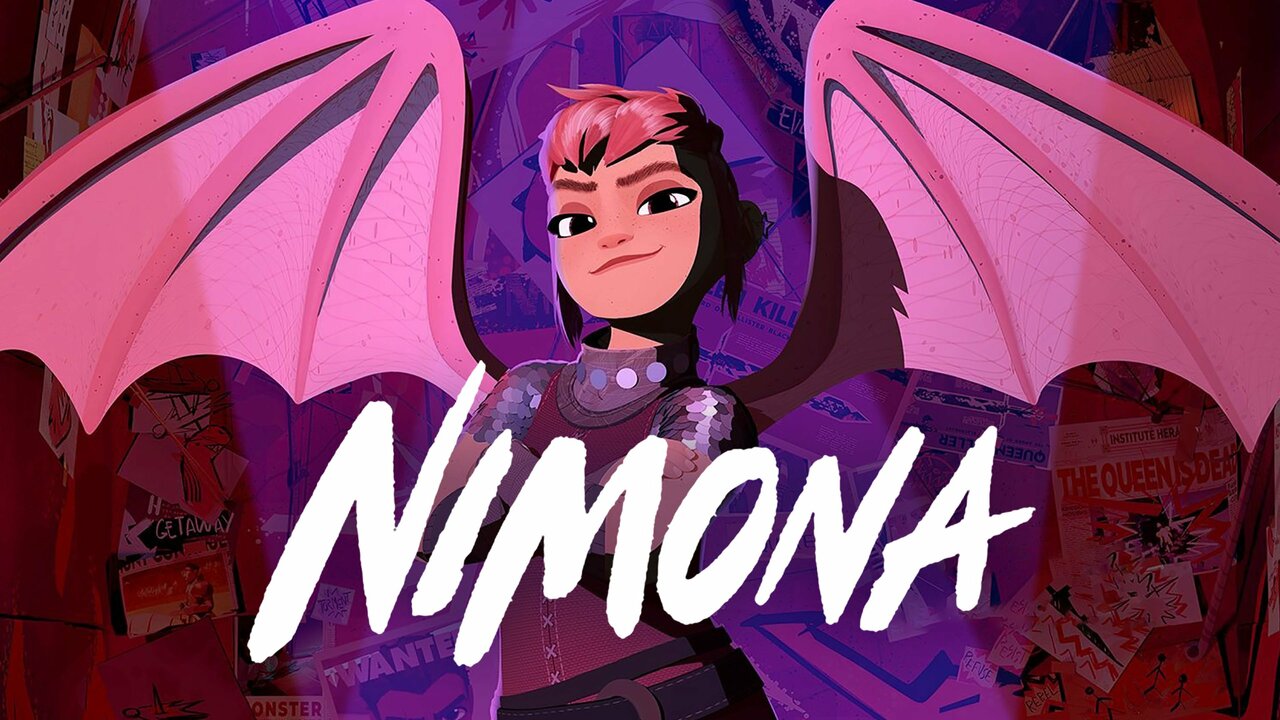
For this go-round, I’ll talk about a new favorite movie that recently came out on Netflix: “Nimona”
I absolutely love this movie and have watched it two or three times already. I love the animation style, Nimona’s chaotic energy, the themes that play out throughout this movie, everything about it is just chef’s kiss.
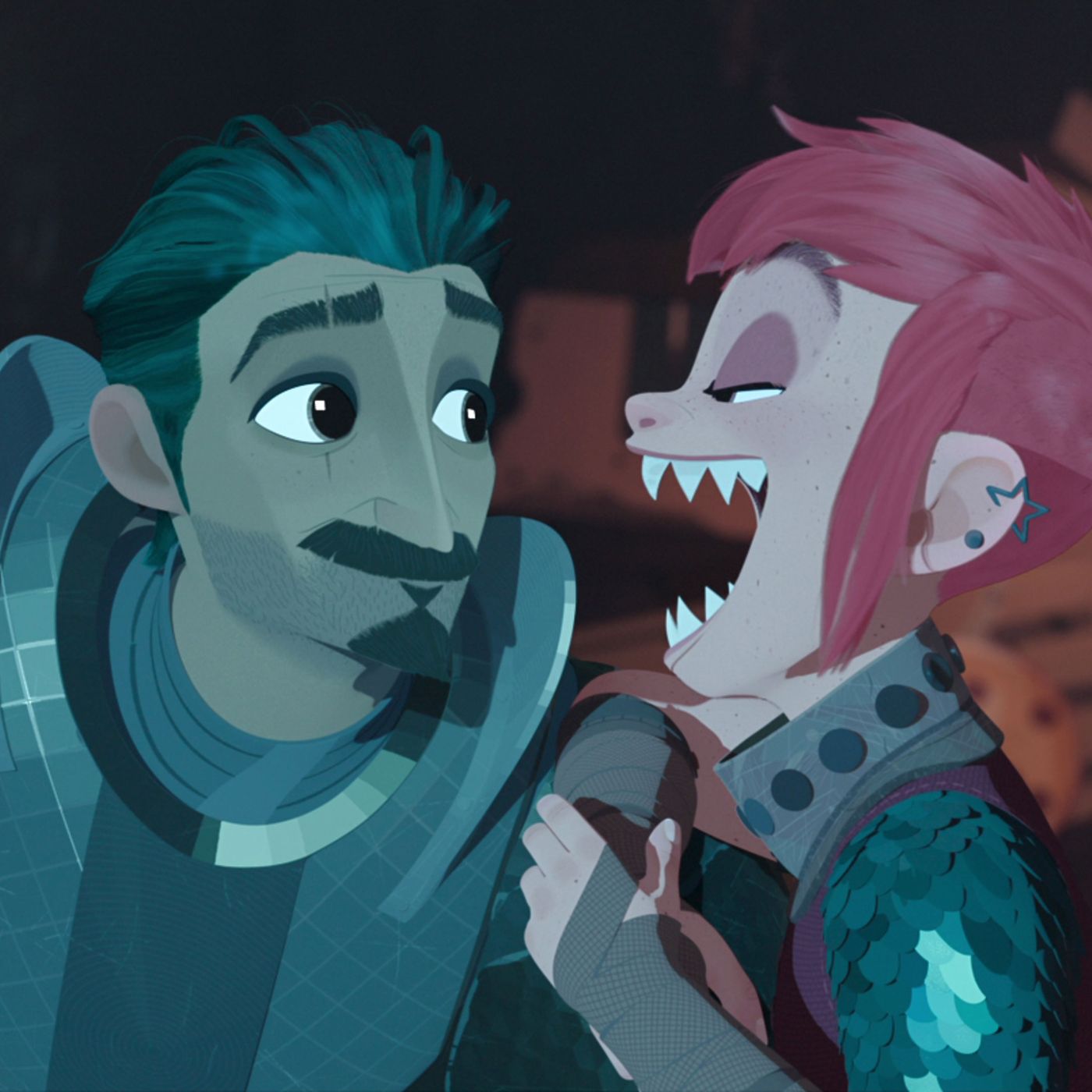
If you are unfamiliar with the movie or haven’t watched it, Nimona is about a girl(Nimona) who has the ability to shapeshift and because of this, she is seen as a monster in the society. Ballister is a knight that was framed for unaliving the queen, so he’s seen as another villain. At first, Nimona just wants to be the villain’s sidekick until she learns that Ballister is innocent. The two work together to clear Ballister’s name in a society that is closed off from the rest of the world by a wall because they have lived in fear of outside “monsters” for a thousand years.
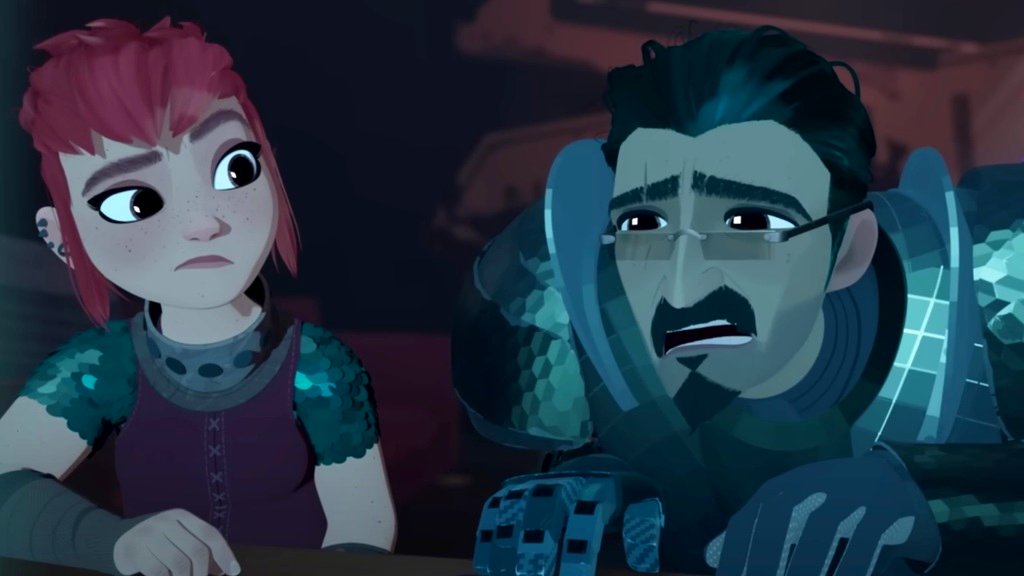
I’m not gonna lie, this movie made me laugh and cry and. I watched it after the first few previews before I’d start to see too many spoiler clips. I honestly wasn’t expecting a lot from it, just for it to be something cute and fun to watch, and I am not picky when it comes to movies, I think the only two genres that I don’t care that much for are rom-coms and anime(please don’t come for me). So Nimona was up my alley. I loved that Ballister played a fatherly role to Nimona(even though she’s a thousand years old, but she still has the chaotic energy of a teenager). I loved seeing the relationship between these two progress through the movie. And I absolutely loved both of their character development.
If you haven’t seen this movie and you love to watch fun, animated movies with a lot of good, deep themes, I highly recommend watching it. Here’s one of my favorite scenes<3
Imitation is the best form of flattery, especially when it comes to reinterpreting art in unique and fresh ways. There is this argument though, that it kills originality and the genuity of the original themes and messages an artist was trying to initially convey. This thought is especially seen within the music industry, with sampling and covers. Personally, the notion that these renditions kill individuality in the imagination simply does not make sense. I think it just takes on a new form and the connections through music or feeling/messages of a song can not be measured in a way.
BASS BASS BASS
There is an artist that really embodies the explanation I’m trying to convey. Her youtube handle is Nikki Chin (above) and she’s a part of a called Tash’s Safe Space. Her personal account is mostly made up of bass covers from what I’ve seen so far. Noticing the attention to detail that she pays tribute to in her covers really made her stand out to me.
She covers my favorite song by my favorite band called “Be Quiet and Drive (Far Away)” by Deftones. She really utilizes the accents of the song within her piece, her bass really adding definition and texture to a song I’ve heard more than a million times. I don’t know but it really felt alive to me. Like Deftones did a really good job with it and of course, no one can outdo the doer, but her cover really brought the bass to another level within the song. She does this with another song that I covered myself, “The Chain” by Fleetwood Mac. She definitely has some techniques that beautifully stray away from the song and even the tabs she used. I think the way she personalized that song is such a huge example of why covers are so important to the music industry.
tyler, question mark space, the creator question mark
I think it goes without saying that Tyler the Creator is an extremely talented artist. One of my favorite things about him is his usage of samples. How he can rebrand a song and make it something completely new. For example, in his album Igor, the track I THINK was sampled from Special Lady by Bibi Mascel and Get Down by Nkono Teles. Two songs were released decades before Igor’s time, and two songs of completely different genres. His artistry helped bring a fresh and new outlook to these with a strong rap forefront and funk/disco undertones. By far it is one of the most talented things Tyler has been able to do.
Fantastic Magic isn’t an album that necessarily tells a specific story the way Flowering did. However, all of the songs are connected by one specific theme: “Who Am I?”. Each of the songs in the album deal with the struggle for an identity, both as a person and as an artist.
Here is a link to the full album on YouTube:
The album begins with the title track “Fantastic Magic”
This song intertwines the struggle for identity as a person and artist. This song, like many, could be seen as a silent confession of the artists emotions towards an unknown individual. It takes a reminiscent perspective, appearing to look back on the good times the artist and the individual shared. It conveys a feeling that the artist is looking back on the past to discover who he is. Specifically in the lyrics (roughly translated):
The delusion and imagination directed at us The delusion and imagination that we were robbed of When I become parched, I know all the colors My heart is pounding, you and me, and memories
The heart of those days is slow mo slow motion My heart is empty these days Slow mo Slow motion Fantastic Magic
This song isn’t necessarily my personal favorite out of the songs in the album, but I never skip it when it comes on.
Up next, we have what is likely Kitajima’s claim to fame: “Unravel”:
This song was the opening for the first season of the anime Tokyo Ghoul, an adaptation of the manga written by Sui Ishida. This song is all about the identity of the individual. It is a declaration of the artists lack of individual identity. A realization that he no longer knows who he is and is afraid of what he has become. It is both a cry for help and a warning to his loved ones to stay away from him. It is also a wish that others will remember him the way he used to be, the person that he sees as a “pure” version of himself. I believe the lyrics that best convey this are:
In the distorted world, I gradually become transparent and invisible Don’t find me, don’t stare at me In a world that someone drew I don’t want to hurt you Remember me and keep me vivid
Overall, this song is a certified banger. If you watch anime, you’ve most likely heard this song more than once. Even then, the best is yet to come.
Following the chaotic cry for help of “Unravel” is “Kalei de scope”:
This song leans into the more existential side of the album. It is also, like “Fantastic Magic”, a fusion between the two different identity crises. One of the most significant parts of the song are the lyrics:
“Why does only the unreachable miracle move my heart?
Why is it that only memories that cannot be seen move my heart?
ordinary emotion”
These lyrics talk about how oftentimes the things we struggle the most to remember are what have the most impact on who we are as people.
After that, the song “an artist” begins:
As evident from the title, this song deals much more with the singers struggle with an identity as an artist. This is clearest in the following lyrics:
“
For the sake of being reflected in you, even though I can’t change
Even if I gave you everything that I captured on the remaining film
Nausea wells up, a mass of phrases I don’t even want to see
Break that key, you’re crazy crazy”
This song is about the artists desire to create art that is inherently meaningful, while also struggling with their feelings that everything they make is essentially pointless.
This is followed by the song “tokio”:
This song is a deep dive into the identity of the person behind the artist. It is the individual. He is observing the world around him, the world of the “artist” from the perspective of the “individual”. It is a fear of change, mixed with the understanding that one must change eventually. This is shown with the lyrics
“no matter how much I overtake myself When the morning comes, everything will rewind If I reach out my hand, the answers overflow Suddenly I’m broken and lost Chasing after unfamiliar places Forcing myself to find my place I feel like I’ll be hated for who I am I tried to swallow myself inside someone It’s time to change I still can’t say anything to the unchangeable me”
This, the bridge of the song (I think), carries the most power within this song. It is an acceptance and a denial. It is the emotions of the song summarized.
Next up is “Shinkiro”:
This song is an expression of the desires of the artist. This is shown through the lyrics
“I can’t see the important things, so listen to my music listen to my music Don’t even doubt what you have in your hand, listen to my music listen to my music i was having the same dream”
This song is softer, and one of the only songs with a second singer joining TK. This song is almost begging for the listener to listen to the music and messages the artist has made. It is a desire to be known as an artist.
After that comes “Dramatic Slow Motion”:
This song is complex in its own right. It is, in some ways, the realization that the individual and the artist are the same. This is best shown with the lyrics
“I want to give you a slow motion name and show it to you In the world, my dream rock star has already entered me”
Though I believe the most powerful lyrics in the song are
“Consciousness is blown away by the delay The volume envelops you Harsh voices and scenery, hand in hand This time I’m the fake star of my dreams Can I touch your eardrums?”
These lyrics are like a repeat of the message of “Shinkiro”. The artist is asking if he is allowed to have his music heard.
The next song in the album is “Spiral Parade”:
This song is about the journey from being just an individual to also becoming an artist. This is best shown with the lyrics
“Forgetting how to blink, I chose the endless road I’m searching with my ears open, it’s an endless Self Spiral At some point, I touched the guitar, and there was nothing to fear It begins when I meet myself reflected in six mirrors”
However, it is also a realization of losing yourself to your art. A fusion between the artist and the individual.
After this is “Fragile”:
This song is about the futility of the artist. It is an expression of the difference between what the artist wants to create and what they are actually capable of creating. The following lyrics support this:
“
I’m not here to seek pain, but The words that come out are sad I’m not here in search of light, but If you can see something, that’s fine
play hide and seek The words I want to convey are floating in the air The only thing I can spit out is the darkness, you know? I wish I could see everything in her transparently”
This song is a beautiful song and is one of the softest songs in the album.
To end the album, we have the song “contrast”:
This song is an acceptance and a transformation. The individual and the artist accept each other and become one. It is the most “conversational” of the songs within the album. The lyrics that best represent the song are
“
you know all my favorite things I guess I even remember my favorite chords Why? Even though the present is overflowing Remembering a phantom promise If you close your eyelids, time will stop
you remember all the things i said Because you can solve all the incomprehensible codes Why? I don’t know who I am I guess I was looking through a phantom telescope I can’t close my eyes because eternity will run away”
It is a realization that there is no such thing as a permanent identity, neither for artist nor individual.
This, while not my favorite album by TK, has some of my favorite songs by him.
“The Anti-Racist Writing Workshop – How to Decolonize the Creative Classroom” by Felicia Rose Chavez.
“White Fragility – Why it’s so Hard for White People to Talk About Racism” by DiAngelo Robin.
“Eloquent Rage – A Black Feminist Discovers Her Superpower” by Cooper, Brittney C.
“Why Are All the Black Kids Sitting Together in the Cafeteria?: And Other Conversations About Race” by Beverly Tatum.
Any book by Rick Riordan.
And thousands more.
–
starting a conversation.
There are a million things I can talk about literature-wise that are important to this conversation. The ‘conversation’ in question is about how classrooms/schools/anything predominantly made up of white people mistreat and mishandle situations concerning any other race. I write about characters of color, and I’ll tell you why. It’s because it needs to be talked about. It’s because I see beauty in other cultures. That’s it. It’s because I want a little kid to read about a character in my stories, and I want them to relate. I want them to be able to see themselves in this piece instead of a “Y/N with blue eyes and blond hair.” I want to stop reading about people like that because it was all I read. I want people to challenge themselves.
one of your favorite authors, even…
A prime example of a white AND published author doing this correctly is the author of the Percy Jackson series, Rick Riordan. Annabeth Chase (the main love interest) has light-tanned skin, blond curly hair, and stormy grey eyes. Now, you would start to think, “Is that not just a Y/N trope that you previously described?” It is. Guess what, though? In the entirety of the series, he also includes BIPOC. Bianca Di Angelo, Nico Di Angelo, Charles Beckendorf, Ethan Nakamura, Grover Underwood, Reyna Avila Ramirez-Arellano, Carter Kane, Leo Valdez, Frank Zhang, AND MORE. So yes, while the main love interest for that may be a Y/N sort of fantasy, BIPOC characters also get just as much love and appreciation from this author. Later in the Magnus Chase series, Rick introduces a love interest named Alex Fierro. Alex is a Mexican, genderfluid, and formerly homeless teenager. Rick is none of those things, and yet many fans relate to and love Alex dearly.
fear is no excuse
If someone is afraid of misrepresenting a culture or group of people, all they have to do is do their own research and reach out for help. There are BIPOC editors who will help with that EXACT thing. Nobody will walk through every sentence with someone while editing, hoping it will help with the representation of BIPOC because they shouldn’t have to. It isn’t their job to do that.
final message
When I was a kid, all I wanted to do was be like Rick Riordan. I wanted to create worlds full of color for all people to enjoy. Even if only five people read my work, I hope they feel represented. Even better, if one hundred people read my work and feel represented well!
BIPOC deserve the recognition they have never been given.
So, anyone who knows me knows that the MSA production of “Lost Girl” by Kimberly Belflower threw me for several loops. Reactions including but not limited to: An entire poetry collection, including a 100+ line self portrait, an entire identity crisis (Short lived and easily resolved but still), and a little too close relation to the character of Wendy. That play made me take a good, long look at several core aspects of myself and my emotions, and put me through an emotional spectrum I haven’t felt in a very long time; the hallmark of truly great art. Naturally, it earns this month’s analysis.
DISCLAIMER: I am not giving a summary and reading further could spoil the play. Read at your own discretion. : )
The first fantastic aspect of this play is the way that it utilizes Peter Pan himself. Peter is built up as this great big concept, while so rarely being portrayed on stage. Such tactics are not uncommon in storytelling, particularly playwriting, but it’s done explicitly well here. Peter, conflated with the concept of himself Wendy has formed in her own memory and attached herself to, grows to represent and play the part of things much bigger than he could ever be. He’s the memory of Wendy’s last moments of joy, the now past concept of who she was, the personification of the only love she’s ever felt. He’s freedom, hope, love itself, happiness personified. But, when he finally comes back on stage, he’s simply Peter. He can’t, wasn’t, and won’t ever be any of those things, and the inevitable and wordless disappointment that comes with realizing this is the key catalyst to Wendy’s eventual recovery, which just happens to be one of the best utilizations of the concept I’ve seen in quite a while.
Another absolutely stunning aspect of this play is Belflower’s use of visual/conceptual metaphor. For example, the most obvious is the window in Wendy’s room. Throughout the whole play, in a show of persistence and pointless hope, Wendy keeps the window open, even when the cold air makes her sick. She does this from the day she returns as a child to the day she sees Peter again and begins to let go. When she realizes Peter can never be what she needs him to be, she asks him to leave and closes the window. She lets go of her hope. It’s the single most fitting ending I’ve ever seen. Other examples of masterful metaphor in the production is Wendy’s kiss, symbolizing anything from purity to happiness, as well as the bedroom itself, which is symbolic of Wendy’s past and her unwillingness to leave it. The play is packed full of masterful metaphors.
Finally, the best thing about this play, as with many, is the monologues, specifically Wendy’s. There are many instances I can, and will if prompted, go on and on about, but for the sake of word count I’m going to focus on one. That monologue is the one that is repeated/modified throughout the play. The infamous “I give myself eight minutes a day to think about him.” Throughout the production, Wendy delivers a version of this same monologue to the audience to benchmark where she is in her progress of letting go. It’s also her final monologue before she sees Peter again. The entire thing is always a wonderfully crafted literary masterpiece, but the mere concept of someone spending so much time in a certain thought process that they have a defined way to think about their own thoughts speaks for itself. The monologue is beautiful, truly.
Honorable mention to the use of the chorus/other girls. It’s truly one of the best writing tactics I’ve seen in a long time, and Belflower uses it masterfully.
Now, with all of that being said, I’ll close out now. Thank you for listening to my “Lost Girl” tangents, and I’ll see you next month!
hello! this month, i’ll be talking about my favorite app–letterboxd. it’s a place where you can log, rate, and review every movie you’ve ever seen and even make lists of of movies you’d like to see. it combines my favorite things in the world–movies, analyzing, and list-making. in honor of my appreciation for the app, i’ll be listing some of my reviews to give y’all a sample of what letterboxd is like.
this, for me, is what documentary filmmaking (especially indie) is all about. a heartbreaking, raw, and sometimes hilarious picture of the lives of two very peculiar people. i love the low-budget look and quality. it’s provides an oddly comforting, fitting feel. every choice feels deliberate and perfect, right down to the title cards and closing credits. sean donnelly deserves way more credit for this. if you enjoyed this film, check out its website! it’s got cool bonus info and pictures.
i don’t completely remember watching this. i just remember enjoying it and thinking colin firth did a great job. imagine my surprise when i found that he is in no way, shape, or form in this movie. no clue where i got that from. good movie, though!
never knew how badly i needed to see stockard channing and sandra bullock do witchcraft with stevie nicks in the background. perfect, warm, comforting. smilled so big my face hurts.
heartbreaking in the very best way. something about them felt doomed from the start, but i rooted for them every step of the way. i absolutely love the dialogue in this film, to the point where i found myself typing notes as i watched. i’ll definitely be rewatching this movie as soon as i mop up all the tears from my floor.
equal parts tragic and hilarious. a beautiful, messy story of two incredible women who thrive together. perhaps the best casting of a duo i’ve ever seen. God bless susan sarandon.
wow, people really hate this movie. personally, it might be my favorite in the franchise other than the original. i think that it managed to cut through the bullshit of the rest of the series and get back to the heart of what truly makes it so effective—the character-driven plot. halloween is so effective in making the audience fall in love with its characters—laurie, dr. loomis, even michael. and this movie, for me, is no exception. i definitely understand why many people didn’t like this film. most think that there wasn’t enough of michael, and that made it weak. i don’t feel that way. in my mind, halloween is and always was laurie’s story. and this was the perfect ending to it.
thanks for reading!
random keanu picture to sum up the past month of my life
Hello everyone, and welcome back to my blog! This week we’re moving on to one of my other favorite bands (out of the thousands). We’ll be analyzing the story beneath the lyrics of the song Spillways, which is one of my favorite tracks on the Impera album. I won’t be explaining the band Ghost to you all because that would take up all of my content, but I recommend figuring them out for yourself! Though I will say that they have a lot of religious imagery, but it’s not used in the way you think.
So, in an interview with Genius, Tobias Forge, the creative mind, composer, and lead singer behind Ghost, described the song as “an elegy for the darkness that most people have inside. When you have a dam, spillways are the run-offs so the dam won’t overflow. That darkness inside us needs to find its way out.” So, we’ll take that idea and run deeper with it. Let’s look at the lyrics and you can also click the link below to follow along!
“Through benediction You tried to rid your mind of malediction But through all this time You try to peel it off, and it is such a ride
This stanza begins the song with the words benediction and malediction, which are almost opposites. Benediction is defined as a bestowing of a blessing, and malediction is defined as a curse. So, in this story, the narrator is singing about someone who goes to church or any religious event to try and get clean or get rid of all their internal curses and evil urges.
All your faith, all your rage All your pain, it ain’t over now And I ain’t talking about forgiveness All your faith, all your rage All your pain, it ain’t over now
So, in the chorus here, it talks about rage, pain, and, most important of all, rage. He says that it isn’t over and that forgiveness isn’t even relevant in the conversation. It’s emphasizing the maleducative feelings from before that lead into the next stanza and referencing the forgiveness that is a big part of who god is amongst many religions.
It is the cruel beast that you feed It is your burning yearning need to bleed Through the spillways
The term cruel beast could be speaking about the beast inside the person’s mind, or if we take the religious route, it would be speaking in terms of the devil. Either way, the “burning yearning need to bleed” speaks of the person’s dire need to purge themselves of those evil and negative thoughts that metaphorically feed the beast through the spillways, which are devices used to ensure that dams don’t overflow and cause detrimental damage.
You keep a casket buried deep within You try to mask it, but fall back in sin You want to shake it off, but you are stuck inside
The casket spoken of here is the darkness or sins mentioned prior. It’s an inescapable and unforgivable condition. They bury it deep within and try their best to mask those dark or sinful urges, yet they always go back to those old ways no matter how hard they try.
Through the spillways of your soul
The chorus repeats itself at the end a few times, but I noticed that this line had been added. The spillways of your soul would be the darkness that flows out in small portions to keep the big stuff from overflowing. The spillways of this person’s soul keep them from committing bigger and more evil sins by allowing them to spill out more minor sins despite the guilt that the person feels for “feeding the beast.”
That’s the end folks! Thank you for reading this month, and keep an eye out for next month’s blog. <3
Since this is the week that we are coming back from Thanksgiving for this week’s blog all want to interview somebody on what they are thankful for this week, I have Jilli Grace here to talk about how much she loves Stranger Things.
So Jilli, what made you want to watch stranger things?
“I wanted to watch Stranger Things because all my friends were watching it 1 and 2 because I saw like the growing popularity of it, especially over this summer and I wanted to see what this is about and so yeah that’s pretty much why also because I saw Joe Keery and Joseph Quinn and I thought they were fine.”
What is your favorite thing about Stranger Things?
“I just really like the vibe of Stranger Things. I like the 80s feel. I like listening to music that I grew up with; it makes me feel nostalgic. I also like the men, mainly Joseph Quinn. Yeah, he’s adorable. He’s my man, and I want to marry him. You know when I first liked the promo picture I thought he was ugly and then I started watching it and realized how charismatic he was and that’s why I fell in love because he’s so cute but yeah just because of the 80s vibe, the music, and the men.”
Who is your favorite character from Stranger Things?
“I have multiple favorite characters in stranger things. The first one is Nancy wheeler I just resonate with her a lot. My next one is Eddie love him so much even though he’s dead I still love him and you know he plays that guitar so well like oh my God Master of Puppets thing was so good did you know that Joseph Quinn played that live on set? I just think that’s so cool. My next favorite character is Eleven I know that’s basic but I just love Eleven. Plus Millie Bobby Brown’s my age .”
Would you recommend that people watch Stranger Things?
“I guess I really just depends on the person. If you want to watch kids running around, doing stuff, and going on adventures, then yeah. If you want the 80s vibe about it, yeah, but if that’s not for you, it’s not for you, and you know what, that’s okay. It’s okay that you don’t want to watch Stranger Things, but some of the crazies in the fandom will get you but I won’t get you because I’m cool like that .”
Recently, I watched a movie with a friend of mine. Totally captivated by the plot, of course I sought out a book to match. Something about the coming-of-age murder-mystery had me intrigued, and as a true Literary artist does, I wanted to find the written text to match the piece of media I had been so interested in.
So of course, I went to my mother, the librarian, knowing that she had either read the book, or knew where to find it. And of course, she had one I could borrow.
Now, one may ask, Adele how can you write a first impressions blog about a plot you have already seen? Now, that. That is a wonderful question, and in response to that wonderful question I want to mention the infinite ways that movies and the books that they are based on are different. In reality, It is incredibly hard to bring all of the beautiful aspects that make up an original text into a two-hour rendition of the same plot.
Synopsis:
Where the Crawdads Sing is a coming-of-age murder mystery about a young outcast that lives in the southern marshes, aptly nicknamed Marsh Girl, who is accused of the murder of a local handsome, young man. The intertwining story lines take the reader on a journey that has the audience questioning everything they know.
First Impressions:
From the first chapter, the most striking part of the text is the beautiful imagery the author uses to describe the southern marsh, which many people would not view as such. Owens opens on a jolting scene that really sticks with the reader. The scene where the main character, Kya, watches her mother walk down the dirt road away from their humble home on the marsh, never to be seen by the family again. The only indication that she has left for good being her alligator skin shoes and the carpet bag in her hand.
In this chapter, the time jumps to heartwarming memories between her mother and herself, and eventually back to a memory of her and her siblings. The chapter really does a good job of showing what her core values are and how the family unit Kya was born into is damaged.
She is the youngest of five siblings, and her father is a horrid, neglectful man. This fact made the impact of her mother leaving her earlier in the chapter even more heartbreaking.
Overall, I really enjoyed the emotion put into this first chapter, and I definitely am excited to keep reading.
Assumptions:
Okay, since I have already watched the movie I am going to skip out on this part of our regularly scheduled programming.
I am so excited to get into this novel, especially since it merges two of my favorite genres, and a setting that has so much depth. There are hundreds of ways that this book will definitely be different than the movie that I watched, so I am not going in with any expectations as to how they will be the same.
Recently, I one of my favorite hobbies is to hit “generate” on a random poetry generator. More times than not, I find myself liking a poem, but not really relating to them. But the other day I found this poem that I became obsessed with.
Some of my favorite poems are the ones that portray mundanity in a way that carries over to almost anyone who reads it. This poem is slightly a different variation of a portrayal of mundanity. In this poem, Elizabeth Hands tackles explaining her family dynamic in a way that many can relate to. Throughout the poem, she shows the reader how even in her own family, she often feels as if there is no real connection.
One of the lines that really stuck with me was when Hand states,
“O what a strange parcel of creatures are we, Scarce ever to quarrel, or even agree; We all are alone, though at home altogether”
Through these words Hand perfectly sums up the feeling of monotony that comes with her family’s perfectly “fine” relationship. She shows how the in between that her family’s interactions reside in is often lonely, because it results in the unintentional distancing from each other.
I think this poem really speaks to the time we are in. Especially with the way technology consumes us today, many times you can feel alone while in a room full of people. Elizabeth Hand really connected this feeling in a later portion of poem too.
“Like social companions we never fall out, Nor ever care what one another’s about; To comfort each other is never our plan, For to please ourselves, truly, is more than we can.”
This line ends the poem on such a relatable note. At first I only thought about the poem on surface level and didn’t think I could relate to it. I have a wonderful family, and most of the time, I feel like we are all very connected to one another. But as a reread this poem I realized that it speaks to so much more than what it was intentionally written to mean.
This poem really captures the energy of how many of Gen Z feel when surrounded by our older family members. We, as a highly technological generation, have formed a sort of disconnect with the older generations unintentionally. Because we are so enraptured by the technology and all the information we have at the tip of our fingers, many times we forget to connect with our families and friends physically. We forget the importance of human connection.
I think this really speaks to the reach of art and how even after decades, art can speak to anyone.