Lets go on The Long Walk

The Long Walk Clip - Walk or Die - YouTube

content warning: mentions of death/killing, discussion of war, breif discussion of racism, general caution is advised.
This also contains some spoilers for The Long Walk. I highly recomend you watch the movie before reading this- however, if you do not, I hope this convinces to you to watch the movie. 

In 1979, when Stephen King was still using the pen name Richard Bachman, he published a book titled The Long Walk. He had written this book over a decade prior, when he was a freshman in university. At age 19, King was witnessing friends and peers his age being drafted and sent off to fight in the Vietnam war. He was horribly distraught by the large number of young men who were forced into a life or death situation at the fresh age of 18. The Long Walk was written to criticize and satirize the US government and their mistreatment of an entire generation of young people. 

In 2025, The Long Walk was adapted into a film by JT Mollner and directed by Francis Lawrence. There were quite a few changes made between the book and movie, both plot and character related. These changes were made with King’s blessing and enhance the overarching message of the story. 

The Long Walk is set in a dystopian version of the US, sometime in the 1970s. While, visually, appearing the same as the states in the ’70s, the government has taken a dictatorship rule over the nation. This shift came after the “war”, an implied reference to World War Two. In this world, the US lost the war and suffered great financial and political losses afterward. The ‘Long Walk’ is an annual event held in the states where a group of young boys (50 walkers in the movie, 100 in the book) will compete in a walking race for endless riches and whatever they might wish for. This race has no end in sight- the boys simply have to walk until there is one walker left.

There are many reasons that a walker might ‘get his ticket’, or get killed. In fact, King wrote an entire rulebook which entails what the walkers are and are not allowed to do on the walk. There are some basic rules that all walkers know. Everyone must walk at a minimum speed (3mph in the movie, 4mph in the book), you cannot physically attack other walkers, you cannot leave the path. Violations of rules will result in a warning- three warnings and you get your ticket. 

So, the walk goes on; a group of young men walking with no end in sight, followed by soldiers on tanks. These tanks carry candid cameras, which broadcast the walk to the entire nation. This absurdist scenario is King’s portrayal of how war was turned into a spectacle of entertainment, while young men suffered and lost their lives to bring honor to their nation. The Long Walk gives a perspective from the inside; an introduction to the men who showed up to willingly put their lives on the line. The story humanizes and empathizes with these young men, who are being treated like animals by their government. 

The story follows Ray Garraty, a young man whose father was killed by the government for teaching and spreading information that had been banned. Ray’s father taught him to reject the authoritarian rule of the government and, instead, seek out all of that banned media. Despite his quiet revolutionary beliefs and hatred of the Major, Ray joins the long walk. 

Ray befriends a number of boys on the long walk. Peter McVries is a songwriter with a rugged childhood. Pete is on the long walk in hopes that he can win and use the money to do something good in the world. Art Baker is a religious man from Baton Rouge. Art says he’s on the walk for the money, for personal use. Hank Olson is smart-talking, sharp, and very enthusiastic about winning the walk. Richard Harkness is a writer who wants to write a story about the long walk from the insider’s perspective. Billy Stebbins is a buff, mysterious, guy who speaks in riddles and respects his government. Collie Parker has a tough exterior, but he’s a family-oriented revolutionary who shares Ray’s hatred of the government. Gary Barkovitch just wants to make friends, but clearly never learned the difference between joking around and fighting. 

In both the movie and the book, there is no censoring the disgusting truth of the walk. These boys are walking for days, no bathroom breaks, no naps- no nothing. It’s gross, grimey, and human. There is no attempt at making it palatable. Even in scenes where characters are having sweet or loving conversations, you never forget the true tragedy of their situation. Some of these boys were so miserable in their lives before, that they walk is the happiest they’ve ever truly been. They’re happy because they’re away from whatever hardships they had back home and now they’re on a walk with peers. While you want to share their happiness, you know that it isn’t going to last. 


Now is when I get a bit more personal with this deep dive. Recap over, I’m going to talk about my favorite aspects of the book and movie, what works, what doesn’t, and other interpretations. I’m going to try to keep this brief though, knowing me, there may be a second part to this at a later date. 

Off the bat, I want to talk about the most important change made (in my opinion) from the book to the movie. In the book, despite there being 100 boys on the walk, only one character is ever directly referred to as being not white. He, Ewing, is declared black by one of the other boys and then promptly referred to as a slur. The only black character in that book is called a horribly degrading slur right before his death- that’s disgusting. Especially considering the fact that The Long Walk is meant to satirize WW2 and the Vietnam War, wars that were heavily fought by black and brown Americans. Many black and brown men joined the army under the promise that they would be treated as equals when they fought for their country. All of that being said, It’s very important (in my opinion) that the casting directors for the movie chose to cast primarily people of color. Of the main eight characters, five are played by actors of color. 

On a somewhat similar note, of minorities’ involvement in the wars, I want to discuss the implied and discussed queerness in both the book and the movie. In the book, Ray and Pete have conversations about being queer, being queer for each other, or even performing sexual acts on eachother. In the book, it’s shown as a sort of “neither of them are actually gay, they’re just pent up teenage boys” discussion. In the movie, there is a lot more to Ray and Pete’s relationship. They look out for each other, save each other’s lives a number of times, help each other rest while walking, share secrets that they’ve never told anyone else, and are honest about their love for each other (though it’s unclear if it’s romantic or platonic love). Queerness is discussed throughout the movie (primarily by closet case number one, Gary Barkovitch), though no labels are ever used. Even in a cut line from the script, Pete makes a comment about maybe being “queer for [Ray]” but goes on to refuse to admit if he’s joking or not. I’m very grateful for how sexuality is handled in the movie. Queerness is a hugely repressed aspect of military history, for a number of reasons, so having a male relationship portrayed in that sort of way (no labels, not necessarily romantic but also something more than just friends) is very important. 

Overall, I appreciate the message that the movie and book both convey. It’s not meant to be a revolutionary story about the final guy fixing the government and getting rid of all the pain. It’s a story about human nature and instincts under extreme situations. It’s a story about family, friendship, and loss. It’s a story about culture and identity. It’s a story about sticking it to the man, even when you’re stuck in the system. All that being said, I think the message falls flat in a couple ways. In the book, Ray is much less of a liberal-minded revolutionary as he is in the movie. I have no problem with that, it just gives a whole different perspective to the story being told. In the movie, we get a beautiful spectrum of moral and ethical standings from each of the characters- however, it’s not as fleshed out as it could’ve been. I don’t want a movie where every character gets thirty minutes to talk about who they are and what they believe- that’s lazy and boring- but, come on. These guys are walking together for five days with nothing to do, lets get to know some of them a bit more. At the same time, I like that some of the character’s stories are left up to interpretation as that prompts people like me to write our own fully-fleshed out backstories and fanfiction. So I guess I don’t mind that much. 

Story pin image

Greek Mythology (again) and acceptable ways to get into it through different medias!!

Greek mythology is my special interest, and I’m okay to admit that now. I remember when I first heard about it, I was probably six or seven and had just watched that horrendous Percy Jackson movie with my mom. I then, somehow, got my grubby little paws on a device and googled the only name I really remembered: Athena.

This opened a whole world for me to explore, with things that happened over two thousand years ago that I never thought could exist! There were multiple gods that I was introduced to, hundred of stories and names and places and even animals to learn about and experience and I was excited. I then remember my teacher, Mrs. Young from East Flora, asking my pathways class “what do you want to learn about?”

I had the conscious thought, then. “I can’t teach this to myself.” I knew that I would need to have someone else guide me and tell me who, what, when, where, etc. So, I suggested we learn about Greek Mythology. She loved the idea, and so for the next two months we studied different (age appropriate) myths, built The Parthenon out of toilet paper rolls and masking tape, learned names and correlations, we even looked a little bit into the stars and constellations!

I’m extremely thankful to my teacher, then. I’m glad there was an adult who asked what I wanted to learn, instead of teaching me what she was told to. I had an amazing gateway to Greek Mythology, even if the original source wasn’t so good. So today I want to talk about good, acceptable sources for younger kids to get into Greek mythology, and a few good ways I’ve expanded my knowledge of it as I’ve gotten older.

First and foremost: Percy Jackson

When talking about Greek Mythology in media, Percy Jackson is the first place my brain goes to. It has wonderful modern adaptations of the Gods into an easy to digest, true-to-myth form. The intepretaions of each god that Rick portrays is almost always interesting, fun, and doesn’t take away from the original concept of each god. While in the first series Rick does make some.. choice mistakes, especially regarding the myth of Medusa, he manages to fix his mistakes in a way that doesn’t completely override any horrible storyline.

Percy Jackon, a young boy and the demigod son of Poseidon, is being hunted by called by Mount Olympus and the Olympian Gods, as Zeus’ weapon, the lightning bolt, is missing; They believe he is the thief, when he didn’t even know that he was a demigod until, like, a week before. This book, and the following books, explores Percy’s story in navigating familiar and unfamiliar myths (Some I hadn’t even heard of until I read the books when I was fourteen!)

Overall, the series is one of my favorites. As a gateway into further interest in Greek Mythology all one has to do is consider that his is a children’s book and has to be dumbed down or explained differently for entertainment purposes. 10/10.

Second: The Song of Achillies (And other works by Madeline Miller)

Madeline Miller is such a talented author, from her writing style to how well she captures the parts of myths that we don’t really see. It’s true that we have little, if any, information on Circe besides what is gathered within the Odyssey, even though she is a recurring figure throughout several myths. Consider Madeline Miller’s work as a sort of in-between, and an amazing one at that. Her storytelling with the upbringing of Patroclus is so beautifully told, especially since he is a figure often overlooked despite being so pivotal for Achillies’ story in the Iliad. With both of her books being a kind of in-between, it is entirely possible to read them and get into Greek Mythology that way, by exploring three characters deeply then going into the much broader myths.. even if the ending of Circe is quite odd. Her books are such a creative take on the Iliad and a telling of Circe’s story that I will always ALWAYS recommend these books to people. 10/10

Third: EPIC THE MUSICAL

Just like the last section, Epic the Musical is written and directed (? I’m not sure, I don’t know musicals or music in general) Jorge Rivera-Herrans, which released over two years, each song coming out one at a time from 2022 through to 2024. The musical follows Odysseus, using wonderful modern storytelling to re-tell the odyssey in way it’s meant to be told. I genuinely have no words for how good this musical is. The only complaint I have about it is that, well, Odysseus does cheat on his wife. Sorry not sorry. Greeks had much different standards than we do today.

That being said, I have NOT touched on some of the.. worse ways people have gotten into greek mythology cough Lore Olympus cough cough really bad webtoon cough cough ANYWAYS!!!!!

This is the end of the blog!!! I hope everyone has a wonderful week!! If anyone else likes Greek mythology, how did you discover it? and let me know if you’d want to learn anything about Greek mythology because I know TOO much!!! Blog ideas are welcomed because I need them, lol.

“All Down Darkness Wide” Review

Content/Trigger Warning (for both the book and this blog): Mental health struggles, mentions of AIDS, suicidal ideation, relationship struggles, partner death, parental death, brief mentions of possible addiction


All Down Darkness Wide is a memoir encapsulating the young adult life of the author, Seán Hewitt. In this memoir, Hewitt explains the convoluted relationship he has with death and his own sexuality. He sees his blood as a historical artifact; a reminder of all the queer men and women before him who were killed by AIDS. While this story focuses on Hewitt’s time as a young, post-college life, the first few chapters elaborate on Hewitt’s time in high school and college. He discusses past relationships that ended in turmoil and the emotional baggage that has left him with. After this, we see Hewitt, despite his financial troubles at the time, save up enough to visit Columbia. This trip introduces the second most important person in this story, a man named Elias. From this point on, the story centers around Elias and Hewitt’s relationship.

This isn’t a love story, though- at least, not entirely. Elias and Seán do love each other very much, but it becomes evident from the very beginning that Elias is not in a good enough mental space to be in any sort of relationship. His insecurities, anxieties, and depression begin to weigh on Hewitt, who believes it’s his duty to take care of Elias. They’re together for a few years, both spiraling deeper into the droves of mental illness, before the two break up. Hewitt reflects on his relationship with Elias, as well as the other men he dated in college and in high school. While not all of his relationship ended poorly, it seems that quite a few have really weighed on his psyche. After their separation, Hewitt continues spiraling. He is forced into a journey of self discovery, all on his own. 

This book tackles some serious themes of depression, suicidal ideation, addiction, and death; all in a manner that feels both respectful and genuine. Nothing is softened to the point it loses its effect or meaning but, at the same time, there aren’t unnecessarily gory details that feel disrespectful or out of place. Hewitt is a poet, and you can pick that up from his prose. He describes places, people, and objects with such vivid detail that it feels like you’re there in the moment with him. My personal favorite aspect of this book is the perspective you get of the partner feeling the need to be the sole provider and caretaker for their mentally ill significant other. I feel that it’s a common trope in media to see this story from the other perspective; someone struggling with mental health issues finds themself relying on a friend or lover to help them through their struggles. A lot of the time, this is painted in a positive or romanticized light. The fact of the matter is that, oftentimes, this is a burden upon unwilling partners who frankly aren’t responsible for being their significant other’s full time therapist. This book gives a new perspective, while staying sympathetic and understanding to everyone mentioned. You find yourself understanding why Hewitt stayed for so long and simultaneously feeling for Elias who is clearly struggling on his own and was just grateful that someone was there to help take the weight off his shoulders. 

I easily give this book a 10/10. The writing is beautiful, the characters are multifaceted, the plot is diverse and nonlinear in a digestible and understandable fashion. Even if the plot isn’t your cup of tea, the writing will inspire you on your writing journey. I first read this book back in 2022 and I finished it in about a week. I read it while I was away at a writing camp and it helped me through the writer’s block that I often feel when I’m in a creative writing class or course. I’ve found, since reading this book, that reading is the best way to cure my writer’s block. I highly recommend this book to anyone that is curious. Whether you enjoy poetry, memoirs, or are simply intrigued by this blog. I bought my copy from the Leumeria library in Jackson, but you can find this book wherever books are sold. Do yourself a favor and pick up a copy of All Down Darkness Wide.

One Piece Charater Analysis: StrawHats, Luffy Part 2

Syrup Town Arc 

Ok so we start this arc off with the trio trying to find a ship they can use to actually go out into the sea, and they end up at Syrup town where they are met by Usopp the troublemaker/ liar of the village where he threatens the trio so they can try and get them to leave. His scheme didn’t work but as he talked to them it is revealed that Luffy knows his father because Usopps father is Yasopp shanks sniper on Shanks crew. Skip forward the person in charge of the island is about to be assassinated so the crew steps in and stops them. Luffy takes out everyone except the 2nd mate of their crew since Zoro always handle them and Luffy takes out the captain. They ended up saving the girl and the girl gives them a ship and the trio along with their new member/ sniper leave the island.


Baratie Arc

ok so the crew are starting to get aquainted with their ne ship and have decided to draw a jolly roger flag (crew enblem) Luffy ask Usopp to demonstrate his sniping skills with one of the ships cannons. Usopps aim proved well as it destroyed a small island which is important to remember that but anyway the crew is impressed with Usopp but they are missing someone fatal, a cook and they just so happen to wander by a restaurant ship called the baratie when they enter they are met by Sanji who has already fallen for Nami’s beauty so he starts treating her like a V.I.P but the men however are broke so they are about to get kicked out but before they are kicked out an injured man comes through the front door looking for food and he starts threating people that if he doesn’t get any food he’s going to hurt them that is until Sanji stops him and gives him food this act Makes Luffy want to recruit him so in typical Luffy fashion he starts to bother him until the baratie was attacked by Don Kriege so Luffy goes out to fight him and protect everyone this act makes Sanji wants to join him and you may be wondering why I’m skipping so much stuff that happened there it’s because it’s not crucial to Luffy’s story but more its crucial to Zoro and Sanji’s stories and developments. when I do their parts I will include it then.  but never mind that after the fight is over Nami betrays them and steals the ship and the treasure so the boys go out and try and find her.

the next blog will be the arlong arc and the winter arc and can I just say One piece has way too many arcs and I’m only talking about pre time skip I bet if you look at whole cake island arc I’m pretty sure there’s about 6-character arcs in there by itself 

Percy Jackson And the Olympians Part 2

Hello everyone, I’m back with another blog about Percy Jackson and the Olympians and I wanted to say thank you for all the support and if some of my information is off or it’s not going in that much depth it’s because I’m going off the top of my head this is also the 2nd part since I need to divert my Attention elsewhere  and if you guess what the 1. book is I’ll give you a cookie. Now without further ado I present.

3. The Battle of the Labyrinth 

Characters: Annabeth, Percy, Tyson, Nico, Grover, Daedalus, Tyson, Luke, Kronos, Calypso, Poseidon, King Minos, Rachel Dare.

Ok so we start off the book with Percy attending orientation at his new school where he encounters some demons where during the fight fire is prong across the school which burns down. Percy would’ve been in major trouble if it had not been for Rachel dare the same girl that Percy met at the dam last book. She ends up getting him out of the school. Percy took her back to camp where she began her studies as an oracle. after getting her situated Annabeth and Percy talk to the campers to tell them Lukes’s plan but unbeknownst to Percy Grover was on trial for not finding Pan [ Even though the gods couldn’t even find him but go off] After this they do a war game [ like every book] where Percy is introduced to the new sword trainer [ who i believe was Luke please tell me if I’m wrong] Percy is suspicious of this new sword trainer because you know they are at war with Luke Chiron is so dumb sometimes. Percy and Annabeth find a labyrinth in camp which they believe Luke will use to invade the camp. Annabeth issues a quest to go into the labyrinth to find Daedalus Workshop and close off the route to the camp. Annabeth, Grover, Tyson and Percy go into the maze where they then cross paths with Nico from the book Titians curse who is there to try and resurrect his dead sister Bianca with the help of King Minos. Nico joins Percy even though he still hates him for not keeping his promise which is technically not his fault since she wanted to be dumb but i can understand Nico’s frustrations.

like I beforehand I haven’t read this in years so i only remember the important parts but stay with me now

Percy went on a side quest for Hephateus to kill a group of Monsters in a volcano that ends up exploding which leads to Percy and Annabeth getting separated with Annabeth thinking he died. Percy ends up getting stranded on an island where it Harbors Calypso (Atlas daughter). Percy stays there for about 2 weeks until he is finally able to leave and when he returns to camp, he sees the camp mourning him since they all thought he perished. Annabeth hugs and punches him for living and not telling her. long story short Grover finds pan makes him lord of the wild, Percy fights Luke, Kronos now has Lukes body, and Daedalus is dead destroying the labyrinth. 

sorry, there’s not that much information I remember most not all.

8/10

Hello everyone, :)

So, as my first post I decided to rank my favorite book series Percy Jackson and the Olympians and give details about each book. I’ll be ranking them lowest to highest

5. Sea Of Monsters 


Ok so the sea of monsters is about of Grover (2nd fav) is captured by a cyclops and Percy and Annabeth go across the sea to rescue him encountering Luke the person that betrayed Percy and the camp and the end of the last book. Where they also met up with allies like Clarissa and Aries (God of war) and had to help them fight a group of enemies (I don’t remember who) but after the help her out they use the sub that Aries gave to Clarissa to go to the island where Grover is being held. When they get to the island, they find Grover in a wedding dress about to get married to the cyclops with the help of Tyson and Clarissa they managed to get Grover out and escape.

Likes: Grover in a wedding dress, Annabeth and Percy relationship growing

Dislikes: Literally everything else. there was barely any character growth for Clarissa. We do get introduce to Tyson Percy half-brother, but it minimizes Percy struggle being the only kid in of Poseidon and in the fight with the cyclops he had barely any importance to the fight also this means the Poseidon broke the taboo again (Hades on top). 

this book was a 4/10 for me at least there’s mixed reviews 

4.The Titians Curse 


I’d say that this had potential because of the characters he introduced like Nico, Thailia even though we saw her last book at the Zoe, Bianca and Paul. You may be asking Paul? Who’s Paul? He is Percy’s step I’m and im glad we got his introduction in this story now we get to see Percy have somewhat of a normal life but let’s get into the summary.

So, we start with Percy, Annabeth, Grover and Thalia going to a school to help out 2 students Nico and Bianca and bring them to camp but there are monsters after them so Percy, Annabeth, and Thalia along with some of Artemis warriors fight them while Grover get Nico and Bianca to safety. During the fight Annabeth gets kidnapped and Thailia, who mind you was also there, blames Percy for her kidnapping. Percy talks to the hunter hoping for help to get her back but he finds out that Artemis has been captured and most likely by the same people.

Bianca talks to the hunters about her joining them which to me doesn’t make sense because that would mean leaving Nico her brother behind but that doesn’t matter right now because after this dialogue Apollo comes in to give them all a ride back to camp, they rest come back they have a prophecy.

  1. Five shall go west to the goddess in chains,
  2. One shall be lost in the land without rain,
  3. The bane of Olympus shows the trail,
  4. Campers and Hunters combined prevail,
  5. The Titan’s curse must one withstand,
  6. And one shall perish by a parent’s hand.

So, they chose to take Zoe. I can understand Thalia I can understand Grover I can also understand that but Bianca? Why her over everyone, even Percy who at this point already battled a god and legendary Monsters, just to choose the girl with no experience and a nerdy brother who knows more about mythology than you. Anyway, the four of them go while Percy follows behind discreetly with a sea creature named Bessie after having dreams about the general. He follows them to Washington DC where he spots Luke following them, so he tells them, and they get mad at him (not Grover though) for following them. They then get attacked by some zombies. Zoe allows Percy to join making it 5 now.

They get to New Mexico where they find a junkyard but before this Aphrodite along with Ares tells him to not pick anything up. Listen to me they said do not pick anything up. Guess what Bianca picks up a figurine she wanted to give to her brother before she leaves him for most likely forever is killed by Talos which breaks the promise to Nico to keep her safe. I blame 2 people and 2 only Zoe and Bianca cause why would you bring an inexperienced first day hunter with you on a dangerous quest and why would you do something so stupid on a dangerous quest and why would she bother giving Nico anything you’re already leaving him behind when you’ve been with him for a hundred years.

After this happened Percy sad since he broke his promise to Nico, but they continue on to San Francisco at the hoover dam where they meet Bessie again and it turns out she has the power to overthrow the gods a manticore who is a servant to Kronos comes almost convince Thalia to join him, but she relents they call Mr. D he comes takes out the manticore.

They are then taken to Olympus where the gods contemplate killing Thalia and Percy since they have the potential to destroy Olympus. So, Thalia decides to become a hunter for Artemis, so she won’t grow up to be 16 while Percy convinces them that he won’t destroy Olympus. Flash forward they get into a fight with Atlas, and they see Annabeth holding the sky with a white streak in her hair. Atlas is also Zoe’s father, so they beat him, make him hold up the sky again and Zoe dies fighting her father, so Artemis makes her a constellation to honor her. They head back to the camp and the relationship between Percy and Annabeth grows and Nico hates Percy since he didn’t keep his promise to keep Bianca safe and it’s revealed that he is the son of Hades in the end.

The end.

5/10

The only reason this rating is so low is that the pacing was very slow, and the character dynamics were terrible compared to the first book.

Part 2 coming soon


A Clash of Kings by George R.R. Martin

SUMMARY

A Clash of Kings, second in the A Song of Ice and Fire series, begins very shortly after the end of Game of Thrones. Westeros is in pieces—the Starks have been split apart, winter is coming, and five kings—Robb Stark, Renly Baratheon, Stannis Baratheon, Joffrey Baratheon, and Balon Greyjoy—are battling for the Iron Throne. Catelyn Stark tries to put her shattered family back together, all while her son grows too fast for her to keep up with. Her daughter, Arya, is still in hiding, and is targeting her enemies. In his brother’s absence, Bran Stark holds Winterfell. Catelyn’s oldest daughter, Sansa, is a hostage in King’s Landing for King Joffrey and Queen Cersei to play with as they please. Also in King’s Landing, Tyrion Lannister puts his foot down and establishes his role in the game. In the North, Jon Snow and the Night’s Watch march beyond the Wall. Trouble brews across the sea, too, as Stannis Baratheon prepares to attack King’s Landing with Melisandre the Red Witch and Davos Seaworth at his side. Theon Grejoy, son of Balon, returns home after many years away. Daenerys Targaryen, last of the Targaryen, now mother of the world’s only dragons, struggles to find war ships for her Dothraki. While a red comet flares in the sky, Westeros is falling apart at the seams.

REVIEW

If you’ve ever seen Game of Thrones, you’re familiar with the grit of A Song of Ice and Fire. George R.R. Martin isn’t afraid to go into fine, gross detail on the screwed-up world of Westeros. It can go overboard at times, but it gets its job done. It’s also a case of “Reality Ensues”—as, to be honest, if we lived in a world where there were no ready police force and the law was only enforced in the enforcers wanted it to be (ie the law enforcers can have bias), there would be chaos everywhere. It’s a nice take on how fantasy worlds are usually depicted as cool and peaceful. Even if the detail isn’t gritty, it’s beautiful. Westeros is a place where everything is larger than life, and Martin depicts it well, from the clothing to the food to the many places travelled.

The plot is not action-packed (except for an important and grandiose battle near the end), for good reason. ASOIAF depicts a world where violence can reign, but it doesn’t drive the story. The story is, as the first book tells, a game. Each chapter is a character’s next move, whether it be manipulation, revenge, war strategy, or simple survival. Even characters not in a permanently-violent position, like Sansa, have gripping storylines. Just because a character is “good”, it does not ensure that they will win—or, if they do, that they will come out in one piece. Some characters do not have their own chapters, like Cersei and Littlefinger, but we still get a look in their heads through their actions and words. But though the story is not one with pedal-to-the-medal pacing, it establishes that it is heading in a certain direction. Stannis is planning to march on King’s Landing, Jon and the Night’s Watch are looking out for Mance Rayder, and Daenerys is looking for war ships and who to trust them with.

When reading and watching Game of Thrones, I always thought that Martin’s strongest skill was writing characters. Each character, good and bad, have their redeeming qualities and their flaws. Stannis has his low moments, but he has reason, too. Sansa is somewhat naïve, but she isn’t stupid. Tyrion is clever and cunning, but he doesn’t know how to hold his tongue. And so on, so forth. Even Joffrey, who has zero redeeming qualities, is so immature and hateful that you kind of love-hate every scene he’s in. The characters we root for screw up sometimes, and villains have motives, reasonable or not.

ACOK has an attention-grabbing story, characters, and details. Yet, for the same things I praise, I dislike in some sense. Details, for example, can drag on. There are scenes when a room full of people describes everyone’s clothing, one-by-one. Something that could be summed up in one paragraph stretches on for three or more to fill up the chapter length. Towards the end of the book, there’s a battle scene that goes into such detail, much of the tension and suspense is lost. I found myself skimming through many dragging parts of the book.

Because of this, Jon Snow’s chapters really slow down the pacing, as most is just travelling in the land beyond the wall. As said before, things could be summed it, but instead stretches on beyond necessity. Catelyn’s chapters are not so tedious, but they do have slow moments, as only one thing of great importance happens in them. Sansa’s, Tyrion’s, and Davos’s piqued the most interest, with Arya’s, Bran’s, and Theon’s following.

One thing that I distract from both this book and its predecessor is that sadder scenes are ruined with lengthy dialogue. There’s a very poignant scene from Catelyn where she mourns how broken her family has become, but she goes into such detail about things that the emotion is ruined. The sad scenes that work well are ones that have little to no dialogue in them, like, ironically, another scene with Catelyn.

ACOK is a long read, tedious at times, but ultimately worth it. If you’re a fan of the show, you’ll be a fan of this, too.

Too Far by Rich Shapero

Image result for too far by rich shapero

Too Far follows six-year-old Robbie, a child with a lot of imagination and nowhere to put it, living in the Alaskan countryside. Robbie’s parents are in a failing marriage—his father encouraging his curiosity, his mother determined to keep him confined to the house. One day, on a whim, Robbie travels out into the forest and meets a girl named Fristeen. Fristeen is colorful, chipper, and utterly wild. Fristeen is under the care of her easygoing but spacey mother, Grace. Fristeen and Robbie form a tight bond, and the two travel into Too Far, their make-believe wonderland. In Too Far, there is a red lake, a tree named He Knows, a forest of Bendies, and the benevolent but mysterious Dream Man and Dawn. Although Too Far becomes the children’s escape to joy, they soon realize that they can never escape reality, as it soon creeps into Too Far.

Too Far is a book that is told in two parts: Too Far and the real world. The real world is easy enough to understand, albeit told through children’s eyes. Robbie and Fristeen’s parents are presented the way a child would, through very opinionated eyes. To Robbie, his mother is controlling and boring, not wanting him to travel out into the woods, but to readers, we understand where her maternal fear comes from. Robbie sees his father as fun-loving and supportive, though we may think him to be too loose with his child. Robbie looks up to Fristeen’s mother Grace as a wise, mystic woman who is as easy-going as it gets. We, however, see that Grace is often drugged out of her mind, and though she loves her daughter, she also pays no mind to her safety. Framing these characters through Robbie’s and Fristeen’s eyes works both ways: we see them as the flawed humans they are, while we also see how tragically idealistic the children are.

The second part of the book, Too Far, is told in a very mystical, fairy-tale way. There’s a tree named He Knows that talks, a ‘bouncy lake’, etc. Although we as readers know that these are simply fragments of the children’s imaginations, they are treated as fact. The characters of Dawn and Dream Man may seem confusing at first, but as the book continues, it becomes clearer that they represent the children’s parents: they love them, but they don’t always make sense, they do bad things and don’t apologize, and they bounce between caring for and pulling away from the kids. It also becomes increasingly clearer throughout the story that Too Far is more dangerous than the children realize. Playing out in the woods is all fun and games before the reader realizes, “Oh, yeah, these are two children completely unsupervised in a place where they could die.”

Without giving away spoilers, the book does end on a very somber note, albeit not one that doesn’t make sense. In fact, as readers, we may consider the ending to be bittersweet, though it’s a tragic one for Robbie and Fristeen. I think the book overall captures the imagination and innocence of children, while also capturing the adult fear of “These children have no idea about what a bad situation they’re in.” Also of interesting note—the book has a soundtrack! Dawn Remembers is an album by Rich Shapero and Maria Taylor made with the book in mind. Cool.

On a more negative note, there are some slow parts in the book, wherein Robbie and Fristeen are just moseying around Too Far. Now, arguably, this is because they’re two bored kids with nothing to do, but it still makes it a tedious read. Especially noticeable in that the kids follow a sort of pattern every time they go into Too Far. Some scenes with Dawn and Dream Man can be a bit hard to decipher, as they are two unreal things being treated as real—in other words, though they are in the children’s imaginations, they seem to have real-world effect.

And of course, the most controversial part of the book—two kids in a sexual relationship! Robbie and Fristeen never actually have sex…or, if they did, it was too ambiguous to tell…but there are parts where the six-year-olds become…acquainted with each other. Kids learning about sexuality is a really tricky thing to write on. It happens, we’ve all been through it, but it’s very uncomfortable when done wrong, and it can very easily be done wrong. And Too Far’s depiction of the situation is…fine. No, I did not enjoy reading about two children getting naked together, but it could have been way worse.

All in all, though it can be difficult to understand and slow to process, Too Far does give a very interesting take through a child’s view. It is imaginative, worrying, and hopeful at the same time. I understand that it is a very divisive book, though, so I’d day look at a sample and see if it interests you.

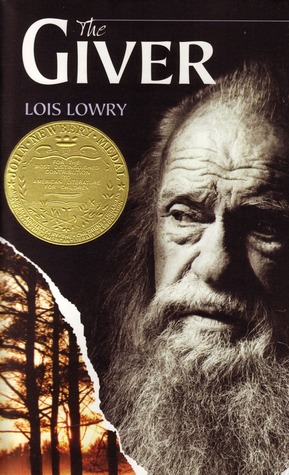
The Giver by Lois Lowry

Image result for the giver by lois lowry

The Giver by Lois Lowry

Lois Lowry’s The Giver is set in a place known simply as “the community”. In the community, everyone is expected to show one another respect and caring—rudeness, lying, and simple exaggeration are all discouraged. Anywhere beyond the community is known simply as “Elsewhere”, and those who break the rules, grow too old or too sick, or simply ask, are “released” to Elsewhere. People are divided by their numbers (ages) and job occupations. Once a person enters the Ceremony of Twelves, they are Assigned their roles in the community—except for Jonas, who is chosen to be the Receiver of Memories, the highest honor of them all. Jonas has no idea what it means to be able to “receive”, but enters training anyway, apprenticing the previous Receiver known as “the Giver.” As Jonas is given memories, he realizes that he and the community have lost more than just the past.

The simple detail given in the book reflects Jonas’s and the community’s point of views. They do not notice color, shape, or form because they have been taught not to. As the book goes on, the detail grows to show Jonas’s worldview expanding. The twist with color is also a clever one that I did not see coming, as is the more major twist towards the end. Even though we may not be able to perfectly see what is happening, we get the idea clear enough.

Dystopian novels are always hit-and-miss with me, and I feel that the one presented here works. Lowry wisely does not explain every facet of the community, as each answer would probably raise another question. There’s no extremely-advanced technology or a dictionary’s worth of terms to keep up with. Although the community, to us readers, is as bizarre as it needs to be, it does not break logic. There’s some sick kind of reason to how the community is run. The lack of explanation for what caused the world to become the way it is works in the story’s favor.

Jonas, being twelve, offers a naïve newcomer’s view on the events taking place. We learn what he learns. Admittedly, I would say that the only character with personalities are Lily, Jonas’s sister; Asher, Jonas’s friend; and the Giver himself. One could argue that this is the point, to show how the community is boring and unison, but the vocal charismas of Asher and Lily kind of undermine that. The Giver himself is an enjoyable character—you expect him to be quiet and mysterious, in that ‘creepy-magic-old-guy’ kind a way, but he’s actually very sweet and soft-spoken. The way he interacts with Jonas is both heartwarming and telling of the setting the story takes place in. The same can be said for the dialogue spoken in the story. It is stilted and awkward, but with reason.

The subjects that story tackles, and the numb tone to which it does, adds to the eerie and mysterious tone of the novel. Murder, loneliness, solitude, and lack of emotion are all discussed in a speculative manner—i.e., how would people act if they did not know what ‘this’ meant? Jonas himself must deal with great emotional suffering as he realizes that the people he loves cannot and do not love him back. The film adaptation was a romance story between Jonas and Fiona, but it’s more of a tragedy here. Jonas has feelings for Fiona, but not only can she not reciprocate them, Jonas himself can hardly understand them. This helps the curiosity as to what caused society to become the way it has.

Though the novel has many things working in its favor, and it builds a not-wholly-original-but-overall-captivating world, it ultimately could have done more. The book is very short and only takes a shallow glance into its circumstances. Many things are left in the air and are unresolved. Now, it is important to know that the book actually has sequels/prequels/midequels? Other books that take place in the same setting. Unfortunately, it is also said that these books are inferior to The Giver, and I probably won’t be reading them. So, judging the book by itself, I don’t think it took advantage of its setting as much as it could have. Also, I know many consider the ending to be artistic and deep and insightful, but I was simply unsatisfied by it.

Overall, I still think The Giver is a fine, if not simple, book.


The Green Mile by Stephen King

Image result for the green mile book

Stephen King’s The Green Mile is a recollection by the elderly Paul Edgecombe of his days as a prison guard. Paul was a guard for the E block of the prison, where prisoners are kept until their executions via electric chair—the floor of the E block is bright green, earning it the title of the Green Mile. Paul finds his job to be a never-ending cycle of prisoner comes in, prisoner stays, prisoner goes, etc. Lately, he has to grapple with Percy Wetmore, a young prison guard who uses connections to higher-ups as an excuse to abuse the prisoners, and Eduard Delacroix, an insane but seemingly harmless inmate with an amazingly intelligent mouse named Mr. Jingles. While Paul and the other guards think nothing of the inmates, their minds change when they meet John Coffey—a giant of a man found guilty of the rape and murder of two little girls. Though Coffey is quiet at first, the guards soon realize that there is more to him than meets the eye—a superpower, perhaps, that doubles as a curse.

As with all of his works, King has an eye for dialogue and detail. I saw every image and heard every conversation as perfectly as possible. Though the characters use expressions we don’t in reality, they did not feel out of place. And though not every moment of the book is packed with suspense and drama, I rarely ever felt bored with it. The cuts to the present-day elderly Paul calmed things down, but did not damage the overall experience, something that most past-and-present-spliced books find difficult to pull off. Delacroix, Wetmore, Coffey, and Wharton were all characters with fantastic characterizations that made them stand out from one another. The plot of the book does not have a typical point-A-to-point-B formatting. The book does not build up to something over its course; arguably, the climax of the book happens a little over halfway through, with the rest tying up loose ends.

On the downside, some of these details can border on unnecessary—one will probably tire of how often the act of urinating is detailed in this book. The first part of the book that focuses so heavily on Mr. Jingles the mouse can also be irksome to get through. And though some of the characters stand out so greatly, others, mostly the prison guards, do not. In all honesty, the only thing I ever knew to differentiate them by was the knowledge that Brutal was the tall and muscular one. That’s it.

The book gives a message that can be hard to swallow: we will all do bad things, some more than others, and how soon we will have to make up for them is unknown. Characters like Wetmore and Percy, without giving away details, exemplify true evils in humans with no remorse for their actions. Meanwhile, characters like Paul and Coffey spend much of their time questioning their choices and wondering if they have done the right thing. The ‘twist’ in the book is also well-executed, as I legitimately did not see it coming, and the smaller ‘twist’ at the end further proves the book’s message.

The Green Mile is deep, dark, and contemplative, and I’d recommend it to everyone.