Real Skinwalkers

I believe in my second or third blog, I spoke about what I thought was the perfect horror and its subgenres. A subgenre that I really love is folklore of any culture: Japanese, African, Southern, Indian, Hispanic, etc. Some folklore of the American South and Midwestern region is Appalachian. Urban legends such as Wendigos, mimics, crawlers, and other cryptids go viral on social media daily. One of the most popular cryptids being skinwalkers.

If I’m being honest, I fell for the sensationalism too. The thought of a humanoid creature out in the woods mimicking your loved ones or pets is horrifying, yet it is all made up. Kinda… The real skinwalkers are much more frightening.

They definitely exist, but they aren’t exactly what you think. First of all, geographically, they aren’t even located in Appalachia or nearby regions. They are actually on the other side of the country in the northern parts of New Mexico, Arizona, and southern Utah.

This is important to highlight that Skinwalkers originated in the southwestern part of the U.S. because they are in the same region as the Navajo Nation. (If unfamiliar, Navajo “Na-va-ho” are Indigenous Americans.) And according to Navajo culture, Skinwalkers are humans who went down a dark path in exchange for power. No, they are not demons, cryptids, or whatever. They are real human beings who practice witchcraft for evil intentions.

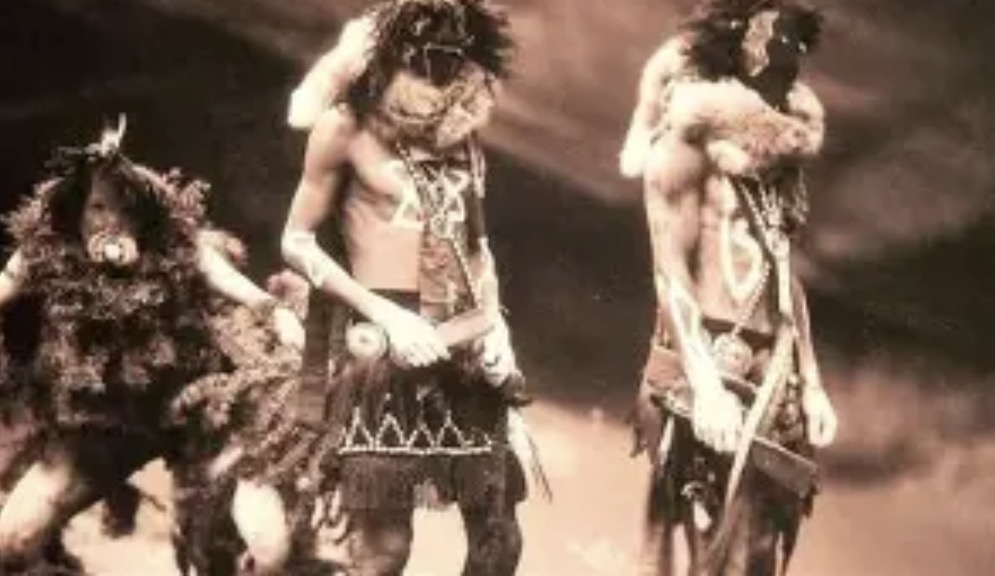
(Popular photo of Navajo Skinwalkers)

How would someone even become a Skinwalker? Well, based on some research of videos and articles online, it seems that an indigenous individual learns about good and bad magic, yet abuses their knowledge of it. Eventually, they do an unforgivable act against someone close—usually the murder of a parent, sibling, or child. Obviously, the community that they were part of will severely reject them for violating cultural standards and morality.

The term “skin” comes from them wearing the pelt of a predatory animal—coyotes, wolves, etc. This is especially forbidden in Navajo culture. The walker part is a mystery to me, but it is known that they shapeshift into whatever animal they wear. In Navajo Nation, they are called “yee-naaldlooshii” (ye-nal-doe-she) or “one who goes on all fours” (take that translation with a grain of SALT). 

They are used as a cautionary tale or an example of misusing powerful spiritual knowledge for evil, greed, or even betrayal. Or to highlight the values of Navajo Americans’ community, such as morality and respect for human beings and the natural world. Many Navajo members choose not to speak about this topic with outsiders, as some believe it is taboo or want to keep foreigners safe; therefore, some information about this may be vague or slightly incorrect.

That’s pretty much everything I learned over the weekend about them, but I don’t want to end my blog on such negativity. Instead, I found some facts and celebrations done by Native Americans. Indigenous American culture is one of my favorite cultures, along with my own and pacific islanders, so why not?

Starting with the Snake Dance from the Hopi people in the northeastern part of Arizona. This celebration is one of the oldest multi-day ceremonies in Native American culture. It was originally a water and rain ceremony where snakes would be labeled as guardians of springs and messengers. They would carry prayers to gods and ancestors and are seen as partners instead of something to worship. I think this perspective of snakes is very beautiful, especially with the Western culture I’ve grown up in, where snakes were seen as evil or demonic. This is still celebrated today and alternates with the Flute Ceremony.

November is known as Native American Heritage Month. Former President George H.W. Bush signed the Public Law 101-343 in 1990. It is recognised for every tribe’s unique identity. language and traditions, as well as promoting cultural preservation. This month is also used to educate other races about the injustices that Native Americans have suffered and still suffer from, as well as Missing and Murdered Indigenous People (MMIP).

The last thing I wanted to highlight in Native American culture is the American Indian Movement (AIM) and its flag. It was founded in July of 1968 in Minneapolis by a group of Ojibwe (Anishinaabe) activists. Its original purpose was to address systemic issues in urban areas. Poverty, police brutality, and discrimination in economic, employment, and court systems. After a few years, AIM was recognized by multiple Indigenous groups because they all suffered from settler colonialism. AIM provided aid to those displaced, monitored police activity, while advocating for legal rights and healthcare. (Kinda similar to the Black Panther Party now that I think about it!!)

That’s all for this blog. Thanks for reading, and take care!!<333

(AIM flag, 2020)

SOURCES!!

Skin-walker – Wikipedia 

Hopi Snake Dance  – Legends of America

Native American Heritage Month 2026: November Observance Guide | TheDayOf 

National Native American Heritage Month | Indian Affairs 

American Indian Movement – Wikipedia

Dr. Sudduth

For years now, I’ve been dreaming of the title “Dr.” being by my name, never “Mrs.” Of course, getting married and maybe even having kids one day is something I would consider an achievement, but not a priority. This priority that I have is making sure I’m fulfilled in this lifetime, while also helping others. The way I want to help people is through mental health support. I know how important it is to be incorporated into society—especially since I was one of the many people who suffer from the lack of it.

Now that I’m a junior in high school, I’m really starting to understand that I don’t have a lot of time left. I’ve been trying to focus more on my schoolwork and refining the things that I’m good at, but I can’t help but feel this anxiety within. I’d say that I’m nervous to start living—I mean, I am living, but what I mean is taking full control of my life. Like, the fact that whatever I do from now on is going to affect me in the long run.

Everyone tells me I’m so responsible, so resilient, so confident. Everyone is so sure that I’ll be successful and make a minimum of six figures. They don’t realize I’m fragile like them, so they expect the best from me. With my timidness, my stutter, the way I cry at minor inconveniences. (I’m working on that.) What if I let them down?

It may not even be me letting them down. What if the world comes crashing down, and I can’t become Dr. Sudduth? Psychology is a male-dominated profession after all, and I’m just a black girl from a small town in Mississippi. Sometimes I feel like it’s not even worth trying to aim that far in life. It’s rigorous, competitive, and grueling, so what if I fall out of love with it at the last second? Right before I become Dr. Sudduth, I suddenly don’t want to be her anymore.

The idea of falling out of love with my passion or letting everyone down is truly haunting, but I’m not going to let it hinder me. Simply because of my own story. How I grew up, the people around me, and the community I live in (and for some reason still have love for) fuel my love for psychology. I know that getting help and recovering from trauma, yet still being a good person, exists because I am living proof of that. I have every right to be inconsiderate, ill-mannered, and downright violent, but I don’t choose to feed into that negativity.

Instead, I chose to work on myself and be kind to those around me. I know everybody goes through hell, so why not be a place for hurting people to heal? The thought of a child like me struggling to survive hurts me in a way I cannot explain. Maybe I have a soft spot for kids—maybe I am soft. Either way, I know helping people is something I’ve been called to do. 

So, whenever I do get to become Dr. Sudduth, I will make sure that I stay dedicated to my work. Doing research for black and brown women’s mental health (since no one else wants to). Maybe I’ll open my own practice. Or work for the National Institutes of Health (NIH). Maybe I’ll even get married and have kids of my own one day.

Probably…


Who Were the Black Panthers?

As a child, I remember running around with other kids my age whom I barely knew when I lived in my old house. We rode on bikes, went to each other’s houses, and shared toys. My cousins and other family members came over frequently as well—almost every weekend. We’d have dinner, barbecue, or play games together. Being surrounded by loving people was the biggest highlight of my childhood.

But now that I’m freshly seventeen, I’ve been wondering why there’s been such a disconnect recently. Not just in my family, but in my friends’ and even strangers’ online. In my race, community has been a big part of our culture, yet it seems to be slowly dying.

For my blog, instead of becoming emotional and talking about how much I miss my childhood, I thought that I should highlight one of the biggest impacts in African American culture.


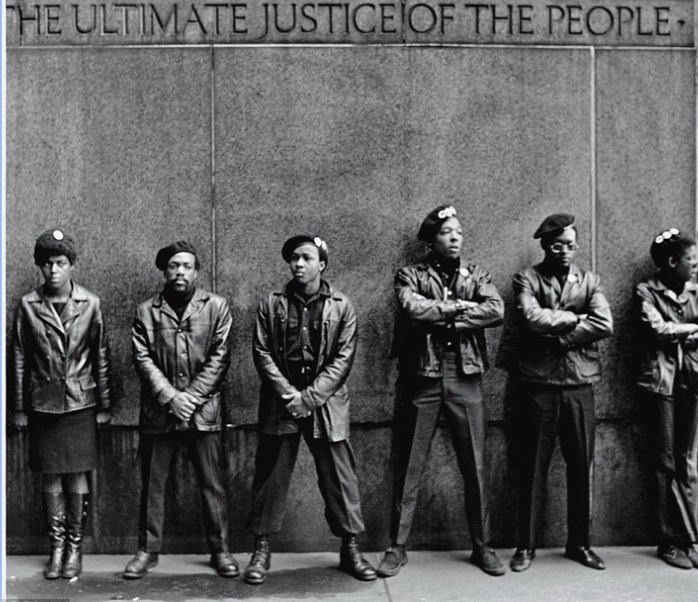
“The Ultimate Power of the People”

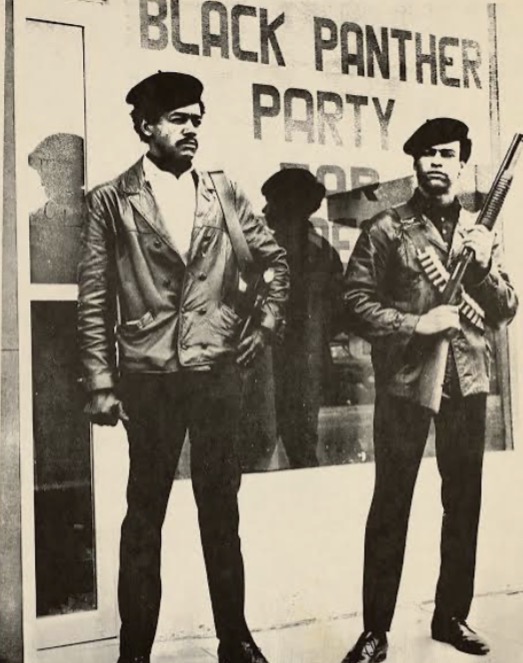
The Black Panther Party.

The Black Panther Party (BPP) was a militant organization founded in 1966 by two “radicals,” Bobby Seale and Huey P. Newton. I’m sure you may not be familiar with those individuals or their group—but don’t worry, I’m here to enlighten you!! This is an incredibly difficult topic to cover. I’ll talk about the rise and fall of this organization as well as their achievements.

For context, the civil rights movement began in the 1940’s when laws were being passed to benefit people of color. Laws such as the Executive Order that desegregated defense jobs. Nobody really considered it a “movement” until Emmett Till’s murder in August of 1955. It sparked national outrage, and the country was divided for well over a decade. After that day, many historical accomplishments were made, and the Civil Rights Act was finally passed in 1964. Yet, things didn’t end there.

History may have advertised that the terrorist group, the Ku Klux Klan, may have died down after the Civil Rights Act was passed. I can assure you that is a lie. If anything, the white supremacists grew angrier and more violent. They bombed, lynched, and set fire to innocent African Americans, leaving them fearful for their lives during that period of what should’ve been celebration. None of them were really charged or punished for their actions because many of them controlled their communities, such as police officers and other individuals who were highly respected.

So how does this tie into my introduction?

Well, since many African Americans were displaced, other people decided to lend a helping hand. People like Newton and Seale. They founded their revolutionary group in 1966 to help those who suffered from discrimination and violence. The founding of the group lasted for decades, even all the way into the 21st century. 

 Malcolm X’s assassination was the catalyst for this group’s formation, as they realized they must take care of one another. Their original purpose was to protect black neighborhoods from police officers. Crazy right? The party opened up “survival programs” for healthcare, education, and food for the youth. In today’s world, many churches and after-school clubs continue to help out those in need as well as the youth by feeding and clothing them. The BPP’s efforts in their community of Oakland, California, made a positive impact.

Not only did they help their communities, but they also had an agenda to follow—“The “Ten-Point Program”— published on May 15, 1967. Their agenda can be simplified to wanting peace, freedom, justice, education, equal economic opportunities, good housing, and representation in law.

The end of the BPP was caused by their internal conflicts. The most notable was that the visions of Newton and Eldridge Cleaver didn’t align, which sparked animosity between them. The party became divided between community service and self-defense, or confrontation with the American government. Eventually, Newton expelled Cleaver—This was known as “the split”. Once gone, Cleaver made his own group called the Black Liberation Army (BLA). The split turned violent when members of the BPP and the BLA began murdering each other, a total of four deaths. This caused hundreds of members to resign from the BPP.

Speaking of violence, this led to the “Free Huey!” campaign. On October 28, 1967, a police officer named John Frey was shot to his death. One of the founders, Newton, was there when this murder occurred. He was known for being involved with violent crimes and was charged with first-degree murder and other felonious crimes for Frey’s murder. This sparked outrage in the leftist part of the United States. Eventually, he was released three years later.

The party formally ended in 1982 due to gender inequality and embezzlement of drugs. Their impacts—both negative and positive—still lasted for decades. Their boldness in exercising authority and kindness in taking care of the people in their race will be forever highlighted.

I Think We’ve Met Somewhere Before

“With a storm in the wind, what would you do?”

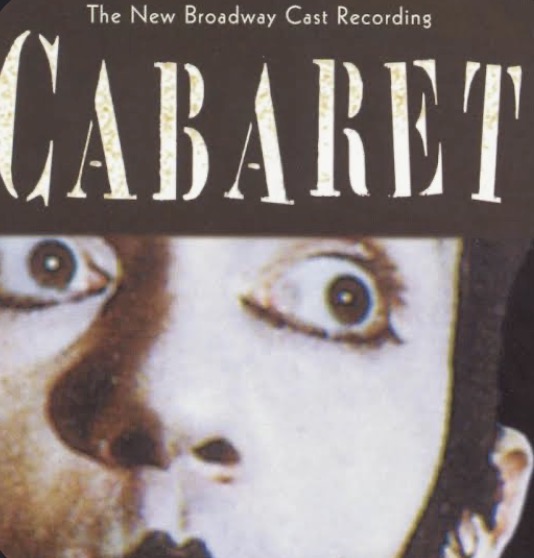
As I was reading all of my classmates’ blogs from last week, I saw how a lot of them wrote about stuff they adored or were hyper-fixated on. I think I’ll do the same, so… Cabaret (1993), right?

I FREAKING LOVE CABARET AAAAAAAAAAAAAAAAAAAAAAAAAAAAA

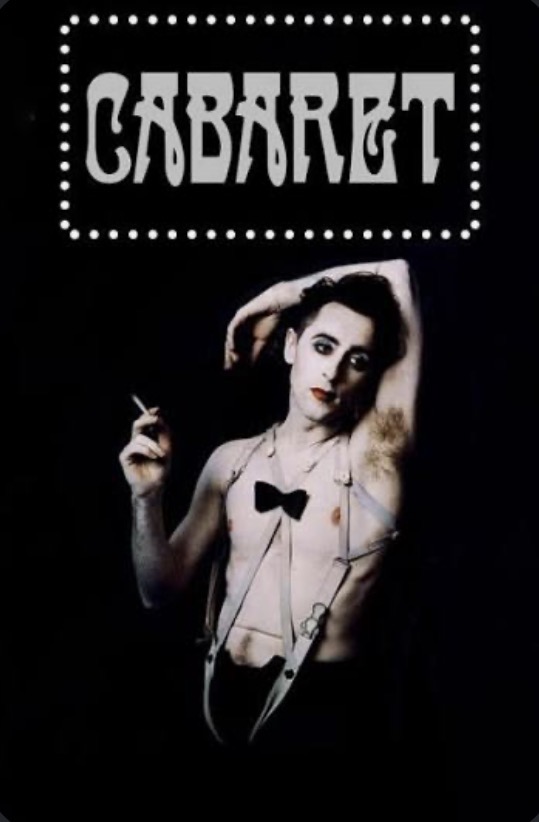
I literally start trembling violently whenever somebody brings it up—that’s how down bad I am for this musical. I know somebody reading this may have no idea what I’m talking about, who that man is, why I titled my blog, or what the quote underneath even means. I PROMISEEEEEEEE I’ll get into that. Let me just explain what the musical is about first. (SPOILERS!!!!!!)

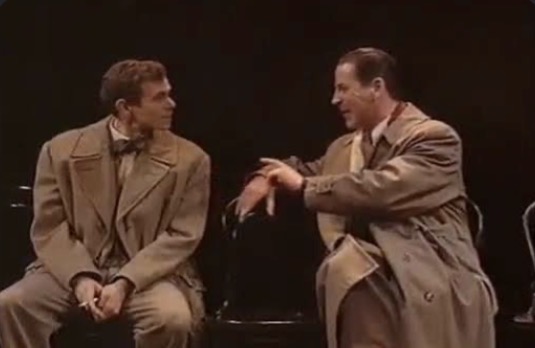
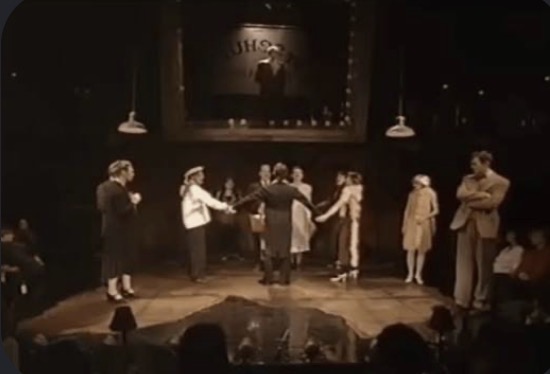
Without getting too in-depth, the musical has this beautiful opening where the Emcee, Alan Cumming, welcomes the audience to the KitKat Klub. A nightclub or cabaret, if you will, for people to escape their worries. Hence, “Leave your troubles… outside!” Anyway, we meet the rest of the Emcee’s crew: Rosie, Lulu, Frenchie, Texas, Fritzie, Helga, Bobby, Victor, Hans, Herman, and finally Sally Bowles.

After the opening, we’re introduced to the main protagonist and another supporting character. Cliff Bradshaw, a “starving author” trying to find somewhere to write, and Ernst Ludwig, a man who smuggles valuables from different countries. Ludwig refers Cliff to Fraulein Schnider’s residence to live in exchange for being taught English by Cliff. He agrees, and there a friendship is born.

When he gets to Fraulein Schnider, she lends him the room for only 50 marks. Then leaves Cliff by himself to celebrate the New Year with her love interest, Herr Schultz. Did I mention that the year is 1944?

For context, Cliff is in Berlin, Germany during the mid 1940’s. I’m sure you all can put two and two together. So, if learning about the rise of the N*zi Party isn’t your thing, now’s the time to click off this blog, because it only gets worse from here. And honestly, that’s what I love the most about this peculiar musical. It gradually gets worse without the viewer realizing until it’s far too late.

Back to the storyline though, while Cliff is adventuring through the city, he finds the KitKat Klub and meets Sally Bowles. A beautiful young woman who is whoreish, trashy, and uneducated. They hit it off and move in after a few days. During that time, Sally obviously has feelings for Cliff and tries to make advances until she finds out that he’s a homosexual. Even then, Cliff and Sally still stay side by side.

Time passes, and Fräulein Schneider and Herr Schultz are engaged and throwing their party. Everything goes well until Ernst Ludwig arrives. He’s disgusted and disappointed that Fräulein wants to marry a Jewish man, so he walks out, but Cliff grabs his arm before he leaves. There, the N*zi symbol rested on his arm. Cliff is obviously horrified because he read Mein Kampf (My Struggle), a book published by H*tler about his beliefs and plans for New Germany.

To get Ludwig to stay and enjoy the party, a guest sings “Tomorrow Belongs to Me” — a fascist song disguised as patriotism. Apparently, the only people who care are Fräulein Schneider and Cliff, as they watch in terror. In contrast, Herr Schultz and Sally turn their heads to dismiss the Nazis. This scene shows the main characters’ perspectives without overdoing it, and it gets me so misty-eyed. 

When I say EVERYTHING goes to crap after that scene, I really do mean it.  Fräulein Schneider calls off the wedding because she’s stuck in survival mode, and rightfully so. Marrying a Jewish man at that time would mean certain death even though he was literally her soulmate.

On the other hand, Sally Bowles gets pregnant by an unknown man, and when Cliff finds out, he encourages her to keep the baby. He wanted to step up and be the father because he adored the idea of them being a family, so Sally reluctantly agrees. Unfortunately, she couldn’t bear the pregnancy any longer and went behind his back to have an abortion. Cliff was destroyed yet still wanted to be with Sally.

He was already planning on leaving Berlin to flee to the United States and wanted Sally to come with him. She obviously declines, and they fight about what’s going on in the political world with some iconic lines.

“Ugh, you mean POLITICS. What has that got to do with us?” from Sally.

“Sally, don’t you understand? If you’re not against all this, you’re for it… or you might as well be.” and “SALLY WAKE UP! THE PARTY IN BERLIN IS OVER! IT’S BEEN A LOT OF FUN, BUT IT’S OVER NOW!” from Cliff.

He leaves Sally with a train ticket out of Berlin. He advises Sally to use it before walking out — for good. He also urges Fraulein Schneider and Herr Schultz to flee from Berlin too, but they both refuse.

Herr Schultz believes it will “pass over” while Fraulein Schneider claims that she’s in too deep but is resilient and will survive. I got my quote from her song “What would you do?” In my opinion, today’s world is scarily similar to Cabaret. As a teenager, I feel like Cliff and Fraulein Schneider simultaneously — wanting to leave my country because I see dystopian aspects everywhere, but how? I don’t have the money or passport to go somewhere else for a while. I’ll just have to wait it out or defend myself as she implied.

I also got my title from this scene. People often joke about history repeating itself, so I thought it was neat for my title hinting at familiarity.

The story ended as history decided it to — the rise of the N*zi Party and genocide taking full effect. One of my favorite parts about this play is how similar the introduction and ending are, yet the ending is obviously corrupted. The orchestra sounds rough, and the choir has lost its liveliness — almost sounding like shouting soldiers. It’s all so uncanny.

Everyone who stayed in Berlin died. Even the Emcee. We see his final moments — teasing the audience by taking off his trench coat as if he’s naked underneath. When he finally removes it, instead of a nude body, the crowd is met with a much smaller frame dressed in Jewish prisoner attire. He sings “Goodbye. See you soon.” In German, before posing as if he were crucified. The lights cut off, and that was it.

When I first watched Cabaret, I was fifteen years old and extremely confused. I understood some parts of the story, but I still missed so much. The play purposefully blinds its audience with sexuality and gender expression to distract from the actual issue at hand. Cabaret has affected me in many ways — good and bad. I’m more open-minded, compassionate, and likely to speak out in retaliation (curse and blessing).

I’m so glad I get to share my love for this play. It feels like I got my jitteriness all out now. Thank you so much for reading this, and sorry it went on for so long</3333

Becoming the “New Adults”

For the past few days, I’ve been sitting at my computer trying to write this blog with nothing in my head. It’s not writer’s block, though. You give me a prompt, and I’ll give you 1,500 words minimum — I’ll write a poem three pages long with a beautiful rhyme scheme too. It’s not that I can’t write — it’s just that I’ve never been given so much creative freedom before. I just wish I could have more freedom in other parts of my life too.

I often find myself thinking about the dynamics of teenagers and adults when in reality, I should be doing my algebra homework. Grown folks see us teenagers as kids and treat us as such. We’re obviously annoyed and we try to defend ourselves against them, usually resulting in some sort of punishment. Phone privileges taken, grounded, or even a smack somewhere. I feel like I’m wrongfully persecuted sometimes.

It’s not that we want to be little pricks, we just want to be recognized as real people. Me and my friends see each other as individuals that can take care of ourselves while being respectful and giving a helping hand. I even see that with other teenagers I don’t know. The way they watch their surroundings, use their money, and even being resistant to changes they know is wrong.

When I say teenagers want to be recognized as real people, I’m not saying that all of us are being treated like garbage. What I mean is for us to be taken seriously. Our mental health, our grief, and our insecurities. Whenever I get upset, I don’t want to be called sensitive, emotional, or hormonal — and if I do get upset, I don’t want anyone mad at me for having emotions. That’s so belittling.

When I was 13, I had to process grief — alone. It had hit me like a freight train, no warning, no goodbyes. I had lost my dog who had grown up with me and was my best friend. I’m not sure how I did it, but I got up the very next day and went to school like nothing had happened that Sunday morning. If I cried, I’d be called weak. If I tried to isolate myself, I would be perceived as disrespectful or rude. 

This obviously affected my mental health negatively. I was lonely and social media told me everyone was doing better than me. They had more money, clearer skin, healthy/long hair, a nice body, and even the love of their life. Everything I had been wanting or wasn’t even aware that would be essential to me later in life was being presented to me and left me feeling humiliated. I grew insecure, anxious, and easily provoked overtime.

I know the people reading this can definitely relate to the feeling of being insecure or anxious. I know my audience may have been in a situation where they were spoken for or talked at instead of talked to. Which is why I thought of writing this blog.

I’m not trying to bash people with a fully developed frontal lobe but cut us some slack. We’re not asking for a million dollars, we just want full independence, freedom to express ourselves and trust that we’ll be okay on our own. If someone spoke for an adult even though they are capable to talk themselves, the adult would grow frustrated and eventually lash out — it’s no different from people in adolescence.

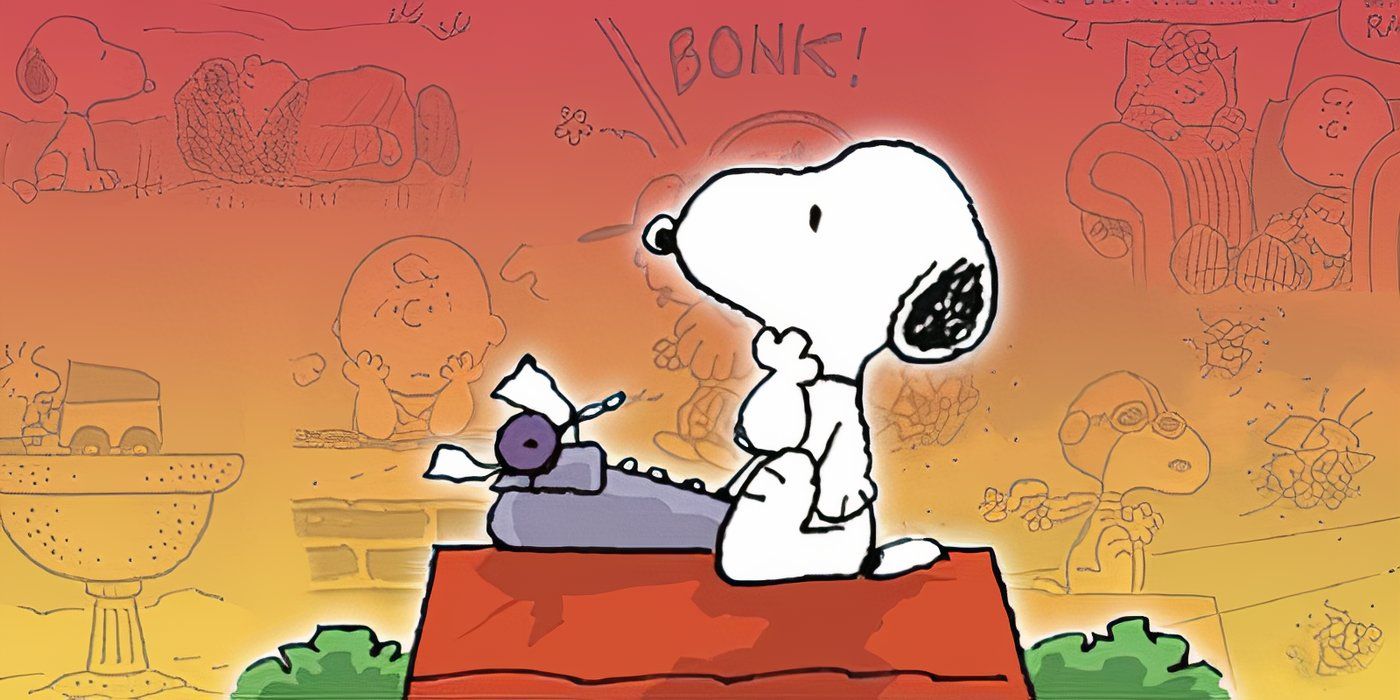
Before I end this blog, I just wanted to add that I feel like we live in a Peanuts parody — me and other people my age. For those of you who don’t know, I’m sure you’re all familiar with Snoopy and Charlie Brown from your childhoods —The beagle who can literally do anything and his bald-headed owner.

I say that we live in a Peanuts parody because the children are the main characters of the show, not the adults. The kids get to control the atmosphere and plot while the adults are in the background. Speaking of the adults in Peanuts, they sound like trombones or some kind of brass instrument whenever they speak and I think that really supports the point of the show, which is giving kids their own voice, space to exist and time to learn.

Last Peanuts Comic Strip Value at Lauren Blackwell blog

The Perfect Horror

I am a huge fan of horror. It doesn’t matter if it’s psychological, serial killers, supernatural, folktale, etc. I love horror with a burning passion. I have only one complaint though — it’s all so repetitive.

Before I even geek out, I want to define “the perfect horror” in my own definition. Horror is supposed to frighten, disturb, or scare an audience — it has many subdivisions and that’s okay. If it’s psychological horror, I want to see the main character spiral and lose their mind while I’m being scared too. If it’s apocalyptic, I want to see an invasive species take over while I cower in fear too. If I’m not slightly disturbed or scared — I don’t think it did a well enough job. But that’s my opinion as a veteran in this genre.

I’ve watched horror movies and read books since I was in elementary. Recently I’ve found that the jump scares or suspenseful scenes don’t scare me as much as they did years or even months ago. I can predict cliche lines, cues, and even deaths. Some movies or books are a poor excuse for gore while others shouldn’t even be classified as horror to begin with. Even with some of the most popular subgenres of horror — analog horror and Minecraft horror.

Analog horror did me dirty to say the least. I watched Mandela Catalogue right before it blew up. It had me second guessing my own faith for a few months before I became fully grounded in it. Satan himself — deceiving humanity to be their savior while wearing the skin of Gabriel was a bold start. It was so similar to the actual story of the birth of Christ that it messed with my head. To be fair, I watched this when I was way too young — eleven years old to be exact. So of course it damaged me mentally, but I feel like it can still be classified as the perfect horror.

Screenshot

The Walten Files reminded me of the fear “Five Nights at Freddy’s” gave me when I was even younger. Obelisk, Vita Carnis, Greylock, The Return of the Pumpkin Rabbit,  and even The Oldest View, had me shook to my core. There’s so many other series that have had a lasting impact on me. There are also some that didn’t give me the scare I was looking for, but I’m not here to bash or discredit someone’s work. I just want to talk about the perfect horror.

To anybody who loves Minecraft as much as me, we all know horror isn’t new in this game. Especially with a silly Herobrine sighting in every video uploaded in the early 2010s. The “newer” version of Minecraft horror is the player being stalked by a humanoid creature. It stalks, it howls, and then it hits you once or twice in a chase and you’re dead. It was unique and utterly terrifying at first — but so repetitive.

I’ve been obsessed with these horror genres since middle school. So many videos and so many years. Even though I still love a good scare from these subgenres, I’m tired of it.

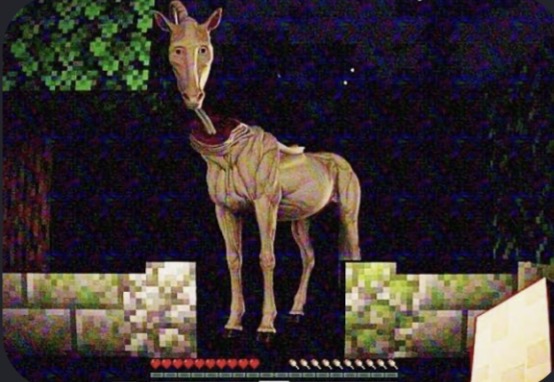
I’m tired of the horror mods that look identical and do similar methods from the mods before them. I’m tired of some analog horror series not having any real depth to them. Just a quick cash grab or a cheap way to scare people. Why can’t I watch something completely different? In recent videos, the most unique horror mod to come about was the “Long Horse” mod by Lookout2DD.

Screenshot

The fact that the horse didn’t attack when the player was nearby was already odd, but when it was revealed that the horse is far more superior than the player had me stunned. I saw that the horse had removed the “Save and quit to title” button from the player, it was haunting — not to mention that it could literally see and chase him in spectator mode. And the way it was modeled is what really got me. I don’t know if it’s the eyes, face or the gory sight of its elongated neck, but I hate looking at that thing. The horse lived up to its name of being long necked. Personally, I feel like that Minecraft horror video was perfect.

Again, I’m not here to spew hate to the videos or series that didn’t scare me, I’m just ranting about an issue (that really isn’t an issue, but still an issue) that I have. Thank you to the people who took the time to actually read this!!<333

I am Her and She is Me

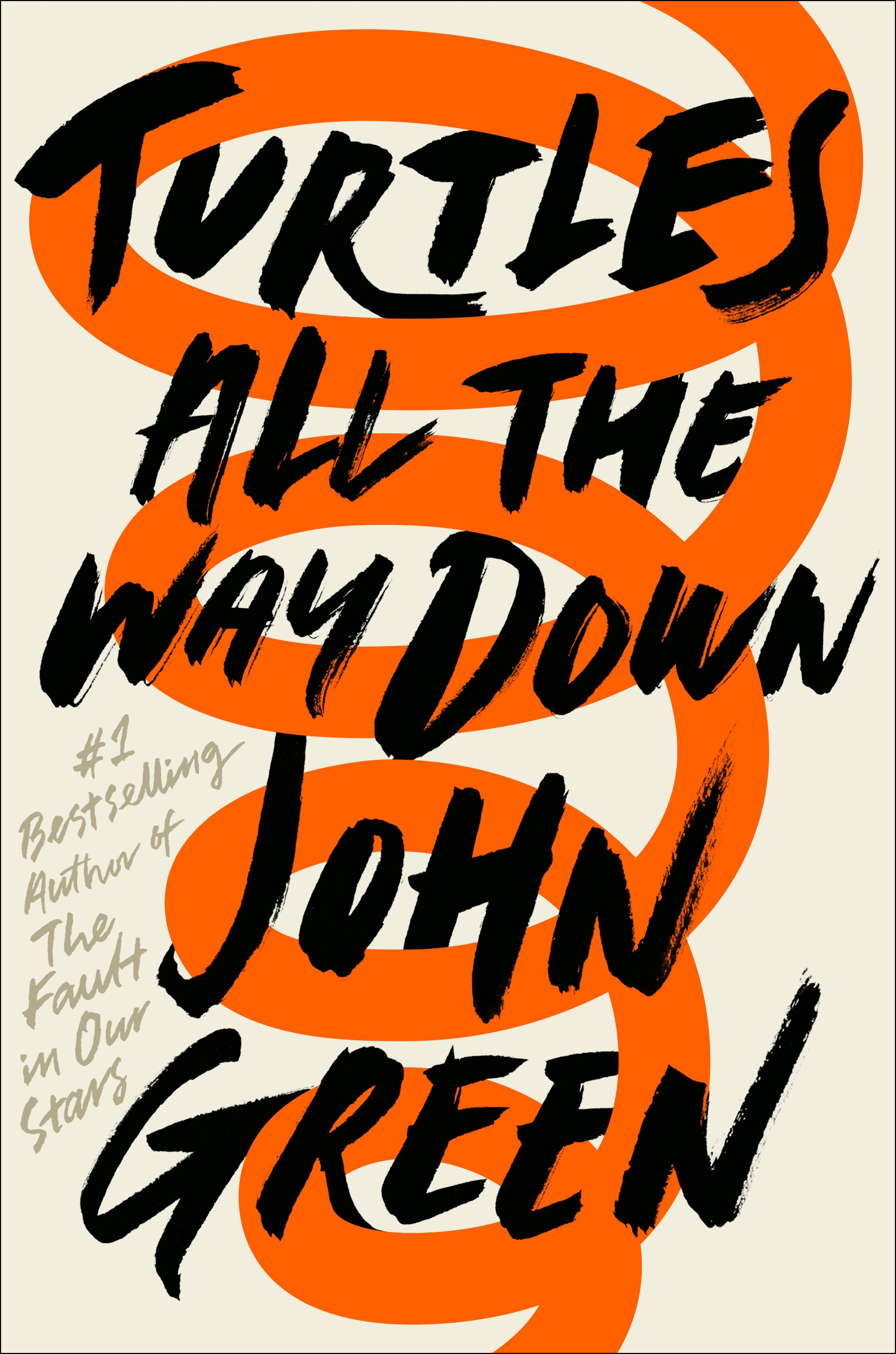
I read one of the greatest books of all time my freshman year by accident. I say “by accident” because I wasn’t voluntarily trying to look for it. I was just trying to find myself in literature before I had to grow up. Anyways, the book was titled “Turtles All the Way Down” by John Green. I had never felt so understood before as I did while reading that book. Especially by a complete stranger. Aza Holmes is the star of this book — A teenage girl dealing with grief, anxiety, and most importantly — obsessive compulsive disorder.

Turtles All the Way Down by John Green - Penguin Books AustraliaImage result for turtles all the way down

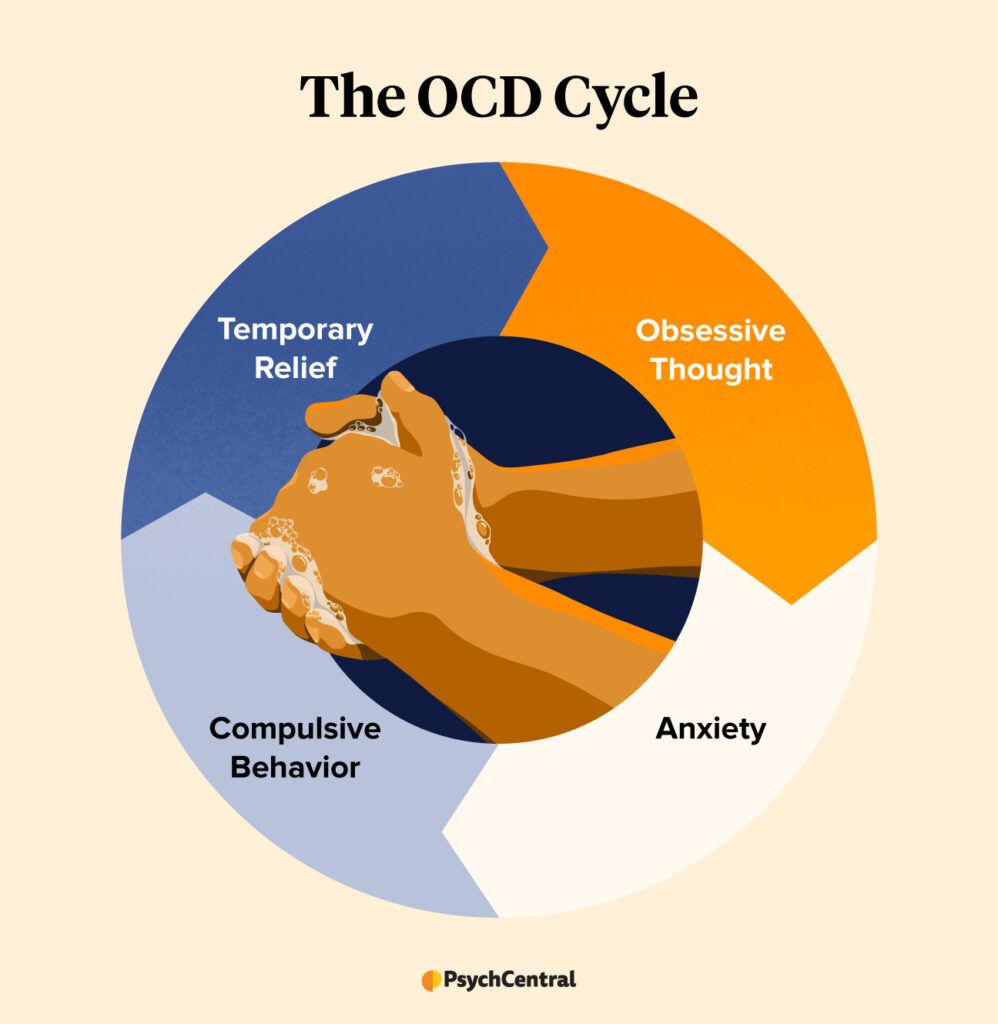
People often joke about OCD, so it gets watered down dramatically. Society doesn’t realize that it’s so much more than a feeling of slight discomfort from something being out of order. This condition can range from the obsession with arrangement, harmful ideation, germs, timing, or even texture. The best way to explain OCD to those that don’t suffer from it is — a phobia that someone tries to get rid of completely. For me and Aza, it is germs. This would mean wasting an entire can of Lysol, washing our hands fifteen times in less than half an hour, spiraling thoughts, or even complete meltdowns. This mental illness took complete control over Aza’s life and so many other people’s lives. Real people.

Ocd Compulsions Examples 10 Myths And Facts About Obsessive Compulsive

I’m not using obsessive compulsive disorder as a way to bash those that are ignorant enough to joke about it or the folks that have to suffer from it. Whether they’re diagnosed or not. I reflect on “Turtles All the Way Down” at least once a week and live with OCD daily, so I thought, ‘why not just yap about it for a few paragraphs?”

Any who, earlier in my blog I mentioned “arrangement, harmful ideation, timing and texture”. I know at least one person reading this has no clue what I meant. Arrangement is the most common form of OCD. Biggest to smallest or vice versa, colors, or numbers being in a specific order, etc. You get the gist of it. Harmful ideation probably threw off a lot of people and maybe even concerned some. What I mean by this is someone being afraid of hurting someone else or themselves. They usually hide sharp objects behind locks, pills or anything else that can be used to do damage. Also, I just wanted to state my opinion that this may be one of the worst forms of this disorder. I am so thankful I don’t struggle with it and for those that do, I hope they can get efficient help.

The timing part of OCD is probably a little confusing to some, so an example would be, “If I don’t do this in time, something really bad will happen”. Spoiler: NOTHING IS EVER GOING TO HAPPEN!!!!!!!!!! Shocker, I know.

The last kind of OCD (that I listed; there’s many more variations) would be touching something that feels “wrong”. Technically it isn’t wrong, but you can’t reason with the mental. This may result in touching whatever it was exactly like before to “undo” the feeling, rubbing something else aggressively or getting agitated. If none of this makes sense to you, then congratulations, you probably don’t have obsessive compulsive disorder! But if it did make sense, I totally understand. I don’t have any words of encouragement or advice for you but keep going. You’ve made it this far and have had a lot of ups in your life, so keep moving forward. And thank you to anybody who’s read this — my first ever blog. I hope you enjoyed it more than you might’ve cringed at it.