
Conflict resolution

Hello everypony, my middle school self would like to formally apologize for the amount of friendship drama I witnessed…and caused 

There was this girl I used to be friends with who had a specific way of dealing with conflict..she just ghosted you..in person. You could walk right up to her and start talking, and she would just walk away. This was her solution to literally everything. 

That friendship definitely taught me something, though. As I’ve gotten older, I’ve become a lot more conscious of how I deal with conflict. I’ve made my own mistakes, obviously. I’ve argued over text. I’ve complained to other friends when I should have just talked to the person involved. I’ve said things while I was angry that probably would have sounded a lot better if I had waited five minutes. I’ve also learned that friendships are going to have uncomfortable moments. What matters is your conflict resolution.

It could be your friend has been acting weird and you have no idea why, you got left out of something, there’s a boy involved, someone said something that bothered you or maybe you don’t even know who is mad and why. Whatever the situation is, here’s what I’ve learned about dealing with it.

First, figure out what you’re trying to say.

You don’t need to write a speech or prepare a ten-page argument. Just know what’s bothering you. Before I talk to them, I think: What happened? Why am I upset? What do I want them to understand? What do I want to happen? If you’re nervous, write it down. Put everything in your notes app. Tell your mom. Talk to someone you trust.

And please, do not have the argument through text. I know it’s easy. You can type out exactly what you want to say, read it seventeen times, and send it without having to look at their face. Sounds amazing. Right? WRONG. If you can, talk face-to-face.. Sit somewhere quiet. Find somewhere you both feel comfortable enough to talk. AND DON’T INVOLVE PEOPLE WHO DON’T NEED TO BE INVOLVED.   

 Now, I start with the friendship, and not the problem. Before immediately listing everything they’ve done wrong, tell them why you’re having this conversation instead of just dropping them. Something as simple as, “I really care about you, and that’s why I don’t want to just ignore what’s been happening between us.” is usually my go to. That one sentence can completely change their mindset.

You’re not saying, Here is everything I hate about you. You’re saying, Our friendship matters enough to me that I really want to fix this.

There is nothing embarrassing about admitting that something hurt you. When you explain what happened, try to focus on your experience instead of attacking theirs. Instead of saying something like…

“You’ve been treating me like garbage.”

I’d say somethin like…

“I’ve felt really distant from you lately, and I honestly haven’t known what I did wrong.”

Same feeling. Just not as dramatic. And once you’ve said your part, stop talking and let them answer.

This is probably the hardest part for me because I might hear something I don’t agree with. Maybe they misunderstood something. Maybe they’re upset about something completely different. Maybe they have a perspective I never even considered. 

You don’t have to immediately defend yourself against every sentence. You can say, “I didn’t realize you felt that way,” or even just, “I need a little time to think about that.”

Finally, don’t make the ending awkward just because the conversation was awkward. You don’t have to walk away with everything magically fixed. Sometimes the best ending is simply agreeing that you’ll both try to communicate better next time. You could say, “Can we just promise that if something is bothering us, we’ll actually say something next time?”

I know this is scary. Confrontation feels so so scary, but it’s a necessary part of growing up. So don’t be too scared to confront a bad friend! 

We got this!

Okay love you, bye bye!!!!
So You Want to Make Your Own TTRPG…

If you’ve ever participated in a tabletop roleplay game, listened to a podcast of a campaign, or simply read through a TTRPG handbook, you’d understand the vast and limitless worlds within these stories. Maybe you’ve thought it’s simply too hard or time consuming to try and create your own TTRPG. I’m here to present you with an easy-to-follow guide for how to create your first TTRPG experience, no matter your skill level. 

1. Blueprints

Here is where you will be asking yourself the big questions: Where is this campaign taking place? What sort of creatures might the players encounter? Is there a lore-based storyline you want to implement, or is it just a go-with-the-flow sort of story? I suggest writing down some rough notes about the themes you want to include, settings, monsters, and major goals of your future players. As for building your new universe, I suggest creating a Pinterest board with images of locations and monsters to help you visualize where the players will be and who they will encounter. Linked below are some of my own inspiration boards.
Monster Inspiration/Sheets or Inspo Board for a specific campaign.

2. The Base.

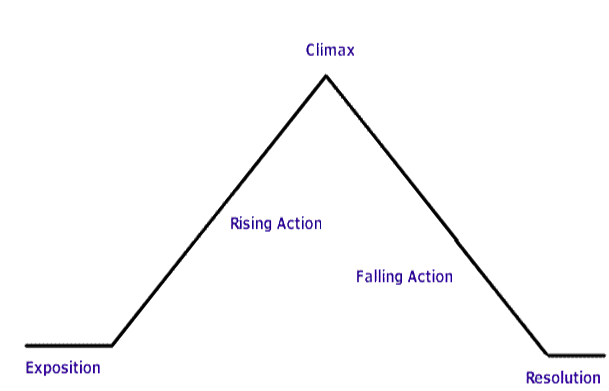
Now that you’ve got the outline of your campaign, let’s start filling in the structure. Now is when you will develop a storyline. You have a plethora of options; you could use your character’s backstories to build a plot, base your world around mythology or pre-existing stories, or create a plot-less campaign that’s left up to the player’s control. Regardless of your structure, you’re going to need to plan out the monsters/fights that your players might encounter. These fights will serve as the major climax events in your storyline. The build up events can be anything from gathering supplies, interacting with townspeople, exploring the unknown, or sitting around playing card games. I suggest drawing out a simple plot diagram- even if you don’t have a concrete end to your story yet. Map out the events you know for certain you want to include, and get inspired by other campaigns or stories to help you fill in the rest.

3. The Floors.

You’re going to need some non-playable characters to fill up the empty space in this new campaign. They can be important figures who will return time and time again to help the player, or they can be random one-off characters who you throw in for one campaign and then kill off. For the more important characters, I suggest creating a very simple character sheet. You don’t need to know their exact stats on everything, but class, race, and health level would be important. As for your one-off characters, a brief bio is enough. Here are some NPC examples from my own campaigns.

Around this time you’re also going to want to consider creating a map for your new universe. I am not a fan of maps myself but they can be helpful, especially when handling monsters with specific attacks. There are a plethora of online map builders- I will add, most are difficult to use, or cost money to work effectively, so I highly suggest creating your own map on paper. For my most recent campaign, I created one large map of the entire town within the universe, then a handful of smaller maps that zoom in on the buildings within this town. The players were able to create their own paper player figures as well. Once again, maps are not a necessity, but they can be a helpful tool during battle.

4. The Walls.

Next is easily the most fun and most difficult aspect of building a campaign. You need to compile your monsters, note down their stats, special moves, and other important battle information. I suggest making a small reference bio to keep in your notes so you don’t have to carry around an entire character sheet for each monster your players will encounter. Here’s an example of one of my mini bios for a monster my campaign fought:

Ancient White Dragon
300 hp, claw atk 2d10, tail atk 2d6, breath weapon (targeted atk) 3d10
stealth bonus (+6), armor class 20, dodge hits 12≤

Something like this will help you keep track of the important information you’ll need in the middle of an intense battle. You can find this sort of information in most dungeon master handbooks or on the D&D Beyond website. 

5. Electrical and Plumbing.

Setting a chapter or act based pace for your campaigns will help you tremendously with writing your story. For example, in my first campaign as a DM, we would only have about 2 hours for each session. This is much shorter than most campaigns, thus confining my players to a shorter quest for that act. My general structure for these short sessions was to start with giving the players a chance to roam/explore their surroundings, discuss events from the last session, or search for the next pivotal point in the storyline. After that, we would have 1-2 monster encounters depending on the strength of the beast. For example, if they were fighting a large monster who’s defeat would be a pivotal plot point, that would be the only fight of the session. If they were to fight less powerful monsters, perhaps in search of weapons or bonus items, there would be multiple battle opportunities for the players to gain more bonuses. 

It’s important that you also propose options to your players. While having a clearly set storyline is good, it’s also vital that your players have the opportunity to use their creativity. Depending on your story structure, these options might be the main gimmick of the storyline (a sort of butterfly effect story). Most of my campaigns have an even split between options and set plot lines as my players (my parents, my younger sibling, and my sibling’s friends) aren’t entirely comfortable with making many choices during sessions. It’s important that you are able to change certain aspects of your story to cater to your players’ needs. If you’re playing with experienced players, it’s likely that they will ask to do/attempt something that you never considered. Always expect the unexpected and be prepared to meet their suggestions with enthusiasm. 

6. Furnishing and Decor.

These final details will be almost entirely up to you. It is your responsibility to determine the number range of skill roll results that will allow a character to complete an action. There are dungeon master handbooks you can follow for advice on these details, but my general structure is to cater certain options to certain players and leave others up to luck. For example, If I know one of my players has a high dexterity modifier, I might include an interaction within the game where players must make a dexterity roll of 15 or higher in order to receive a bonus. Another and much more common example is when players are exploring a new location. If that location has plot relevance, it will be up to players with high history, perception, or even arca modifiers in order to roll high enough to identify the important details within an area. For instance, my first campaign followed closely with Norse mythology. In order to learn more about the history and lore of their town, players had to roll high in history, perception, investigation, and arcana. Make sure that the story will be able to continue, regardless of if your players are able to make high enough rolls. Not every piece of information needs to be vital!

If you have any remaining questions or concerns, I’ve added two of my campaigns that follow very different structures. Neither are complete, but the information is still a relevant example. Remember that your notes do not need to be the ultimate formal writing- Make them legible to you! I struggle to follow dungeon master handbooks because of how convoluted they tend to be structured, so always feel free to adjust things in a way that makes the most sense for you.