I could count how many times I have read a poem that I truly relate to on one hand. Seldom do I connect with poetry on a level of familiarity, but this particular poem immediately resonated with me. For my entire life, I have been singled out, picked on, praised, and even questioned about my most unique feature: my gap. After losing my two front teeth as a child, I was sure that they would grow back in the same way as they were prior to me losing them; I was wrong.
My teeth came back with a space that would be with me forever. The idea of getting rid of my gap bothers me and even brings me to the brink of dissapointment. Why would I get rid of something so beautiful?
Jacqueline Woodson was a poet I came across during my search for a poem for Poetry Out Loud. Once I found her poem Genetics I was immediately intrigued. I had never seen a poem with such a title; a simple word with such a heavy meaning.
Upon reading the poem, my first thought was, “Wow. This is literally my life.” The parallels within the poem matched perfectly with my life. Like the speaker in the poem, I, too, have a family gene of the famous gap. No matter how big or small it is, every member of my family has a gap. The most prominent carriers of the gene happen to be me and my siblings. My brother and sister don’t have a large gap like me, but theirs surely isn’t in hiding.
Our infamous gap is behind the various questions of “Are you guys related?” or, my personal favorite when it is just my sister and I, “Are you two twins or sisters?” These questions never fail to bring a smile to our faces as we know how distinct that feature is and how personal it is to us.
For Jacqueline Woodson to bring that same smile to my face as I read her poem, I thank her. Her simple words and short lines told a story that I knew well. It tells a story that I dream of being able to tell someone one day. It was almost like I could envision myself saying the poem to a stranger who asked me about my gap or to someone who doubted my relation to my brother or sister. I could see myself as the speaker.
Strictly praising the content of the poem, I also want to give praise to the simplistic structure of the poem. I am a strong believer in shorter poems holding more weight. The words are carefully picked and placed together strategically. With longer poems, I feel, you have more room to throw in “filler” words, creating a disconnect between the reader and the poem.
Jacqueline Woodson worded this poem perfectly, not wasting time on descriptions, but rather being completely present in that moment. The structure of the poem was an interesting aspect. I don’t dwell too much on poem structures considering the possibilities are endless for how a poem can look. Personally, I like to see the various ways a poem can be structured, I even practice changing the structure of my own poems from time to time. The overall poem had great pacing, strong word choice, and also has a very welcoming and relatable tone to it.
I love this poem and I think you all will too! Check it out and let me know what you think!
Recently, a man was shot while walking pop star, Lady Gaga’s dogs, Koji and Gustav. The man has since been identified as Ryan Fischer, who has often been seen with Gaga’s dogs in the past. Reports say that while Fischer was unconscious at the scene, he is now out of surgery and in stable condition. Fischer put up a fight when the unidentified men attacked him while walking the dogs, and many believe that’s why he was shot. However, Fischer’s efforts were not in vain, as one of Gaga’s three beloved French bulldogs, Miss Asia, was able to escape.
Police are still unsure of the motive behind this attack. However, all signs point to a targeted attack, but the reason still remains unclear. Were the dogs stolen because they belong to the pop princess or simply because French bulldogs are high-priced canines? The West Hollywood police department is continuing to try and answer that question. In the meantime, Gaga has yet to make an official statement, as she is out of the country shooting a film in Rome. However, sources close to the star have said that she is devastated and is offering $500,000 for the safe return of her dogs, “no questions asked”. This now raises questions that the robbery was purely for ransom. If so, Gaga has taken the bait to ensure the safety of her beloved Koji and Gustav.
Nonetheless, I can’t help but think of how ridiculous this all seems. Gaga is willing to pay half-a-million dollars to get her animals back, but seems to have no sympathy for Fischer, whose life was on the line. Doesn’t he deserve justice? I’m an animal-lover too, and while her dogs may be like family, how are we to ignore the fact that a man was shot? Witness, Buck Angel, says, “Someone actually got shot over dogs… Are we gonna start taking people’s dogs for ransom now? It’s horrible.”
Angel is right; is this the new normal? Will criminals start coming out of the woodworks to steal celebrity animals for a payday? Is man’s best friend really worth all of this?
I have always found the synthesizer-driven band Depeche Mode fascinating. When I was much younger, I pronounced Depeche (“depesh”) like “depeechee”, and every time “People Are People” filled my ears with clanging metal, dance-inspiring synth beats, and catchy lyrics, I would lose my cool. I took nothing from the lyrics, but the angelic voice singing, “I can’t understand what makes a man hate another man,” against a backdrop of punchy electronic rhythm made me want to dance.
Fast forward to today…I am a senior in high school listening to the same classic song. And I still can not get over the bouncy bass synths, explosion of clanging metal, and the unraveling, airy synth that strikes an impression even before the vocals begin.
How did I get here? admiring a strange-sounding song from 1984 to the point that I am writing an obsession-fueled blog post?
To be honest, I ended up with a good bit of my parents’ music taste. It has always appealed to me—the mix of eighties’ and nineties’ hits I would play over and over on my pink portable CD player. I would blast through earbuds “Run Away” by Real McCoy in the car or make up dances in my room to “99 Luftballons” by Nena. I would sing giddily along to “Friday I’m in Love” by the Cure or become entranced by the whining guitar in the Smiths’ song “How Soon is Now?” I soon abandoned the CD player and fell into other genres and aesthetics, but years later, I ended right back where I started. And that is the power of the eighties, hah!
I was a tenth grader in two back-to-back online classes with access to Youtube. I was peeling oranges and stalking Mississippi School of the Arts’ website and feeling stuck in my present reality. My prime form of escapism? Music. I had my earbuds in the second the bell rang for first block all the way until lunch…almost four hours later. After twenty hours a week of listening to your same favorite genres, you grow desperate. Therefore, I thought, hey! I need to look up some songs from my childhood! Oh, Callie…why? Your addiction is so bad you want to be more of a music nerd than that old guy on Youtube who bought Alan Wilder’s Jupiter 8. Who is Alan Wilder? I will get to that later!
But, yes, what happened? My mind exploded.
I first listened to a basic radio station called EIGHTIES’ HITS! or something generic. And oh, jeez, I was hooked. My brain looked like this: “Oh my goodness, a band called the Cutting Crew sings the song that goes, ‘I just diiiieeeed in your arms tonighhhht,’ it all makes sense!”. After discovering I was a fan of INXS and Simple Minds, I decided to try something out called…dun dun dun: new wave. So I listened to a new wave radio station on Google Music (which later kicked me out because I would skip way too much). WOW! I began connecting familiar songs to band names and album covers, and to me, “the dots” were all connected. What next? Youtube.
I nearly fell out of my chair discovering the British show Top of the Pops. I nearly fell out of my chair watching the music video for “Take on Me” by a-ha for the first time. I also put the magical, awe-inspiring music of Tears for Fears to names and faces. Oh, boy, was it a trip to watch the “Shout” music video for the first time! I developed a very healthy obsession after watching Roland and Curt with mullets and trench coats singing dramatically on a beach. Suddenly I found my thing—something that interested me beyond belief, something I absolutely had to research and learn everything about.
Almost three years later, I own a synthesizer and like to pretend I am in a new wave band in the eighties. R.I.P.
Even though this is so laughable (I have a jolly good time laughing at myself, but it is simply so fun!), music means everything to me. I never have time to play my synthesizer, but when I do my eyes will not leave it for hours. There is something so alluring about synthesizers and new wave to me. It is my favorite genre of all time, and in a way, it is everything that I am. From the “stay weird”, jittery dancing of Dave Byrd (of the Talking Heads) to Mike Score’s (of A Flock of Seagulls) strange hair-do and sci-fi persona, I see myself. And I see myself in the whirs and clicks of Gary Numan’s cold synthesizers, and I see myself in the Cure’s rich blend of impeccable sound. New wave is full of melancholy, madness, and intention created by some pretty darn intelligent artists battling pessimism or transforming it into art. Inspired by the blatant “I don’t care” attitude of punk and England’s grey skies, new wave has inspired nearly every aspect of my life. It is an addiction, I tell ya…
Where does Depeche Mode fit into all of this?
In 2018, I typed “People Are People” into the Youtube search engine and found this:
So this was “Depeechee” Mode…interesting. Immediately, I was filled with a hundred questions all vying for my attention. What was going on? Who exactly were these people? What did the lyrics mean? And, most importantly, was that a battleship? I was intrigued by the cool lead singer who wore all black and possibly eyeliner. And I loved his funky dance moves, haha! I could not make out much of the other band members other than the second main singer—the curly blond one wearing a lot of eyeshadow and leather. Although I was not aware of it at the time, I was hooked.
I have undergone numerous Depeche Mode phases since then—which basically consist of me listening to nothing but DM, wanting to wear my leather jacket with everything, and doing a concerning amount of research and video-mining. Surprise! I am in a mega Depeche Mode phase right now, so step aside, Cure!
Therefore, I present to you the extensive product of my infatuation: a blog discussing the addictive but stellar nature of Depeche Mode and the band’s insane influence on its very, very, very devoted fans.
Depeche Mode, if you are reading this, go on tour…I am begging you.
Depeche Mode
Some brief history:
formed in Basildon in 1980
OG member Vince Clarke said “peace out” after the first album dropped and went on to form Yaz and Erasure
Alan Wilder joined in 1982 after lying about his age and acing the audition
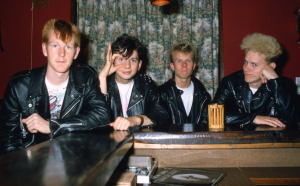
Depeche Mode started wearing leather jackets
Boom…fourteen studio albums and worldwide success
WHo the heck are these people?
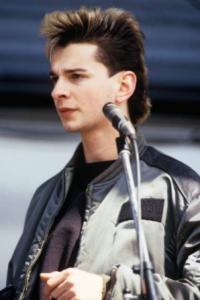
Dave Gahan
The man, the myth, the legend…lead singer of Depeche! (also, “the attitude”)
Martin L. Gore
A literal icon…synth and guitar player…vocalist (and “the brains” behind Depeche’s lyrics)!:
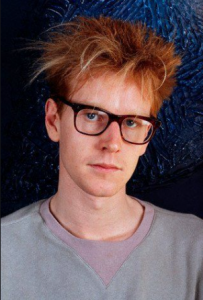
Alan Wilder
Synth legend and extraordinaire…occasional drummer (“the genius” and “the secret mastermind” behind the majority of DM hits)!:
Andrew Fletcher
…he plays the synth pretty darn well, is a tall English lad, and can be mistaken as DM’s accountant (“the consistency”)!:
*note: everyone in Depeche kind of does their own thing—from playing tambourine to shopping cart sides—so take these roles with a grain of salt*
…Depeche Mode!
They have gone through so many stages as a band; it is absolutely wild.
Stage One: Vince Clarke era
album one released in 1981: Speak and Spell
I bet $100 that the band can not recall this era without cringing
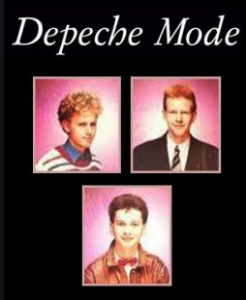
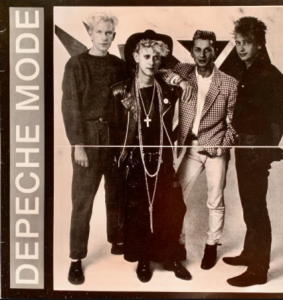
They look so uncomfortable—to the point I must laugh. Vince is the scraggly lad that is slightly separate from the others, almost appearing edited in.
The only Depeche Mode music video Vince Clarke made an appearance in despite forming the band:
The first time I saw this, I was taken aback. Although this is a fun, bubble-gum synth pop performance that fits the song, it is obvious that they are trying too hard.
Surprise…Vince Clarke leaves the band…something to do with finding the interviews and prospect of touring busy and annoying. Dave Gahan says Vince was actually bored and itching to seek out more successful projects.
Stage Two: Alan Wilder Joins
1981
The band put out an ad in a magazine asking for a new member under the age of twenty-one. After lying that he was not twenty-two, Alan Wilder aced the audition and joined the band.
A classically trained musician, Alan became the Music Director of the band and was responsible for its sound. (Bolded because this is an important note to pay attention to…)
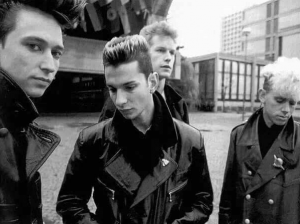
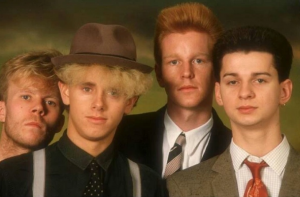
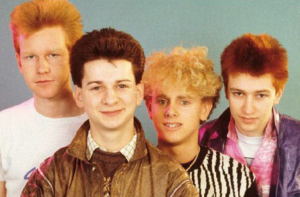
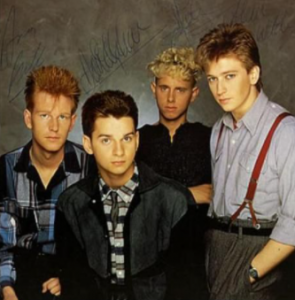
Okay, refresher: (from left-to-right) Andrew “Andy” Fletcher, Dave Gahan, Martin Gore, and…new addition Alan Wilder.
Look how young they were! It makes me laugh because, well, you will see how much they change.
But in my opinion, Alan Wilder fits the band a hundred times better than Vince. This is a rock solid four—they all compliment each other.
One of the first Depeche Mode videos I watched (surprisingly, I viewed this live version of “Just Can’t Get Enough” before the official music video):
I can never watch this without smiling. Although Vince—who was the major songwriter—is not present, this version to me feels more authentic and better fits the song. And it is live! I love Depeche Mode because they are natural performers. This is super light-hearted and infectiously giddy. Andy’s awkward foot-dancing? Yes. Dave’s youthful dancing? Yes. Alan’s fun swagger? Yes. Martin’s good-humored smirk? Yes.
To me, this video represents the new Depeche Mode. And they were not trying to be anyone but a couple of young guys playing synths and enjoying themselves. To me, this is how the band truly began.
Stage Three: Leather Jackets? Yes.
1984
Occurred after the suit-and-tie phase of the following albums: A Broken Frame (1982) (included hits such as “Leave in Silence” and “See You”) and Construction Time Again (1983) (included hits such as “Everything Counts” and “Love, in Itself”)
The albums of this era include the following: Some Great Reward (1984) (“People Are People” and “Blasphemous Rumours”), Black Celebration (1986) (“Black Celebration” and “A Question of Time”), Music for the Masses (1987) (“Never Let Me Down Again” and “Strangelove”), and of course…Violator (1990) (“Enjoy the Silence” and “Personal Jesus”).
The “Golden Era” of Depeche Mode!
This era is my personal favorite. I can not possibly express how much I love every album, every individual detail that amounts to the overall aesthetic. It is literally perfect.
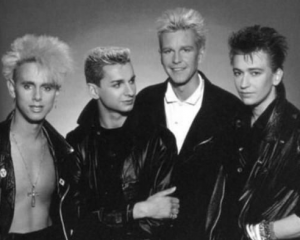
So, what happened to the bow-tie-wearing, basically British boy band from before? Well…Vince Clarke founded Depeche Mode in two instances: the moment he created it and the moment he left.
Depeche started with Vince and Andy playing guitars inspired by the Cure’s 1979 album Three Imaginary Boys. And they only fell in love with synthesizers because of Andy’s friend Martin, who owned a synth cheaper than a guitar amp. Vince was a founding member. He brought the band together, and they played for years in random locations—sporting the name Depeche Mode, something Dave Gahan had spotted in a clothing magazine during his time studying fashion in college. Depeche’s 1981 album Speak and Spell is irreplaceable, fun, and genius. “New Life” is a stellar opening number filled with bubbly sequencers and early 80’s synth pop fun. I love “Just Can’t Get Enough” so much that I learned the riff on my own synthesizer. But Speak and Spell was Vince Clarke.
Vince was the main producer, the leader. He wrote the lyrics, the music—everything. And if he would have continued with Depeche Mode, the band as we knew it would not have existed…no “Personal Jesus”, “Strangelove”, “People Are People”…nothing. And I feel like Vince would have left anyway. He was not destined to carry on with the guys from Basildon; therefore, I feel he saved Depeche by leaving, in a way. And he produced some memorable hits with Yaz and formed Erasure, a perfect musical duo that has lasted for years. By leaving, Vince created Depeche Mode as we knew it. Thanks, Vince Clarke!
When Vince left, Martin took up songwriting and Alan joined. And Depeche flourished.
In 1984, three years and two albums after Vince departed, the band released an album entitled Some Great Reward. In my opinion, with this album, Depeche Mode truly grew into the icons that they are. Alan introduced EM-U Emulators I and II. And with these legendary synthesizers, Depeche Mode began sampling sounds like scissors snipping and pots clattering down stairs. Some Great Reward was unlike anything music had seen before. The music is heavy, industrial, metallic. It carries the sound of traditional synth pop presets but blended unrecognizably. It is incredibly rich in texture, tone. And Dave’s voice adds a smooth touch to all the grating metal sound effects. Somehow, the band managed to create something so heavy and steely but packed with such emotion.
For example, here is a track from Some Great Reward. I first encountered “Blasphemous Rumours” on the radio while driving sometime at night. I had never heard anything quite like it before; it was extraordinary. Side note, I had never sat through the entire music video before, so I only now noticed the Yamaha DX7 (?) synth Martin is playing! That is one of the most legendary 80’s synths of all time. Also, I am not going to comment how much Dave looks like Morrissey…
Speak and Spell was fun and bright-sounding but consciously Vince Clarke. Written mainly by Vince, A Broken Frame still carried the same early synth pop melodies. Construction Time Again introduced a more industrial edge. And with Some Great Reward, every trace of Vince Clarke’s electronic optimism had vanished. The band was changing—adopting a darker appearance and focusing heavily on life’s substance. And with their 1986 album Black Celebration, their transition from posh school boys to pensive stars in leather jackets was final.
In my opinion, Black Celebration was Depeche Mode’s first rock-solid, awe-inspiring album. Every song is an individual, but their flow altogether is immaculate. Everything is intentional and ingenious. And the first track, “Black Celebration” is one of the most captivating opening numbers of all time. I can only compare its dynamic, darkly mystifying beginning to the ethereal “Plainsong”, a track that introduces the Cure’s Disintegration. Not only is the song cinematic, but the beat is incredibly catchy and rich variety.
In 1987, Depeche Mode’s six album, Music for the Masses, was released…and what has to be one of my favorite Depeche Mode eras. The album begins with the sonic “Never Let Me Down Again”—a literal masterpiece meant for stadiums packed with thousands. This epic opening of impressive sound leads into an album showcasing the band’s versatility. From the techno ballad “The Things You Said” to the heavy, drum-filled “To Have and to Hold”, Music for the Masses truly displays the sheer ingenuity of the band. My favorite Depeche Mode song ever, “Strangelove”, is featured on this album!
I recently learned the catchy synth riff on my synthesizer, and it is so addictive to play! I love the groove of this song; it is so unique and dance-worthy. I also love the Music for the Masses era because of 101, Depeche’s live album recorded in the Rose Bowl. I personally believe it is one of most stellar live performances of all time. Here is a video of the legendary concert. At 45:44, the band closes with “Never Let Me Down Again”.
Then, in 1990, Depeche Mode dropped one of the most memorable albums of all time: Violator. In a way, this album feels like a second part to Music for the Masses. The band’s most acclaimed songs—”Enjoy the Silence” and “Personal Jesus” are found on this album. I personally view Violator as the peak of Depeche Mode. The dark, sophisticated allure they had been building since 1984 had risen to its highest, most profound degree. This was Depeche Mode in all of its synth-driven, dark wave glory. Although their next album was a massive success, to me Violator will always be Depeche’s magnum opus.
May I present to you “Enjoy the Silence”! Perhaps the band’s most popular piece, this was once a typical ballad written by Martin. But Alan suggested a more electronic, fast tempo approach usually found in dance music (side note: that is Alan at 2:06 playing the synthesizer). Thank you, Alan Wilder, because this song is not only unique but a smashing success! I also learned it on my synth, and it is absolutely beautiful!
So this is Depeche Mode
This is only part of Depeche’s journey as a band. But these were my favorite years: the awkwardness of finding fame at a young age and losing their frontman, the shift between bow ties and leather jackets, the manifestation of a sound unlike any other. This group of four—Dave Gahan, Martin L. Gore, Andy Fletcher, and Alan Wilder—were unstoppable. But dark days lay ahead. Everything changed after Violator.
I have always loved Depeche Mode. But recently, I have sort of fallen in love with the band. They are beyond talented, and it is no surprise that their fans are known as Devotees (after their upcoming album Songs of Faith and Devotion and its Devotional tour). There is no mistaking the soul connection fans have to the band. And I realized this after stumbling upon a documentary entitled Our Hobby is Depeche Mode. Suddenly, my interest in Depeche Mode was rekindled. This blog, and what is to come, is all a result of that documentary; this is my interpretation, my analysis, my perspective.
Stay tuned for more! This is part one of a series based upon the documentary. In this blog, I broke down some of the band’s background. In part two, I will analyze the documentary’s contents in-depth and ponder the reason behind Depeche’s influence. And in part three I will ask, who exactly is Depeche Mode?
Welcome to my blog…where I often overstay my welcome writing music reviews. In this blog post, I will dissect a handful of songs I tend to obsess over. Enjoy!
“Just Like Heaven” – The Cure
Note: the sound quality is slightly diminished in this video, but everyone likes a music video, right? Enjoy these strangely brilliant people with their funky hair.
Initial Impressions
In May of 1987, the Cure released a studio album titled Kiss Me, Kiss Me, Kiss Me. Although this album boasted memorable, catchy hits such as “Why Can’t I Be You”, the eighth track—”Just Like Heaven”—became a smashing success and a Cure classic…and my favorite song by the Cure, ever. Now, I listen to a lot of the Cure. I love Faith with its ethereal, gloomy works such as “The Funeral Party” and “All Cats Are Grey”. I wrote a three-part blog analyzing all of Disintegration. And I am no stranger to a few underrated B-sides: “To the Sky”, “Halo”, and “This Twilight Garden” to name a few. But my favorite Cure song of all time is perhaps one of their most popular pieces.
Why? Well, it feels me with such indescribable joy. When the drums first kick in, I immediately want to get up and dance. And not to mention “Just Like Heaven” is a pop masterpiece written by anti-pop Robert Smith who loves to sporadically confuse critiques and fans; although the Cure is associated with eighties’ gothic culture, the band will write a lovesick, perfect pop song for kicks. But, yes, this a layered masterpiece that makes my heart spill! The song begins with a catchy drum beat and bass, then a low guitar and another low guitar, and then…an absolutely iconic synth riff…before one of the most delectable electric guitars still the spotlight. And Robert Smith’s voice is as smooth as raspberry sorbet and twice as sweet.
Overall, I can never be mad whilst listening to “Just Like Heaven”. It is one of the impeccable songs in existence, and I can not help but smile and dance a little, feeling energetic. It is definitely one of my comfort songs. I absolutely can not get over the electric guitar and synth riff. This song, to me, is like the auditory equivalent of watching a sunrise, eating an orange, or smelling tangy sherbet. Ah!
Lyrics
“Just Like Heaven”
“Show me, show me, show me how you do that trick The one that makes me scream,” she said “The one that makes me laugh,” she said And threw her arms around my neck “Show me how you do it, And I promise you, I promise that I’ll run away with you, I’ll run away with you.”
Spinning on that dizzy edge I kissed her face and kissed her head And dreamed of all the different ways I had to make her glow “Why are you so far away?” she said, “Why won’t you ever know That I’m in love with you, That I’m in love with you.”
You Soft and only You Lost and lonely You Strange as angels Dancing in the deepest oceans Twisting in the water You’re just like a dream You’re just like a dream
Daylight licked me into shape I must have been asleep for days And moving lips to breathe her name I opened up my eyes And found myself alone alone Alone above a raging sea That stole the only girl I loved And drowned her deep inside of me
You Soft and only You Lost and lonely You Just like heaven
This song’s lyrics are utterly delectable. Robert’s Smith’s words are as sugary sweet as strawberry cheesecake. “Just Like Heaven” is one of the Cure’s upbeat love songs, and although it is quite simple—lacking any ulterior motive or dense metaphor—it is literal perfection.
Robert’s voice is impeccable, his tone changing to match each word intuitively. And listeners are immediately hooked after “show me, show me, show me…” Not only is the first stanza eye-catching, as it is quite dialogue-driven and fun, but the entire plot of “Just Like Heaven” is as immersive at is catchy. With lines such as “spinning on that dizzy edge” and “dancing in the deepest oceans, twisting in the water” Smith evokes this lovesick, giddy feeling in listeners.
But the lyrics take a mysterious and slightly ominous turn. The protagonist in the song wakes up alone on a cliff by the sea: “…alone above a raging sea that stole the only girl I loved and drowned her deep inside of me.” I am infatuated with this line and its strange, significant meaning. What does it mean to have someone drowned deep inside of you? Suddenly, the story of “Just Like Heaven” has taken upon itself a negative connotation, but it is not necessarily sinister. This sudden shift is nearly imperceptible, as the musical tone appears unchanged. But “Just Like Heaven” is no ordinary love song despite its seemingly simple make up.
Overall, I absolutely love the lyrics. With lines such as “daylight licked me into shape” and “you’re just like a dream” and “I’ll run away with you”, Smith makes me want to write a strange love poem. I love everything about the lyrics: the word choice, hazy story, and myriad of feelings it sparks.
Overall
I feel so weightless listening to this; I want to spin in circles until my eyes swim with my surroundings and I am dizzy. I love the punching drums joined by the grounding, groovy bass. I love the piano trills, grand synth chords, and, above all else, that iconic electric guitar. And Smith’s voice is so fitting, so immaculate. Therefore, I am wholly in love with this ethereal piece, “Just Like Heaven”, and the feeling remains long after all the instruments and lyrics end with Smith’s, “just like heaven.” I mean, comparing someone to heaven? Wow!
“Big Sleep” – Simple Minds
Note: Once again I am using a video of low quality. But this is such a captivating live performance! I wish I was there back in 1983, alas…Although the singer is not dancing crazily, his careful, fluid movement across the stage is memorable. And let us take a second to appreciate the synth player…he is all alone playing that same riff over and over while managing a wall of synthesizers.
Initial Impressions
In 1982, Simple Minds released New Gold Dream—arguably one of their best albums. Although I enjoy the majority of the album’s content, I was absolutely enamored by “Big Sleep” ever since it first met my ears. The methodical, repeating synth riff immediately arrested my attention, and my jaw dropped as the song progressed. “Big Sleep” is something to listen to with your eyes closed: your mind able to fully process the song and all of its fascinating pieces. This is a song to dance to in the rain, a song to walk with beneath the white winter sky, a song to listen to as you drive at night. It is absolutely hypnotic…everything about it: the poignant synth riff, the ti-ti-tipping drums, the whining guitar, the unfettered bass, and the smooth vocals. Ugh, what an epic song! I love “Big Sleep” with all of my heart, and I can listen to it on loop for hours. Every delicious piece of it is something to savor carefully and with your full attention. Oh, and yeah…I love this song so much that I learned the iconic synth riff.
Lyrics
“Big Sleep”
“So where did you go? Where do you go in the Big Sleep Going out in the Deep Sleep Is where you’re wandering now So where did you go When you’re in the Big Sleep Drifting in wildlife And still you’re wandering now
We were on the top and the world was spinning We were only young in the whirlpool of warning Communication lost in the thundering rain style A shelter from the storm in the early beginning Going out in the Big Sleep, out in the Big Sleep Could have been years, you know it could have been years Or only seconds ago
Big Sleep, Deep Sleep
Where are you now? Now that you’re up in Big Sleep Valuable friend They saw you leaving this way
We were on the top and the world was spinning We were only young in the whirlpool of warning Communication lost in the thundering rain style A shelter from the storm in the early beginning Where did you go? Immaculate friend For a lifetime I’m grateful And it’s only seconds away
Big Sleep, Deep Sleep
For evermore If only you could see me If only you could see me If only you could see Forever Coming home in the Big Sleep Coming home”
Wow. The lyrics are indecipherable to me, but I am definitely amazed by the meticulous and inventive wording. After reading through the song, my guess is that Big Sleep is a substitute phrase for the word death. This song reads a bit melancholic to me in various ways, so I have some belief in my guess.
After the subtle intro, Jim Kerr sings, “So where did you go?” And a burst of emotionally-charged sound follows. I adore the interesting inflection in his voice.
One of my absolute favorite parts is when Kerr sings, “We were on the top, and the world was spinning; we were only young in the whirlpool of warning.” The meaning alludes me, but I interpret this as a glimpse into memories of once lively moments. These couple of lines maintain the melancholic, hazy vibe of the song but contrast the uncertainty and loss of the Big Sleep with youthful, head-spinning triumph.
I am curious about the significance of time:
“could have been years, you know it could have been years…or only seconds ago”
“For a lifetime I’m grateful, and it’s only seconds away”
“for evermore…forever”
My crude analysis: If I settle upon my interpretation that “Big Sleep” is death, perhaps “could have been years” and “only seconds ago” mean you could die years later or only seconds ago. And perhaps Kerr hopes to live a proper lifetime, as death is only seconds away. And when a person dies, their presence becomes forever uncertain and intangible.
All in all, if I were to continue with this theme of death, I could say that Jim Kerr wrote “Big Sleep” after a death of a significant, “immaculate” friend. He is grieving and wondering of the this deceased person’s existence after death, asking, “so where did you go” and “where are you now”. He begins to reflect upon the futility of his own life and the fragility of existence. And he has potent nostalgia for younger, brighter days spent with the deceased person when death felt so far away—”we were only young in the whirlpool of warning.” And although Kerr wishes the person could only see him, he eventually views death as inevitable and makes peace with it at the end: “coming home in the Big Sleep, coming home.”
Overall
Every once in awhile, you stumble across a particular song that lifts you and assuages you like a melodious hug. For me, “Big Sleep” is one such song. Jim Kerr’s voice is hauntingly beautiful, his performance on stage hypnotic, his English accent on point, his lyrics a bit ominous in their mystery. I am in love with the groovy bass and infectiously rhythmic drums and bubbling, whining electric guitars. And I must revere the synth riff as legendary! It adds to hypnotic, thought-evoking nature of a song that is also simultaneously rich in movement. I can listen to “Big Sleep” over and over again and never grow numb to its awesome effect. Thank you, Simple Minds! This is my favorite song you sing…not “Don’t You (Forget About Me)”! This is an absolute masterpiece.
“Souvenir” – Orchestral Manoeuvres in the Dark
Note: What a beautiful three minutes…one of the most subtle yet artistic music videos I have ever encountered. Although it follows band member Andy McCluskey in a cherry red convertible, the scene is captured with reverent lens, every detail savored. I can not express how perfect this music video is; it has made a home within my heart, and I can feel the myriad of meaning behind each detail. Also, it works with the song so magically.
Initial Impressions
This song means so much to me. The intro is soft, comforting but ominous, and reminiscent of a hushed choir of voices. And the synthesizers are sweet and upbeat but filled with longing or loss. And Paul Humphreys’ voice is so light but heavily significant. “Souvenir” was a part of Orchestral Manoeuvres in the Dark’s 1981 album Architecture & Morality. Its early new wave sound is evident, and I am such a fan! I love OMD because of their fantastic usage of synthesizers and drum machines. In some lights, “Souvenir” can be viewed as an imperfect pop song—short, simple, and catchy…but not as catchy as “If You Leave”, the band’s smashing hit song. But in another light, this track is three minutes of sound to dream to, to discover one’s self. It is a reflective piece revealing OMD’s masterful methods of blending sounds, textures, and moods without revealing anything. the subtlety in “Souvenir” is staggering.
Lyrics
“Souvenir”
“It’s my direction, it’s my proposal It’s so hard it’s leading me astray My obsession, it’s my creation You’ll understand it’s not important now
All I need is co-ordination I can’t imagine my destination My intention ask my opinion But no excuse, my feelings still remain
My feelings still remain”
How amazingly vague are these lyrics? They can mean a number of things, and I am quite curious to know the original intent behind them. But I am confident enough to say the lyrics center around obsession. Perhaps this is a quiet voice in an argument. Perhaps it is a private realization. And perhaps the songwriter is professing their love for fast food tacos. Whatever the underlying meaning, “Souvenir” is a masterpiece of subtlety.
Although the lyrics could be discussing a person’s obsession with said fast food tacos, I can easily imagine “Souvenir” being a carefully guarded profession of love. The speaker in this song has developed significant feelings for someone they probably should not have, for the speaker fears this love will be unrequited. Maybe my interpretation is a stretch, but a few other OMD songs have similar themes: “Secret”, for instance, is an admittance of adoration. And some of the lyrics In “Souvenir” support my interpretation as well. The speaker is admitting their feelings because it is becoming an obsession, their direction; it is leading them astray from their preconceived path in life. And the speaker is conflicted because they feel it is solely their creation and their proposal. And although this obsession has become the speaker’s direction in life, they can not possibly imagine their destination. Not completely understanding the intention behind their feelings, they cover it up and deem it unimportant. But their feelings still remain, and all they want, all they need, is reciprocation.
That was a lengthy analysis! But I love it because I gathered all of that from a few vague lines. Again, “Souvenir” could have been written about a concerning love for fast food, but I love the drama of this interpretation. Speaking of, what is the meaning of the title? Anyway, I love these lyrics.
Overall
This song instills so much peace within me. It calms me down, enables me to breathe. And I love to walk with it playing in my earbuds, for it is so deliciously atmospheric. OMD is definitely one of my favorite underrated bands. The melodic synth riffs in this are absolutely stellar, but OMD, of course, is a legendary synth band. I greatly appreciate the balance in this song of soft, whispering voices and bouncy, optimistic keys. Paul’s voice is so ethereal—as is the song itself. “Souvenir” is something to listen to while cloud-watching or writing stressful essays late at night. Thank you, OMD, for creating something so comforting. It perfectly matches a mood I feel sometimes, one I can only describe as taking in a magnificent sky with watering eyes. I love it!
Peace Out
Thanks for reading, and I hope you have a great day! Tune in later for more music content. (:
Now, this will be a literary review, but not exactly like something I’ve done before. Usually, I like to do my reviews on genres within the creative writing world (i.e. short stories, flash fiction, poetry, etc.), but this time I’ve stepped into the world of reading research articles. Yes, it sounds boring, but this particular journal article piqued my interest so much, I simply have to do a review on it. This will be more along the lines of me dissecting the information presented in this particular article that I read, but still a review of the writing style of this piece of writing.
Given the assignment in my new psychology class, we had the opportunity to look through journal articles on things we found interesting in our lesson. Starting with an interest in counseling psychology and all the things related to the specific practice, I looked through maybe 30 journal articles, but to no avail, none that I looked at held any real interesting information. In another attempt, I went for journal articles concerning developmental psychology. This is where I stumbled across this particular article highlighting a psychological study on household chaos. Written by Jennifer A. Emond, this article, entitled, Household chaos: a risk factor for adverse child outcomes gains attention in public health, highlights important information found in a study on the influences that household chaos can have on the development of a child and their physical health as they grow into adolescence. The question must stand, what is household chaos? As the article defined it, it is “characterized by high levels of confusion, disorganization and hurriedness in the home.” This alone had me hooked on the article. Never in my life have I thought of household chaos being a problem. Though my home life is less chaotic now that all the birds have left the nest, as a young child I often remember moments of pure chaos in my house. It definitely makes me wonder if I have been affected by said chaos.
The article goes on to explain the influences that household chaos can take on behavioral, attention, and learning problems in children. The writer utilizes the information in a very effective way to downsize the scientific jargon that was surely present in the original study. The writer provides a clear, structured article that is very easy to follow and uses words that cater to the less informed on the scientific terms and scientific data used regularly in articles like this. I particularly enjoyed this “layman’s” explanation as I am only into my fifth class of psychology.
The overall article was very well written and definitely gives me insight on research and technical writing, a different side of the literary world that I am not so used to seeing…
But to go into my dissecting process, I would love to share that the article highlighted the correlation between household chaos and sleep. Now, I can’t say that my own experience with household chaos directly influences my terrible sleep schedule, but I can come to the conclusion that there might be some connection between the two. I can’t for the life of me tell you how a psychologist might have even considered that your sleeping behaviors could be a result of high levels of household chaos, but they have. This is what further deepens my growing love for psychology; it is literally everywhere! There is a psychology to everything we know. There is a psychology behind sleeping behaviors, communicative disorders, and even the way we walk!
I won’t go on much more considering I’ll probably just keep on talking about the many wonders of the science of psychology and how I am always in awe of the information that comes about from it. Unfortunately, the article was subjected to being in a library with limited access meaning I can’t share it with you all, but I encourage you to look more into this phenomenon and see what other information you can find! Psychology is slowly making its way into my curious heart and I am so excited to see what else I can learn.
Growing up in a rather judgmental community, I heard a common phrase that as the older I got, the more repulsive it became. It would come up in the discussion of how we should strive to be in our life and in this discussion, people would share examples of others who “weren’t living righteously”. The examples would usually consist of the smaller and more relatable things such as people who cuss or vape. It’s the phrase “they’re such an awful person”, or, “I don’t like them; they’re a bad person.” First of all, this says a lot about your character if you base someone off of a life choice they make that you disagree with. Second of all, who are you to give anyone the title of being a “bad person”?
The stereotyping of a group of people is something I’ve never been able to do as I’ve been stereotyped against my whole life and will never bring that upon anyone else. It’s the same as being called something you’re not simply because you are misunderstood. You can’t blame people for misunderstanding if they have never been taught, but the best thing you can do is teach them in that moment as to allow them a better understanding.
Every time I hear someone say they don’t like someone because of a life choice they make, I question their thinking process with, “why should that have anything to do with who that person is?” I don’t understand how it can be so hard for people to dissociate others from their sins. They see them do something they don’t agree with and somehow think “Oh they’re a bad person.” But people are not their mistakes or their habits.
Especially recently, I try to focus on the good in people. It is hard for me to think someone is a bad person based off of a life decision that they’ve made or continue to make. I’ve come to notice that everyone has redeeming qualities in them that make them beautiful in their own way. It’s easy to look at the world as an awful place– it can be. But I try to look at it optimistically because I’ve seen how wonderful it can be.
In one of my favorite films, The Dark Knight, the morality and goodness of people is tested and studied by the greatest villain of all time, the Joker. In every one of his experiments, people turned against one another and killed each other over decisions they felt like they had to make. This supported his theory that he was trying to prove– that all people are bad and will choose evil given the right circumstance and if the right amount of pressure is applied.
However, there is a scene where people are trying to leave the city due to the chaos in Gotham, on two separate boats; one with the prisoners, and one with the citizens. A bomb was planted in each boat and a remote to set off the other boat’s bomb was placed on a wall. In order for one of these groups of people to survive, they must kill the other group. If neither of them actives the other ship’s bomb, they both die.
Now. I know this is dark- but it’s run off of the Joker’s thought process. He expects either the citizens to blow up the prisoners ship because prisoners don’t deserve to live over them- or he expects the prisoners to kill the citizens because they have no morals. Consequently, both groups of people die with this logic.
But as it turns out, The Joker was wrong. Even though the situation given was crucial, neither of the groups could kill each other. In fact, one of the prisoners took the remote and everyone around him suspected he would blow up the citizens ship, but instead, he threw the remote out the window.
With the comprehension that the prisoners wouldn’t kill the citizens, the citizens couldn’t kill the prisoners either. To Joker’s surprise, both groups were willing to die rather than killing one another.
This is my favorite scene in the movie because it is the first time that the groups find their humanity and value other lives other their own. Through this scene, we find that everyone has good in them– whether they be a prisoner or a law-abiding citizen.
This is not to say that you should always let the good overshadow the bad, but at least try not to let the bad overshadow the good– because if everyone has good in them, then they are human just like you.
Now for the closing: The question in the title asks if bad people really exist. First of all, you have to realize the difference between diseased mind and an evil mind. Also, the situation in which the sin committed should always be considered as should the question of “Are they a bad person? Or was the situation which they were placed in bad?” Anyways, to put it plainly: there are most definitely bad people in the world. But I know for a fact that there are more good people than there are bad, and with that in mind, it is up to you to decide if someone is bad or not. But keep in mind: don’t let one bad thing about them distract you from seeing them as a person that has good.
Thank you for reading:) I hoped you enjoyed this post and I hope you have a wonderful month.
Recently, I stumbled upon an article bywriterspractice.com. The article is about writer’s burnout: what it is, how it happens, and how to overcome it. Before reading this article, I had never heard of writer’s burnout, but it 100% described what I am going through. The article describes it as “looking at the page, hating the page, and questioning your entire identity as a writer, all for an extended period of time” which puts exactly how I’ve been feeling into words. Honestly, writing in general has been difficult for me lately, and I have been rethinking my entire life because I feel so lost and confused. The steps the article lists to overcome writer’s burnout really helped, and they are as follows:
Recognize the Problem
“You can’t move on without first recognizing that maybe something is wrong. Have you ever thought, ‘I just have nothing to say, no words to write.I don’t care about writing anymore. I have no new creative ideas. I never want to write again.’If so, you might be going through a writer’s burnout.” In the process of NaNoWriMo, I felt like a failure. Every day, I’d wake up, pull out my laptop, and swear I was going to make progress. Instead, I stared at that stupid, blinking bar for hours on end, before finally closing my laptop to hide under my mountain of blankets, as if hiding would make the shame and disappointment disappear. As someone who is somewhat of a perfectionist and planner, I try to be in complete control of all things in my life, but with this project, I felt totally out of my element. I’m not a novelist, and I never claimed to be, but maybe that was the problem. I think I went into this assignment with the wrong mindset. I went in not believing in myself, and I think I set my own self up for failure.
Don’t Stop Writing
“Write through the toil. It’s the only way to get to the other side.” I did it; I stopped writing. I gave in to the burn out and fear of imperfection, and that was my second mistake. I get so caught up in wanting everything I put my name on to be the best that I forget how to just write. It’s so tiring trying to be perfect all the time, but I feel so much pressure to do so. I often say, “If it’s not the best or it’s not perfect, why even do it?” I have slowly come to the realization that that isn’t the best mentality to have, but I’ve had that mindset for so long that I just don’t know how to break it. I should’ve pressed on. I should’ve followed through with my daily goals instead of simply avoiding them in fear not being good enough. Sometimes, I think, you just have to do the things you dread in order to become stronger and better.
Find Yourself (again)
“When you’re feeling lost in your writing, try taking a moment to remember who you are as a writer, and more importantly why you write. Remember your audience, your message, and most importantly, your voice.” As much as I hate to admit this, I have lost myself as a writer. I can’t even remember why I started writing or why I love(d) it. Last year, I had so much passion and drive for writing and for literary, but now, everything seems so bleak. I don’t know what it is, but I can’t seem to find that spark that I once had. I’ve lost my voice, and I don’t know how to get it back, but I fear I’ve lost it forever, which breaks my heart.
Don’t Try to Explain Yourself
“It’s a complicated and messy thing to try to explain why you set aside your most important projects. At first, even you might not know exactly why you had to switch gears, and that’s okay.” I struggled with this a lot during NaNoWriMo. During the break, for my story, I talked to women, including my own mother, about their struggles with infertility and pregnancy loss. I heard some of the most moving, emotional, and inspiring stories. I thought that because I had taken the initiative to get these real-life stories that I’d be more enthused to write this story, but instead I felt inept. I couldn’t figure out how to translate such important, powerful stories into my own writing, so I didn’t. I worked on other things, so I could say I had a productive day, but when my fellow writers were sharing their daily goal accomplishments, I was shoving my head deeper into my sheets. I felt embarrassed to tell them that I hadn’t made much progress in my story, so I countered it with the fact that I’d been working and that my home life is crazy, which isn’t false, but I felt the need to explain. I felt like I’d let them down, but really, I had let myself down.
NaNoWriMo is not for the weak, and for most of the month, I considered myself weak, and even writing this feels like a cop-out. However, in writing and reflecting on the month, I realize that while writer’s burnout is a thing, and I have definitely been experiencing the struggles of it, I am not defined by a word count or an assignment. My self-worth should not be determined by whether or not I adequately completed something, and I should stop holding myself to these impossible standards. I’ve always wanted to be a writer, and I am. To be a writer, means to write, so I’m gonna do just that. I’m gonna write every day, and I won’t worry about meeting a word count or completing an assignment that I don’t care about. I’m just going to write simply because it makes me feel good, and maybe, in that. I will overcome this writer’s burnout, and find my voice again.
Nikki Giovanni needs no introduction from me I am sure. To say she is only a poet will be doing her an injustice. To quote a recent article from New York Times, “Giovanni emerged as a writer in the late 1960s during the Black Arts Movement, alongside her fellow poets Amiri Baraka and Sonia Sanchez. In one of Giovanni’s early poems, “Reflections on April 4, 1968,” marking the day Martin Luther King Jr. was assassinated, she wrote: “What can I, a poor Black woman, do to destroy america? This / is a question, with appropriate variations, being asked in every / Black heart.” Nikki Giovanni, Finding the Song in the Darkest Days
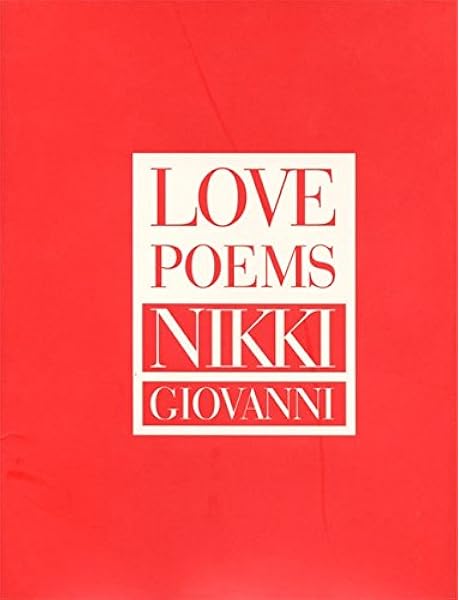
I recently read her poetry book, Love Poems and I can honestly say I LOVED IT. From the very first poem, “What It is” I was captured through her words and technique. Every stanza and line break was placed purposefully. My favorite poem will have to be “Balances”.
In life one is always balancing
like we juggle our mothers against our fathers
or one teacher against another (only to balance our grade average)
3 grains of salt to one ounce truth
our sweet black essence or the funky honkies down the street
and lately i’ve begun wondering if you’re trying to tell me something
we used to talk all night and do things alone together
and i’ve begun
(as a reaction to a feeling) to balance the pleasure of loneliness against the pain of loving you
After reading this poem I was filled with so much understanding about myself and the way I love. The ending lines, “and i’ve begun /(as a reaction to a feeling”)/ to balance/ the pleasure of loneliness/ against the pain/ of loving you.” Hit me so hard because I am learning the lesson of self- worth and temporary affection. I know my worth and I am very selfish with who I dedicate my energy towards. On the other hand, I am a Leo and I shamefully love romantic attention lol. Those ending lines made feel like I will get through this phase in my life and I will love again. The power Nikki Giovanni holds in her words!
In Love Poems, Giovanni explores the connection between all types of love not just romantically. My favorite platonic love poem is “A Poem of Friendship”
We are not lovers because of the love we make but the love we have
We are not friends because of the laughs we spend but the tears we save
I don’t want to be near you for the thoughts we share but the words we never have to speak
I will never miss you because of what we do but what we are together
Nikki Giovanni writes how she speaks: softly yet powerful. I deeply enjoyed the experience reading Love Poems. It was the delight at the ending of my day. It truly made me look forward to new loves in my life, platonically and romantically. As a new generation writer, I am influenced by Nikki Giovanni’s writing style. I could only wish I can reach a bit of the impact she has on society.
For this month’s review, I will be rating songs from Mary Lambert’s self-produced album, Grief Creature (2019). This album is filled with some weepy wonders, and as a sad song enthusiast, I couldn’t have been more excited when this album released. Lambert describes it as her “life’s work, masterpiece, a break-up album to shame, an ode to mental illness, and a love letter to hope”.
Fine/Finally- 7/10
This song is short but powerful. The soft piano paired with Lambert’s vocals is heaven. It’s not my favorite, in terms of songs, but the lyricism and instrumentality in this song is so beautiful, and it makes for a great intro for this album.
“I thought s**t, she looks happy for a girl who is drowning”
Shame- 9/10
This is one of my favorites from this album. It’s the break-up song to shame that Lambert describes, and it’s one of the best songs on the album, in my opinion. It’s a song that you listen to, and it’s sad, but it’s also incredibly empowering. There’s that dramatic, weepy melody, but those strong, uplifting lyrics, and it’s a song that just makes you feel like you are worthy despite the shame, despite everything.
“You can’t shame me if I’ve already done it myself You can’t drown me if I’ve already done it myself”
Me, Museum- 9/10
This is the first of the few spoken-word songs on this album. It’s Lambert’s poem, “The Art of Shame,” read by her and accompanied by her masterful pianism. It’s so powerful, and it’s one of those pieces that live rent-free in my brain.
“I took snapshots with my memory camera”
Sister- 8.5/10
I love this song purely for the vocals. Lambert really popped off with her runs in this song, and if you had asked me when this album was first released, I would’ve said this song was my favorite, 10/10, but I think I got burnt out on it. I mean, I listened to this song every day, on repeat for at least 2 months, so it still has a high regard in my book. However, it’s just not that 10 it used to be, and I’m a little bummed it’s not because of how much I used to love it.
“It’s not so bad when you’re laughing It’s not so bad when you’re smiling”
Born Sad- 8/10
This is the one upbeat song on this album, and it still talks about sadness, but I’m not mad at it. Lambert’s entire brand is built on writing and producing sad songs, so when she set out to make a sad, tear-filled album, I was a little surprised to even see this gem on the tracklist. Nonetheless, it’s about being sad and this noting o of being “born sad,” so it’s still very much on brand. It’s not my favorite song because it strays from Lambert’s melodious piano and orchestral sound, but it’s still a great song.
“Keeping my head above water Is all that I can do… Everybody wants to be happy, nobody knows how to do it”
Write You A Song- 9/10
This is another one of my faves. It’s very much a love song, and I am so here for it. Also, the vocals in this song are so good. Lambert, at one point, has some layered vocals, and it’s one of my favorite parts of the song. Overall, I love this song, but it’s not quite a 10. However, it is pretty close!
“I’ll write you a song I’ll write you a hundred”
Steady & Sure- 7/10
This song is great. It’s not one of my favorites, necessarily, but I still really enjoy it. Lambert has such a soft, profound voice that it makes it nearly impossible to dislike any of her music.
“Do you know how to hold my heart like a safe and a holy relic?”
Easy To Leave (feat. Maiah Manser)- 8/10
This song is one that really tugs on your heartstrings. It’s one of those sad songs that makes you want to cry no matter how you were feeling before listening to it. The repetition of “Am I easy to leave?” is what gets me everytime. Also, the pairing of Lambert and Manser’s vocals is phenomenal and just a great choice artistically.
“Will anybody stay a while? Will anybody stay for me?
Am I easy to leave?”
Knife- 10/10
This is the second spoken-word song on the album, and it’s next in line to my favorite song on this album. The poem is so incredibly powerful and moving. The emotion in this song can be felt so strongly, and it’s convicting. Then, towards the end of the song, Lambert strikes again with her poignant vocal stylings, and you can’t really help but melt. It’s just that type of song.
“This is what dying feels like What is means to knife and to be knifed by the one that you loved And to keep driving home”
House Of Mirrors (feat. Macklemore)- 9/10
This song isn’t as upbeat as “Born Sad,” but it still isn’t Lambert’s usual sound, making it one of my personal favorites. To be fair, most of the songs on this album, I consider a favorite of mine, but I quite enjoy the pop type sound coupled with Lambert’s moving lyrics. Macklemore’s verse in this song added to the pop sound of this song, but I think that’s what really made this song work.
“My brain is a house divided, rooms with too many doors”
Not Ready To Die Yet- 8/10
This song is so honest and vulnerable. I think that we’ve all been in this place where we’re just sort of stagnant, not moving forward, but we want to progress. That’s what this song is, it’s a poetic “f- you” to that feeling because it’s about overcoming that feeling, and forgiving yourself. It’s a song about choosing yourself, and it’s a song that never fails to resonate with me because I do still believe in hope.
“I’m not great at living, just surviving nightmares”
Climbing Out- 7/10
The beat in this song is interesting. It’s a song you can kind of just vibe to; it’s nice. It’s got the same pop- y feel to it as “House of Mirrors,” but also, very different. It’s not one of my go-to songs, but I still enjoy listening to it. It’s an uplifting song that encourages you to keep going and stop staying stagnant, so I especially appreciate the motivation in this song.
“Sadness is hardly an artform, but it does get better”
Feel With Me (feat. Hollis)- 8/10
This song is such a sensual song, and you can’t help but want to dance. The music just naturally sways your body, and it is just such a bop. This is the kind of song I play when I’ve had a long day, and I just want to feel— which is coincidentally what the song is titled. Hollis and Lambert really did the thing with this one.
“Find within all this space that you need to be free”
Trauma Is A Stalker- 10/10
This is a spoken-word piece, and it one of the most evocative pieces of music I have ever heard. The orchestral sound coupled with Lambert’s voice is so eloquent and passionate. I mean, I have never heard a violin played so beautifully. It’s like a literal slice of heaven, and then, you listen to the lyrics, and you just sort of feel gutted. Who does that?! Two words: Mary. Lambert. *mic drop*
“What if I told you trauma is a stalker? Follows me room to room, visits me at work, leaves dead animals on my day planner, texts me knives, licks my memory before I have a chance to get it right”
If You Ever Leave Somebody- 100/10
This is my FAVORITE song on this album. I don’t think I will ever get tired of hearing this song, like I love it so much. It is so emotional and evocative. I am always moved after hearing this song, and I listen to it at least 25 times a week. It’s one of those songs you just can’t but fall in love with— from the care Lambert took to composing the chords and the piano to the lyricism. She is my favorite poet, and she brings her poetic style into her songwriting, and it is pure bliss.
“If you ever leave somebody, pray to God you’re right, don’t leave in the night, cry like you mean it, don’t cry like a coward, don’t lie for hours, and say what it is”
Another Rape Poem (Sixteen)- 8/10
This song is another spoken-word piece. Similar to “Knife,” it has some gorgeous vocals in it. The song is actually called “Sixteen,” but the poem she is reading is “Another Rape Poem,” which is actually one of my favorite poems by her. The pairing of these two pieces with the fervent piano playing in the background is kind of ingenius. Lambert just has a way with words and sound, and she knows how to manipulate these two mediums in a way that they blend seamlessly and beautifully.
“There were three wolves in the bedroom who circled me without ever flashing their canines Isn’t rape funny like that? I have to speak in metaphor in order to get it out”
“Suddenly I was a prize in a building of a thousand men — drenched in America and sweat I’m not saying that the military raped me”
Bless This Hell (feat. Julien Baker)- 9.5/10
This last song is one of my go-to songs on the album. I just can’t get over how beautiful the piano sounds, and how soulful Lambert sounds while singing. This is also my favorite collaboration on this album, as well. Lambert and Baker make such a great duo, and I adore the layering of their voices in this song.
“You don’t belong here Get out of my head”
Overall, Grief Creature is just that— a creature of grief. It’s a sad album filled with sad songs, but if you’re a sappy, sad song enthusiast (like me), then this is an album I HIGHLY suggest you listen to— bring tissues.
Welcome to part three of my Disintegration analysis! In this post, I will be reviewing the final four songs of the album. I have enjoyed this journey thus far, as I revere the Cure as an insanely talented and groundbreaking band. Sit back, relax, and enjoy!
Track Nine: “The Same Deep Water as You”
Duration: 9:19
Initial Thoughts
…one of Disintegration‘s masterpieces. The melancholy contained in this piece paints Morrissey—of the Smiths—as an oblivious, happy-go-lucky guy. Although I can not deny the infectious drone of Morrissey’s voice—which is perfectly suited for melancholic songs about loneliness and despair—”The Same Deep Water as You” has a mature air of dreariness that is utterly incomparable. The song begins with the sound of falling rain, a crack of thunder preceding the eerie musical intro; the hypnotic light drums and somber strings luring listeners. And when the mysterious, entrancing synth adds a subtle but extravagant flair, Robert Smith’s voice joins in. The captivating vocals slip into the saturated setting with ease, and the overall effect is flavorful, dynamic. “The Same Deep Water as You” wraps listeners in an assuaging fog of sorrow, the vaporous guitars surprisingly groovy and the many textures rich in feeling and meditative thought.
Lyrics
“The Same Deep Water as You”
“Kiss me goodbye Pushing out before I sleep Can’t you see I try Swimming the same deep water as you is hard ‘The shallow drowned lose less than we’ You breathe The strangest twist upon your lips ‘And we shall be together… ‘
‘Kiss me goodbye Bow your head and join with me’ And face pushed deep Reflections meet The strangest twist upon your lips And disappear The ripples clear And laughing Break against your feet And laughing Break the mirror sweet ‘So we shall be together… ‘
‘Kiss me goodbye’ Pushing out before I sleep It’s lower now and slower now The strangest twist upon your lips But I don’t see And I don’t feel But tightly hold up silently My hands before my fading eyes And in my eyes Your smile The very last thing before I go…
I will kiss you I will kiss you I will kiss you forever on nights like this I will kiss you I will kiss you And we shall be together…”
Firstly, I would like to express my admiration for Robert Smith’s fantastic lyrics! Each song is a snippet of a journey—a moment—that is entrancing; the music ends, and you feel awoken from a strange dream that almost belongs to you. “The Same Deep Water as You” transports me, personally, to an ocean in the night. The water chills me to the bone, and everything lies deceiving still, filled with potential energy—disaster gathering its breath, preparing to strike. To conclude my contented poetry-obsessed heart, there is not a Cure song that fails to take me somewhere. Listening to this track, I almost want to shiver and pull a jacket tightly around me.
My interpretation of this piece exists in the following: It is dark, quiet, and chilly, and the narrator is with someone who wades too far into a body of water with substantial depth; the narrator has no choice but to chase after the person, out into the frightening depths of the freezing water. Now, this stands as my literal interpretation. As for a more figurative explanation, the narrator’s muse is pulling the narrator into something fearful and weighty. Although the narrator struggles to join their muse, they succumb by the end of the song.
Perhaps my literal and figurative interpretations can be applied simultaneously. Perhaps the narrator is pondering on the aforementioned dilemma while swimming with their muse. Below I have provided my reasons why:
In the first stanza, the narrator is at war with what the speaker wants, but the speaker is persistent and a bit daring.
“…Can’t you see I try Swimming the same deep water as you is hard ‘The shallow drowned lose less than we’ You breathe The strangest twist upon your lips ‘And we shall be together… ‘”
In the second stanza, I see the narrator diving into the black water after their muse. I am unsure about the use of “reflections”, but perhaps the narrator sees their muse’s face staring up at them—the narrator’s reflection of the surface colliding with this sight. But then the muse is gone, the water still—beckoning the narrator to “break the mirror” or disrupt the reflecting stillness of the water to join them.
“…Reflections meet The strangest twist upon your lips And disappear The ripples clear… …And laughing Break the mirror sweet ‘So we shall be together… ‘”
The third stanza is my absolute favorite. It realizes the narrator’s surrender to the water and the person persuading their descent. Robert Smith conveys this effortlessly—his voice at its most dramatic pitch in the song, his words seeming lost as he repeats, “the very last thing before I go.” In this one stanza, his fear gives way to something hazy and illogical.
“…It’s lower now and slower now The strangest twist upon your lips But I don’t see And I don’t feel But tightly hold up silently My hands before my fading eyes And in my eyes Your smile The very last thing before I go…”
To conclude my analysis, perhaps “The Same Deep Water as You” follows two people swimming beneath the stars in the black abyss of the ocean. Perhaps it follows someone’s surrender to something toxic they would rather avoid. Perhaps the narrator is talking to themselves or something. But who knows?
Overall
Writing this analysis, I have significantly more appreciation for this track. Following the falling rain that introduces this song, methodical but urgent drums are followed by a dreary bass and eerie synth. Periodical cracks of thunder pierce the ensemble of gloom, and Smith’s vocals—although a piece of this puzzle of sound—provides a plot. Overall, the guitars are rich and flavorful, the bass and tinny drums rhythmic as they are daunting, the synths perfectly matching Smith’s tortured voice. I feel cold and disturbed but assured by the delicious melancholy of this piece. And I love Robert Smith’s lyrics and the way his voice brings them into existence: he is not simply reciting them in a singing voice; he is living and breathing them. And the guitars! “The Same Deep Water as You” is a hidden gem deserving of occasional infatuation and excessive blog rambling.
Track Ten: “Disintegration”
Duration: 8:18
Initial Thoughts
Of guilt, apathy, and painful imperfection, “Disintegration” earns its name. The song begins with shattering glass, a bass with a sorrowful drone, and quick and heavy drums reminiscent of “One Hundred Years”, a Cure song from 1982. The repetition of the rhythm is purposeful, allowing listeners to slip into the churning blend of meditative guitars and drums and various, random bits of texture. For nearly two minutes, Robert Smith does not utter a word. But when he begins to sing, the lyrics flow in an almost cathartic way. The instrumental background established earlier perfectly highlights Robert’s dramatically changing pitch—the lyrics carry substantial weight and are given the spotlight they deserve. This song removes listeners from the wary, trepid voice of “The Same deep Water as You” to examine the despairing, guilty conscious of “Disintegration”‘s narrator. This piece clarifies the Cure’s ingenuity: although it is not my favorite track from the album, the shattering glass, Smith’s narrative voice, and the ensemble of instruments perfectly capture anguish and the process of disintegrating against one’s will.
Lyrics
“Disintegration”
“Oh I miss the kiss of treachery The shameless kiss of vanity The soft and the black and the velvety Up tight against the side of me And mouth and eyes and heart all bleed And run in thickening streams of greed As bit by bit it starts the need To just let go My party piece
Oh I miss the kiss of treachery The aching kiss before I feed The stench of a love for a younger meat And the sound that it makes When it cuts in deep The holding up on bended knees The addiction of duplicities As bit by bit it starts the need To just let go My party piece
But I never said I would stay to the end So I leave you with babies and hoping for frequency Screaming like this in the hope of the secrecy Screaming me over and over and over I leave you with photographs Pictures of trickery Stains on the carpet and Stains on the scenery Songs about happiness murmured in dreams When we both us knew How the ending would be…
So it’s all come back round to breaking apart again Breaking apart like I’m made up of glass again Making it up behind my back again Holding my breath for the fear of sleep again Holding it up behind my head again Cut in deep to the heart of the bone again Round and round and round And it’s coming apart again Over and over and over
Now that I know that I’m breaking to pieces I’ll pull out my heart And I’ll feed it to anyone Crying for sympathy Crocodiles cry for the love of the crowd And the three cheers from everyone Dropping through sky Through the glass of the roof Through the roof of your mouth Through the mouth of your eye Through the eye of the needle It’s easier for me to get closer to heaven Than ever feel whole again
I never said I would stay to the end I knew I would leave you with babies and everything Screaming like this in the hole of sincerity Screaming me over and over and over I leave you with photographs Pictures of trickery Stains on the carpet and Stains on the memory Songs about happiness murmured in dreams When we both of us knew How the end always is
How the end always is…”
Wow, that is a lot to unpack…After inspecting the lyrics—which are almost written as a stream of consciousness—Robert Smith’s singing style in “Disintegration” makes perfect sense. The words rush from Smith like a painful river of truth, but he ends his confession of a song on a relieved note. “Disintegration” deserves its name for its cathartic delivery; it embodies the album and summarizes the various themes in each track. Reality is confronting the narrator with everything it has, leaving nothing unnoticed or unfelt. I revere this track for the band’s immaculate portrayal of the act of, well, disintegration. Personally, I imagine the narrator trapped within an intangible whirlwind of all their fear and guilt. I imagine the narrator either engaged in an argument or alone in the dark or surrounded by tons of people oblivious to their suffering. Listeners have a crystal clear glimpse into this narrator’s perspective. From the overall sound and Smith’s lyrics, I feel trapped in a bleak reality I have created and can not seem to escape. I feel my lungs constrict and my head spin. Lights are blinding and streak across my vision, and I feel myself dissociating. Of course, this is all imagined—often, I listen to “Disintegration” while humming and thinking about my lunch—but I love how effective the Cure is at conveying moments!
Robert Smith’s voice, in the beginning, is as quiet and dreary as lilting bass. He seems to choose his words carefully despite beginning to break down his resistance. Then, as synth begins to accompany the musical ensemble, the flow of Smith’s words becomes more rapid and free. He retires his composed singing featured in the track before: “The Same Deep Water as You”. He surrenders a perfect pitch to adopt one of release and admittance, his voice almost breaking as if in an argument. And after the most impactful stanza, Smith repeats “how the end always is” until the instruments have a dramatic, resonating finale and the glass is swept up. Smith’s voice is drained but not defeated.
A Few of My Favorite Lyrics:
“And mouth and eyes and heart all bleed And run in thickening streams of greed”
“So it’s all come back round to breaking apart again Breaking apart like I’m made up of glass again Making it up behind my back again Holding my breath for the fear of sleep again”
“Now that I know that I’m breaking to pieces I’ll pull out my heart And I’ll feed it to anyone Crying for sympathy Crocodiles cry for the love of the crowd And the three cheers from everyone Dropping through sky”
Hm…”Crocodiles cry for the love of the crowd”? I love this! How intriguing…
Overall
Wow. I am definitely impressed. Once again, the Cure does not disappoint. I absolutely love the glass sound effects, whining guitar, synth (for dramatic emphasis), and the overall ability of this song to transport me to a foreign yet somehow familiar moment in time. Smith’s lyrics are brilliant, and the way he relays them is so emotional and effective. “Disintegration” is one of the most sincere songs I have ever encountered. This track benefits from high volumes…feel free to blast it while dancing at your desk at midnight while eating a bagel or crying on your cold, crumb-speckled floor.
Track Eleven: “Homesick”
Duration: 7:06.
Initial Thoughts
In all honesty, I do not love this track. I personally feel that “Homesick” is one of the weakest songs on Disintegration. However, the album hugely benefits from its presence, as it is the beginning of the end. It carries the same themes of “Disintegration” but with much more clarity, and it sets up the mood for the final track on the album. “Homesick”: emotionally drained, contemplative, but also in denial. It refuses to refute its wrongs or face reality; it is one last pinch of turpitude. After reflecting upon the songs overall sound, it begins quite assured in its melancholy. I may not treasure the song itself, but I definitely respect and appreciate. The layering is impeccable: the sincere piano meets the carefully plucked guitar and riveting drums and the sorrow violin—viola?—and then a more electric-sounding guitar. And finally, after some bass and a three minute intro, Smith begins to sing. The piano is jazzy, the guitars slightly “rockish”…exquisite overall sound and energy.
Lyrics
“Homesick”
“Hey hey! Just one more and I’ll walk away All the everything you win Turns to nothing today And I forget how to move When my mouth is this dry And my eyes are bursting hearts In a blood-stained sky Oh it was sweet It was wild And oh how we… I trembled Stuck in honey Honey Cling to me… So just one more Just one more go Inspire in me the desire in me To never go home
Oh just one more And I’ll walk away All the everything you win Turns to nothing today So just one more Just one more go Inspire in me the desire in me To never go home”
I am interested in the perspective Robert Smith wrote “Homesick” from. Despite the title, one line reads, “Inspire in me the desire to never go home.” First of all, I have never heard of anyone desiring to avoid one’s home…one usually desires to return home. Likewise, to state the obvious, why title this piece “Homesick”? Do the title and lyrics go hand-in-hand? Was the title a guilty afterthought? Why is the overall sound somber if the song is about wanting to never return home? Is there a touch of sarcasm, irony, or purposeful contradiction anywhere? “Homesick” is definitely a head-scratcher, but I feel that is what Robert Smith has intended.
Although the lyrics are brief and inspire me as much as “Last Dance”—a previous song on Disintegration—I do absolutely adore the line, “my eyes are bursting hearts in a blood-stained sky.” Ugh! So beautiful, am I right? I also love, “All the everything you win turns to nothing today.” Overall, this is a powerful, moving track that is delicious to my ears, but I have a difficult time personalizing the song’s meaning. What do you think? The light lyrics do not match the regretful sound and the title, and I believe this to be purposeful…how clever!
Overall
Sorry, Cure, but I doubt I have ever sought out “Homesick”…this is the most I have listened to the song on its own. Although “Homesick” does not possess the grand, bone-shattering glory of “Plainsong” nor the infectious “hit recipe” of “Pictures of You” and “Lovesong”, the album simply would not be the same without it. The track exists as a perfect segue from “Disintegration” into the final track of the album. It is also one of slowest, more methodical songs on the album. And it has a unique sound! I absolutely love the singing guitar in the beginning and then the addition of a more whiny guitar. And then…a smooth base line. “Homesick” is a musical dish of lasagna, consisting of layers upon layers. And how can I possibly criticize the raining melody of strings and intriguing drums and the most jazzy piano on the entire album. And Smith’s languid voice ties everything together like a bow on a present.
Track Twelve: Untitled
Duration: 6:30.
Initial Impressions
When I first listened to “Untitled”, I was unsure about the wheezy accordion(?)-filled first few seconds. But oh my goodness! This has got to be one of the best Cure songs, in my opinion. Why? The sound is air-tight in its stability and precision. “Untitled” is an impeccable end to Disintegration. The lyrics are absolutely stellar; Robert Smith’s voice reads so clearly and with appreciable sincerity. I absolutely love the confident drums matched perfectly with the churning bass, and I adore the singing guitar—it is more rich and tender than filet mignon! And I would have to say the same for Smith’s vocals. Also, before I summarize my impression, you got to love those cymbal crescendos, eh? Overall, this track has such a relaxing, light sound…the most fitting end to a masterpiece such as Disintegration!
Lyrics
“Hopelessly drift In the eyes of the ghost again Down on my knees And my hands in the air again Pushing my face in the memory of you again But I never know if it’s real Never know how I wanted to feel Never quite said what I wanted to say to you Never quite managed the words to explain to you Never quite knew how to make them believable And now the time has gone Another time undone Hopelessly fighting the devil Futility Feeling the monster Climb deeper inside of me Feeling him gnawing my heart away Hungrily I’ll never lose this pain Never dream of you again”
Surprise! The lyrics do not match the light beat at all. The Cure has mastered the art of contradiction to better the experience and/or meaning of a song. With “Untitled”, the rhythms are refreshing and sweet, but the lyrics sting. In my opinion, these lyrics are some of Robert Smith’s best work. All I can say is…ow.
“Hopelessly drift in the eyes of the ghost again; down on my knees, and my hands in the air again”…what an evocative entrance. This paints such a picture of bleak surrender and sorrow. Now, I could dissect this song in such a way line by line, but I will paraphrase for your sanity, hah! Smith goes on to say, “Pushing my face in the memory of you again.” Who is “you”? Anyway, he continues by admitting he has no idea what is real or how to feel. He feels as if he never said everything he hoped to. He realizes the time, the moment, has gone. He uses the word “hopelessly” again when describing a battle against futility, which he describes as being a devilish monster. The song ends as follows: “Feeling the monster climb deeper inside of me, feeling him gnawing my heart away, hungrily; I’ll never lose this pain, never dream of you again.”
Quite somber, am I right? Yes, the lyrics are quite the contrast to the relatively upbeat sound!
I absolutely love how Robert Smith ends Disintegration with these exact lyrics. It is no triumphant affair, nothing close to bombastic. His words are bleeding sincerity. And in a way, “Untitled” summarizes his whole attitude towards the album. The encompassing theme of Disintegration is futility and the battle against it. Is the album enough? Is Smith relaying everything inside of him, everything he intended to share? Does his career as an artist live up to his expectations? The whole inspiration behind Disintegration is Robert Smith dreading his thirtieth birthday because he does not feel accomplished enough. So he ends the album with all grand, explosive sounds peeled back. “Untitled” is stripped of anything that would diminish its core meaning and feel. This is the painful, hopeless reality of Disintegration.
Overall:
The rich blend of guitars at the end never fail to give me chills, as they are quite sensational. And the accordion picks up once again, but its meaning has changed…I end up appreciating it a bit more, for I see someone in a dimly lit corner playing it solemnly. As for the contradicting lyrics and sound, Smith’s lyrics are despairing, but he is somewhat content with it all. He is almost telling listeners, “Look, it’s not perfect, but who cares? Reality sucks, and I’m just an English guy wearing lipstick with hair full of hairspray.” One can easily feel the pain behind Smith’s words—to the point that the cheery sound tastes more bitter than sweet. Personally, I find this track immensely consoling. Often, we fail to express ourselves to the fullest; we constantly feel just shy of “enough” or right at it. But that’s okay.
After All of This, What Exactly is Disintegration?
For me, Disintegration is separated into three main segments:
“Plainsong”, “Pictures of You”, and “Closedown”:
The lyrics are all overwhelmed by time.
These three all have an explosive, ethereal sound.
All are a bit comfortable; these are the most stable songs on the album.
“Lovesong”, “Last Dance”, “Lullaby”, “Fascination Street”, and “Prayers for Rain”:
Although of various themes, moods, and meanings, these five characterize the album’s middle.
All of these songs are of a unique sound, purpose, and plot.
These songs share a similar tone, even if subtle.
“The Same Deep Water as You”, “Disintegration”, “Homesick”, “Untitled”:
Robert Smith’s lyrics become more convoluted and regretful and defenseless; his perspective almost does a 180°…these four songs feel so separate from segment one (how does “Pictures of You” belong to the same album as “Disintegration”?)
Overall, I love Disintegration with all of my heart. Although released in 1989, the album continues to have its hits blasted on accepting radio stations. Personally, every time I hear “Pictures of You” play on the radio, my heart almost bursts. The Cure has numerous albums that are absolutely stellar—such as the fun-filled, addictive Kiss Me, Kiss Me, Kiss Me (1987) and the ghastly, quiet pondering of Faith (1981). But with Disintegration, Robert Smith created one of the most “together” albums of all time. Despite its overall air of melancholy, it possesses songs for various moments in time, numerous emotions. No singular song diminishes the quality of the album. It is sincere, purposeful, and as original as any other Cure album. And the journey it contains is indescribable: while listening, I found myself standing on a windy cliff overlooking a dark ocean, dancing in a ballroom in the middle of winter, shivering in bed in confining darkness, swimming at night in a frighteningly deep body of water, in the middle of a dizzying breakdown, and in a lonely but comfortable corner. From the grand expanse of “Plainsong” to the small, pained content of “Untitled”, Disintegration holds so much. Often, I like to wrap myself in its songs like warm blankets in the wintertime.
I know the band will never see this, but I am eternally grateful for the Cure and albums such as Disintegration. Thank you.