Things I’ve learned in philosophy class

As an online dual enrollment student, I take plenty of classes that I don’t necessarily have an interest in. Honestly, taking these classes isn’t all bad because I also take classes that I do like and genuinely enjoy. But there’s always that one class that I can’t fathom, no matter how many placebos I’m juggling at the time. Although I expected intro to philosophy to be included in this bottomless pit of classes, it wasn’t. In fact, I learned the most in philosophy I’ve ever learned in another online course before. I took a genuine interest in the material and learned valuable things about life. This knowledge not only had an impact on how I viewed the world, but it put into perspective what I could do to change my own actions. In this blog, I’ll be talking about what I’ve learned in philosophy class and how it impacted my understanding of the world and myself.

The mind and body as two separate entities:

There’s a famous philosopher who specifically studied the correlation between the mind and the body. The body, in this philosopher’s brain, is an unthinking, machine operated being, and the brain is a non-extended thinking substance. Rather than seeing the mind and body as one whole that works together to carry out life tasks, he sees them as two separate entities that work closely together but have little in common. He backs his belief up with the fact that the body is divided into multiple parts, whereas the mind is only one whole and can think independently. Thinking about the mind and body in this way makes a lot of sense because I feel that my mind is vastly different from my body in every aspect. So, because we deal with two separate entities, it’s important that we care for them individually and through different methods.

                                                There’s a lot of power in reflection:

            For an assignment, we wrote about our feelings on Socrates quote, “The unexamined life is not worth living.” I remember reading this and thinking that the quote was a bit too serious. But the more I read and wrote about it, I realized that the unexamined life really is as bad as Socrates believes. An unexamined life refers to a person who acts constantly but never reflects on the consequences of his or her own actions. This might seem easy for people to comprehend, but it’s not hard to get trapped in a cycle of doing and never reflecting. Reflection is how we achieve knowledge that can help our specific circumstance, and I feel that I especially stray away from it because it’s hard for me to accept criticism. It’s a harsh truth, but reflecting can do more inner work than we think.

                                                            Act now, reflect later:

            This might contradict the paragraph above, but it’s just as important. I’ve heard a version of this advice in every school I’ve been to and I’m just now understanding how relevant it is to everyday life. My dance teacher used to tell us to say yes to everything and no to nothing when we are actively creating art. When we create art or make decisions, we often do so with a conscious, logical mind. Removing the inner critic that’s always within us can help us create better art, it can ease our minds, and it can prevent or limit the chances of thinking ourselves out of opportunities. This can be especially helpful for people who struggle with procrastination, as it encourages them to act rather than go through the process of convincing themselves. This advice isn’t always easy to follow, but it works as a reminder that simply acting on something is all it takes to get started.

My Fav Children’s Fiction Novels

One of my all-time favorite genres to read is mystery/children’s fiction. In grade school I was one of those kids who went crazy over I-ready points. I-ready was basically a platform where grade school children and teachers tracked how many points a child earned through reading.

 So, the more books you read, the more points you got, and I really wanted those points. So, I ended up reading a lot. Me and a friend of mine would recommend each other good books and series, and some of these books I still read today.

 The books I’ll be talking about in this blog have stuck with me since grade school and have influenced my life in so many ways. I really loved reading these books back then and I still love them now. So, I’ll be talking about a few of them here.

Freak the Mighty:

Freak the Mighty is written by Rodman Philbrick and it’s a story about a 13-year-old boy named Maxwell who has low self-esteem due to unresolved trauma involving his parents and because he genuinely thinks he isn’t smart in any way.

He lives with his grandparents, Grim and Gram, and sometimes he overhears them talking about his father, Kenny Kane or Killer Kane, who is in prison for murdering his mother, Annie.

Next door lives a boy named Freak who suffers from Morquio syndrome, a life shortening condition that affects the development of his bones and organs. This syndrome impairs his ability to walk, and to get around he must wear a set of crutches.

When Freak loses one of his many gadgets in a tree Maxwell swoops in and helps him, and this marks the start of their unlikely friendship. Together they become Freak the Mighty because of their obvious size difference and their ability to compensate for one another’s shortcoming.

This novel is very colorful, a little sad, and a whole lot of interesting. I always love reading this because the writing is so humorous. It’s the kind of story where the narrator is a little unreliable and it’s clear through the manner he tells the story.

I also love the trope of an unlikely friendship. I remember reading this back then and thinking that Maxwell and Freak could never become friends, but then they do and it’s heartwarming to see.

Holes:

 Holes is written by Louis Sachar and it’s about a 14-year-old boy named Stanley Yelnats who is convicted of a crime and is sent to serve a sentence at Camp Green Lake, a boys detention center where the boys dig holes all day to ‘build character’.

Throughout the book Stanley claims he is innocent; however, no one truly believes him.

He blames his horrible luck on his no-good-dirty-rotten-pig-stealing great grandfather. He also blames his grandfather for his father’s failed career as an inventor.

At Camp Green Lake he meets other boys with unique nicknames like Zigzag, Armpit, and Zero. When the guards tell Stanley to report if he finds anything while digging, he starts to wonder if they have an ulterior motive for making them dig the holes.

Could the guards be using the inmates to search for some mysterious underground secret? Stanley and the other inmates team up and embark on a journey to discover the mystery of Camp Green Lake. He also embarks on a journey to prove his own innocence.

Although this novel tackles a tough subject like injustice, it’s still very humorous and it’s a joy to read. This book has plenty of hidden secrets, and the story is told at the perfect pace for all these secrets to unfold. I truly love how unique the characters are, and how much fun they add to the story.

The Curious Incident of the Dog in the Nighttime:

This book is written by Mark Haddon, and it’s about a 15-year-old boy named Christopher Boone who discovers a dead dog, Wellington, in his neighbor’s front lawn. After he wrestles with his own conscience, Christopher vows to uncover the mystery behind the dead dog and to hopefully bring it justice.

He starts to investigate his neighbors. During one instance of his investigations, the police are called. Christopher’s father, who deeply opposes the entire investigation, warns him to leave the murder mystery alone.

Although Christopher receives a stern warning from the police he continues the investigation in his own way. He writes down his thoughts in a journal, which is the book we are reading, and he also uses it to keep track of his findings.

After another dispute with his father regarding the murder, Christopher is close to giving up the investigation until he finds something appalling under his father’s bed. In a box, there are letters from his mother who he assumed had died of a heart attack two years ago. And not only that, but there are clues that link his father to Wellingtons death.

 If you can’t tell, this book has plenty of twists and turns. The first time I read it, it reminded me of the Girl on the Train, which is another thriller/psychological fiction novel, because it unfolds in this really creepy yet surprising way that you would never expect, but it was kind of your face. This was one of the first novels that got me into reading murder mystery, and I really enjoyed it because it takes the identity of a murder mystery and spins it in this childlike way.

Anyways, I love all these stories. They give me so much joy and inspiration. Bye.

The evolution of whales

So, I’m sure everyone knows about evolution. The idea and theory that animals evolve overtime to fit their environment. Evolution is a debatable topic. Many people believe that relying on science is the best way to go about discovering once living creatures. Other people believe that evolution shouldn’t be a topic of conversation because it goes against religion. Whatever point of view you have about evolution is okay. There’s no rule or law that says you must believe that everything originated from one animal. I’m just saying that the idea of evolution is cool, and it’s backed up by some solid evidence. So, we’re going to talk about the evolution of whales. There are more than eight animals that scientists identify to be ancestors of whales, but today we’ll only be talking about the median three. 

Pakitcetus:

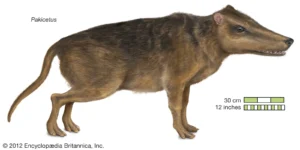
Pakicetus is an extinct animal from South Asia that lived during the early Eocene period, about fifty million years ago. It is classified as a cetacean, an aquatic mammal, because it lived around oceans, and had a specialized inner ear that most cetaceans developed. It lived both in and around water, walked on land, and was carnivorous, meaning that it ate fish and other animals to survive. Pakicetus looked more like a wolf than a whale. Scientists who studied the extinct fossil say that it had a snout, tail, and large molars that gave it the ability to break down tough material. The most shocking difference between Pakicetus and other modern-day cetaceans is that it walked on four legs and was covered in fur. Pakicteus is what scientists regard as a transitional ancestor, meaning that it serves as the groundwork for current cetacean creatures and it signifies cetacean’s transition from land to water. There is no specific cause for Pakicetus’s extinction. The animal likely went extinct due to environmental pressures that interfered with how well it could survive.

Kutchicetus:

            Kutchicetus existed during the Early to middle Eocene Era, and like the Pakitcetus, it lived in Pakistan. Many of the animals were also found in India. Kutchicetus is the smallest cetacean, and fossil evidence shows that it also had a snout, like the Pakitcetus. It had a tail, and four limbs that helped it to swim and walk on land. I think this animal was one of the last ancestors of whales to swim and walk. After the Eocene period, there is an event (not sure which) that likely changed all organism’s ability to adapt, so the Kutchicetus won’t have use for four legs, other than for swimming properly. It has a thick tail, hip bones, and elongated vertebrae/spine. The Kutchicetus has body proportions that are unlike other cetaceans, but similar to other land-living creatures, like otters.

Dorudon:

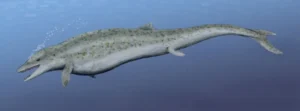
            Dorudon lived during the later Eocene period. It was one of the first creatures that evolved to look like the modern whales we know today, except it was a lot smaller. It measured about five meters long. Dorudon didn’t have any legs or body hair, and it lived in warm seas. Many fossils of this creature have been found in Egypt, New Zealand, and West Sahara. I also think this is the first whale to be so widely populated and so well adapted to its environment. Because of Durodon, whales have taken on traits that make them more adapted to swimming, which is what they do best. 

If you’re interested in all the different species of early whales, I recommend that you watch a more detailed version of this on YouTube. There is so much information out there that breaks down the habits and biological traits of extinct whale ancestors and other animals. I truly love learning about this, and hopefully in the future, I’ll write more about the other species as well. 

Why you should re-read the House on Mango Street

Let’s cut to the chase. Everyone knows about this book, and if don’t know about this book then that’s proof enough to tell me that you weren’t paying attention in middle school English class. It’s okay. I wasn’t either. But that’s just to say that The House on Mango Street is more than just a part of your draining middle school English course. And if you spare me a few minutes of reading I’m sure you’ll understand why this book is so good.

Firstly, I want to admit that I didn’t like this book when I read it in my English class. My old English teacher gave us a quiz for every chapter, and that alone was enough to take me out of the novel. Even the amazing writing flew over my head because I was so focused on memorizing names and places for our next quiz. Then I got to writing school, started writing poems and novels of my own and realized that I didn’t give that book a proper chance. So, a year ago, I dedicated myself to re-reading it. And I liked it so much that I re-read it again. And again. Now, I recognize it as my favorite book. This isn’t a blog to persuade you to love it, but just to persuade you to read it again, because I promise you, it deserves a second chance.

And if you haven’t heard of this book until now, hopefully this blog can convince you to check it out. Now let’s get into what I absolutely love about this book.

1.Every character is so unique.  How am I so sure? I’ve read a lot of books, and no character has left such an impression on me the way Esperanza, Nenny, Rachel, Lucy, Cathy, Meme, Louis and more have. These characters bring so much life to the story that the reader is in for an instant refresher. We have Esperanza who wishes her family was not poor, yet she becomes friends with Lucy and Rachel who are slightly less stable than she is. And despite her distaste for living on Mango Street she longs for friendship and community. And then we have Cathy who loves cats and claims that she will eventually go to France to claim her royal bloodline, but truthfully, she is just teenage girl who wishes she were anywhere else but Mango Street. There are so many tactics that Cisneros use to make her characters human. Their hair type, their speech, their insecurities, their lies, their movements, their environment and more. Every person in this book is tailored in ways that leave you speechless. It’s amazing.

2. The writing style is God sent. For those of you who were taught this book in English class, did you ever notice how the writing was unique in comparison to other children’s fiction novels? I’m not sure how to word it but this book is narratively poetic. There are so many moments in this novel that sound like poetry to me, and I feel like that’s what attracts a lot of readers. There’s a lot of repetition and simplicity in this book. Plus, the chapters are short and juicy and could very well be some type of longer poetry. What really stands out to me about this book is the writing style. It has a journal entry style, where the protagonist speaks with their own dialect, rather than the added literary elements. By the writing style alone, we can see where Esperanza comes from, that she is only twelve years old, and that she doesn’t have much experience. But she is very in tune with the world around her. This book is so interesting because the journal-entry style makes the story feel personal and real. It’s also a good reference to study if you want to learn about writing from the perspective of children.

3. It will open your eyes. I feel like the main thing that I should’ve mentioned earlier about this book is its roots in the Latino community. The writer is Latino, and this story is some testament to her experience growing up in a low-income and Latino neighborhood. There are mentions of the protagonist’s heritage and where her family came from, the type of food they make, and how they celebrate certain holidays. Honestly, I’ve learned so much more about Latino culture from reading this book. I think that’s one of the most important take-aways from this novel. So, if you’re looking for a good book to sink your claws into that is as interesting as it is informative, The House on Mango Street is a novel that you need to add to your reading list. And if you aren’t too fond of it at first, try reading one chapter every so often. It doesn’t have to be in order. What’s important is that you’re witnessing this amazing story unfold, happy reading!

Blog 18

First off, I just want to say that this year has been amazing. I never would have expected it to end so fast, but here we are. It feels surreal how fast the times have come and gone, but it also feels like a victory. When I first got here, I was super scared of what being a literary major would be like. I knew I liked to write and build my own characters, but I was terrified of sharing my work. It was fine when I was just reading stuff to my mom but reading my work to complete strangers was definitely a challenge for me.

Besides that, I was also scared that I would not be good enough. When I first got here, I lacked confidence when it came to writing, and I felt it was because of the change in environment. As many people know, coming to MSA is a very big change.

However, I’ve realized that it wasn’t a bad change. I’ve learned about my art, and I’ve learned a lot about other people’s art too.  I’ve learned about character building and descriptions and details and the ways it can make a story flourish. I’ve learned other very important and crucial writing tips to carry with me on my writing journey. I’ve also had the opportunity to see growth in my writing, my communication skills, my social skills, and confidence.

  I’m thankful that I’ve had the opportunity to share and connect with different people. It’s such a blessing to be educated on something that I love (most of the time). I’m also excited about the summer and what it might look like. Saturday is going to be my first job interview, and I can’t wait to see what my summer workplace is going to be. It’s an agriculture center in my town, which works perfectly for me because I love everything about science and nature. I also thought it might be good to check out certain fields. Especially since my senior year is right around the corner.

Besides working, I do plan to rest too. I want to make sure I am getting proper rest, especially since I’ve been heavily neglecting my sleep schedule during these past few months. Of course, it has everything to do with me, so I am taking matters into my own hands this summer by going to bed at nine o’clock every night. I’m not letting anybody talk me out of it.

  Something else I’m looking forward to this summer is a weekly camping trip I do with my friends every year. It’s super fun and it gives us an opportunity to get out of our houses and meet new people. I’m so excited about it, and I’m also excited to meet with my friends again on a weekly basis. I feel like I haven’t talked to any of them since coming to MSA, so it would be nice to see them more often. I hope you guys have also had a positive experience at MSA and I hope to see you next year!

Writing Down the Bones- a book review (I think)

If you’ve only read a snippet of the book or maybe you haven’t read any of it at all, Writing Down the Bones is written by Natalie Goldberg and in it she talks about building your stamina as a writer, looking for progress and not perfection, and approaching the practice through Zen meditation. She emphasizes the importance of creative journaling and setting yourself free through your own writing. When I first saw this book, I was almost certain that it was going to say something about practicing writing every day. Every time you seek advice about writing from professionals or books or articles, they ultimately tell you the same thing- to write every day. Now, this book isn’t exactly different from those other books and articles, but I think the intention is a little different.

Although Natalie does advise you to write every day, she also wants you to eliminate your own personal critic, and this makes a lot of sense. Personally, I’m always in a battle with the backspace button. There have definitely been moments where the words to a short story or a poem or an article poured straight out of me, but there are other moments where I feel the need re-read what I write, and this causes some overthinking and frustration because I see comma splices and poorly chosen metaphors and not enough flowery language and blah blah blah.  Filtering out your personal critic can allow the words to flow freely, and it can give you a sense of freedom. This cuts down on stress, and it keeps you motivated to write more. This is helpful advice, especially as a new writer because you gain that space you need to grow your craft.

Another topic that Natalie frequently touched on in the book was separating your ego from your writing practice. Matter of fact, she also explains how ego can directly affect your writing. This happens when your thoughts are being filtered and ultimately interrupted because you are anxious to accept criticism as a writer. Simply put, ego limits creativity. Natalie provides writing exercises that can decrease issues related to ego. An example of an ego decreasing exercise would be writing a vivid moment that relates to a memory or an experience. The important catch to this exercise is keeping all the raw and deltaic moments in the story and recognizing when you filter because of ego.

Zen meditation is another topic that Natalie explores throughout this novel. Natalie Goldburg is a Zen Buddhist, and she has implemented the practice of Zen meditation in her writing practice for a long time. Natalie views writing and Zen meditation as very closely related practices, both focusing on the mind and its relation to the present moment. She emphasizes that writing is like meditating and it involves a regular, consistent effort to become self-aware. Zen meditation has many pros to it as well. It decreases anxiety, creates a sense of mindfulness, and it allows us to explore our mind. But not just that, it can also allow us to form a different connection to writing. Honestly, I didn’t understand how Zen meditation could be related to writing because they are two completely different practices, but as I continued the book and she dived deeper into this concept, I learned that Zen meditation and writing are alike in that they both allow you to explore the mind’s inner landscape and to connect to yourself.

I enjoyed this book so much and I’ve taken much more than just writing tips from it. In it, you can also get a glimpse of Natalie’s life as a writer and how she got where she was. She talks about the good and bad parts of the writing life, and the struggles new writers face as they begin. I hear that her other book “Wild Mind” is another good one and I hope to check that out too.

My fav snl cast members

As I’ve mentioned in previous blogs, I love theater/acting. I’m always on the prowl for a good play/sitcom to watch. I love drama, comedy, and actors who pour their guts into a role. What better place to find all three of these than Saturday Night Live? I started watching SNL in 7th grade. I have a vivid memory of watching Zach Galifianakis in a red M&M suit defend himself in a candy store and several other bizarre, unhinged moments in the show. This show has some very funny cast members.  Now, I’m not too quick to pick favorites because I’m sure every cast member there is super talented. I’ve heard that it’s difficult to audition for SNL, let alone secure a spot. But I can’t imagine what this show would be like without the influence of five people I will be fangirling about today.

Kenan Thompson:

Kenan Thompson has been a cast member at SNL for a very long time. Like seriously, they should pay him tribute by photoshopping a picture of his face on the SNL logo. He is THE OG cast member, and I can totally understand why Lorne (the exec) has kept him on air for so long. He presents himself so naturally.  You can really tell that he just reads the script, practices one time and then catches on immediately. I haven’t seen any actor exude the energy that Kenan does. It’s unique and genuinely funny.  Also, Kenan has the funniest resting face I’ve ever seen. It looks like he’s about to burst out laughing at any moment. I’ve probably watched every skit that he was in.

Cecily Strong:

Cecily Strong is one of the OG goats of SNL. I think she came onto the show in 2012. What really stands out to me about her is that she can play any character. I know actors get this compliment a lot, but I really mean it when I say she can play ANY character. I’ve seen her play a cashier, a crazy neighbor, a gold digger, a kid, a mom, an old lady, etc. She has a very wide acting range, and it’s so enjoyable and thrilling to watch her on the stage/tv. I can really see why so many actors admire her. She’s easily one of the funniest members on the show. If you want a good laugh, you should go watch the QVC skit with her and Kristen Wiig!

Bill Hader:

Bill Hader came onto SNL a little bit before the cast members mentioned above him. He started the show in 2005 and left around 2013, so he didn’t get the chance to do a lot of sketches with the other actors mentioned above him. But that doesn’t matter because he stands out all on his own. Bill Hader is an amazing actor, and I commend him for all his moves/shows aside from SNL. But what draws me to him the most is his voice. He has such an eloquent and captivating tone. He plays the role of a sardonic game show host perfectly. He’s another one of those dramatically funny actors, and he matches SNL’s vibe so well.  

Kristen Wiig:

Kristen Wiig joined the cast of SNL in 2005. She easily established herself as one of the funniest people there. She is such a talented person. I feel like I’ve called everyone in this blog talented, but I feel there is no other way to describe how impressive her acting is. I’m convinced that Kristen Wiig has lived the life of every character she has played because the way she disappears into the role is unbelievable. Most of her characters are bizarre and outlandish, but she makes them memorable with the way she portrays them. I can’t imagine how dull the show would have been if she never came on air.

Aidy Bryant:

Aidy Bryant joined the show in 2012. She is another actor with a very wide acting range. I love to see her play confident/slightly arrogant characters because she steps into that role really well. She has a lot of control over her tone, and she stands out because of it. Aidy has so many funny skits on SNL, and I can really see her acting in her own sitcom or movie.

blog 15

Today I woke up and I felt inspired to create a world. I don’t get inspired a lot, so I knew that this was something special. For the longest time I’ve been interested in creating universes. Especially in fantasy writing. I used to read tons of fantasy books when I was a kid, and I admired many authors for creating amazing and complex worlds. My goal for any story is to create a world my readers can question, be fascinated in, and enjoy. This takes time and focus and a lot of planning. I want to start creating a base for the world first and then expand on the small details as I learn more about it. With that being said, I have so many thoughts and ideas that could potentially be a short story or whatever. But I also know that universes take a lot of effort to create and I’m also wondering if I have the ideas to flesh this out.  Universes are cool but It’s kind of hard to maintain them and remember the small details about them. One thing I’ve learned about writing in general is to have an open mind about characters and universes. There have been many instances where I have created the groundwork for a character, and they didn’t have the traits they began with later in the story. I don’t think this is a bad thing because it teaches you that writing isn’t always a mind task. Sometimes you can be influenced by the world around you and an entirely different story is created. Some people can maintain their initial thoughts for a story, but for me it’s hard to get back to my previous ideas. For a while I was so burnt out with writing, I think this is because I was trying to adhere to something that didn’t work for me. I forgot that the best part about writing was to indulge in your process and experiences. Without this it’s hard to write something that you will enjoy. This is unrelated to the earlier topic, but me and a writer friend of mine were talking about being burnt out because of writing assignments. The problem was that we didn’t have enough time to enjoy other writing projects because we had to meet deadlines. Eventually I admitted that I was absolutely exhausted with work. I told her that I barely got any other work done aside from my assignments because I was so burnt out by the time I completed my work. This burn out would last until another assignment was due and I had to push through to meet that deadline. Luckily, she told me that she understood and experienced this as well. She said that writing became more like homework when she started taking classes, but what helped her was personal writing. She said that taking time to write something you enjoy can help you find the reason you wanted to pursue the craft. And y’all, this was pretty good advice. I was slightly inspired by her love and persistence for writing, but I also knew I needed help to get out of my dry patch. So, I pushed through and wrote a small paragraph about the moon. It was relieving and I was happy to be writing again, even if it was only a few sentences. This was about a month ago, and I’m proud of how far I’ve come. Also, I’ll post my fantasy universe draft when I finish it.

March reading list

For today’s blog I’ll be talking about books I’m currently reading this month. I thought this would be a good idea because I want to start keeping a written catalogue of what I read. I figured doing this as a blog series would be an interesting way to keep track of it. I’ll also be providing a little summary of the books as I explain what I like so far. Hopefully you like them enough to read them too.

The Sun is Also a Star (Nicola Yoon): Started reading: 3/24/25; Currently on page 30; Scale of 1-10: 8

 – This book is about two main characters named Natasha and Daniel.  Natasha is an 18-year-old immigrant from Jamaica who has lived most of her life in America, until her father accidently gets a DUI, alerting law officials of their presence. The outcome for her family is deportation. Daniel, an 18-year-old Korean American struggles to compete with his overachieving older brother and their mission to become successful doctors. These two meet and discover their love for one another before Natsha’s family gets deported.

I’ve wanted to get my hands on this book ever since it came out in 2015. I was ecstatic when I found it on the shelf in the library. The colorful cover caught my eye in October, but I was too busy to check it out. Now it’s march and I finally have it. I love that this book alternates 1st person POV of the two main characters. The author even includes POV’s from background characters that the main characters have small interactions with. It’s so interesting to see the narrator’s thoughts and then find out how wrong they were. The only thing I don’t like about this book is the pace. I know I’m only on page thirty, but I feel like the story should be moving faster. I know it’s important to include everyone’s POV, but there are parts I would rather skip. 

Bones and All (Camille DeAngelis): Started reading: 2/2/25; Currently on page 60; Scale of 1-10: 7

-This book is about a girl who is abandoned by her mother and is left alone to navigate the world while being a cannibal. She meets this guy who is a hitchhiker (perfectly good dinner), but she notices that he’s different from others. In the sense that he hasn’t left her yet. They go on adventures while she figures out how to tell him that she is a cannibal.

My friend got this book for me at wild fox, and I like it. I heard about the movie before I knew about the book, so naturally I was really excited to read it. It has such interesting language and a lovable protagonist. The protagonist’s backstory really pulls at the reader’s heartstrings. The ONLY issue I have with this book is that I got SPOILED. Yes, I went on the internet because I was curious about characters in the book and got book flashed. Honestly, I wouldn’t be angry about this if the ending was happy, but the ending is very sad. I’m contemplating finishing the book now because I know what’s going to happen.

Fourth Wing (Rebecca Yaros): Started reading 12/27/24; Currently on page 25; Scale of 1-10: 8

-This book is about Voilet Sorrengail who is the daughter of a commanding general. She is forced to join the dragon riders at a war college (a college where trainers can bond with dragons). This novel is a high fantasy and involves a romance between violet and another trainer. From what I’ve heard, this novel is a fun, wild ride.

I like this book. I definitely need to start back reading it because I’m only on page 8. I was a little busy around the time that I got it, so I didn’t read as far as I wanted. I found out this book is a love triangle, which is a book trope that I cannot stand. It can be interesting to read, but as a reader it gives me mixed signals. Still, I don’t know enough about this book to judge it yet, but I’m a little worried. Aside from that, I like everything else about it. I’m a fantasy lover.


My favorite short stories/flash fictions


It’s been forever since I’ve written a blog.  The last time I wrote one of these had to be three long weeks ago. I don’t remember what obsession I wrote about last time but I’m happy to start racking my brain every Wednesday again and reading y’all’s amazing blogs. Today, I’m going to be talking about some of my favorite short stories/flash fictions. These are stories I read to find inspiration, to study different elements of writing, or just for entertainment. Their genres include mystery, dystopian, and memoir/childhood. (My favorites). They are all really good, and I personally can’t get enough of them. Let me know if you guys have read them or would like to read them.

  1. Orange World (Short story):

This short story is written by Karen Russell. It belongs to her short story collection book, “Orange World and Other Stories.”  In this short story a woman who has suffered from miscarriages in the past makes a deal with the devil to protect her unborn child. In return for making sure her baby is delivered safely, the devil asks the woman to breastfeed it. I love this story so much. Not just because the plot is super bizarre and unique, but also the construction of this world is so interesting to learn about as you read. The setting greatly resembles our natural world; however, demons can interact and communicate with humans. The setting is super mysterious but in an evoking way that makes you want to know more, like does this story really occur on earth or could the woman be hallucinating the little demon? At the same time, the demon represents the draining reality of motherhood, and the woman’s guilty consciousness. This is an interesting read, and it’s packed with unique moments. Karen Russell is an amazing dystopian/ magical realist writer.

  1. Guilia (Flash Fiction):

 This flash fiction is written by Keri Miller. This story follows the narrator, a mischievous, adventurous young girl and her close friend Guilia. The two girls have an inseparable bond, but it’s clear that the narrator has a childlike envy towards Guilia because of her wealthy lifestyle. Though, the narrator recognizes that Guilia isn’t perfect (her father is romantically unstable, and her mother is an alcoholic.)  When they become adults and have children, the narrator develops a sense of empathy for Giulia’s life, but it’s clear that she can’t fully relate to her family struggles. The most devastating part of this story is that Guilia was never understood by the closest person in her life. It adds to the bittersweet end. This story is vivid, detailed, fun, sadly sweet, and absolutely amazing. I am in love with the narrator, the language, the setting, the small details, and the theme of childhood in this flash fiction. The author is amazing at crafting such a vivid world, its crazy.

  1. Lamb to the slaughter (Short story):

 Lamb to the slaughter is a short story written by Roald dahl in 1953. Most people have read this in their English Comp class, which is no surprise because it’s a classic. I can’t even communicate how much I love this story. It is so simple but also intricate for its time. It establishes urgency, mystery, and anticipation. I’m on the edge of my seat every time I read it. Mary Maloney is crazy, but she’s the most surprising character you’ll ever meet. When I want to create a character that has lost their self-control, I think of Mary Maloney. I read this story every month or so, and it’s still the goat, I love it.