I am still working on my Punk blog but in the meantime, I wanted to update you on the music I’ve been into recently and I kind of want to talk a bit about my style and what I’ve realized.
So the first order of business is my music. I have really been into a summer vibe of music recently. I am very excited and ready for my summer to begin. The first song I want to talk about is Bravado by Lorde. This song feels as though it fits within teenage and summer times. It has a unique sound that makes you almost nostalgic yet wanting to move forward and experience life. The song is about Lorde’s own experience with shyness and introversion and how she overcomes these obstacles while being a public performer. It’s a “pep talk” for herself in this way. She addresses how she has to embrace confidence and ‘put it on’ for her performances. I have been listing to this song a lot lately because I love the way Lorde writes her songs. I like the lyrics and I also like the emotion it conveys. I have also been listening to Noah Khan a lot recently. Noah Khan has a bunch or songs that have that free summer type of feeling to them. He writes about his depression, anxiety, and difficulties and how he deals with them. He uses his songs like diary entries or a journal. He makes them as specific or as generic as he wants. He writes the music to have feeling and that is his goal. I have been listening to him a lot just due to how much I relate summer to him. Last summer I had a friend who was really into Noah Khan and we listened to him a lot so now I relate his songs to summer and to that friend. I really like Noah Kahn and find myself relating to some of his songs. I have also been listening to a band I found recently called ‘The Story So Far’. They are a pop punk band and their songs focus on both the angsty breakup side of pop-punk as well as the more mature, introspective, and growth side of pop-punk.
I have been going through my Pinterest recently and organizing it (or at least trying to) and I have found a bit of stuff I am interested in as well as who I am as a person. I have found that I am either a summer or fall girl. No in between. I have found that I really like patterns and certain pastel or deep color schemes. I have found that I really liked and still like art and need to begin drawing again. I have realized how much I would like to travel and see the world a bit before I am too old to do so. These are things I have thought about but not in depth and i think would be good to look into and find out why I like these things. I feel like this would be a good exercise for trying to understand yourself and find yourself. I feel like it is a good way to find yourself on a deeper level.
So, this is what I am thinking of doing for the month of April. I am going to look through my music, my Pinterest, my interests, and my dislikes. I am going to write about each one in a journal and find out the meaning they have to me. Everything needs meaning and connection. Without these things we have no purpose.

 The main thing I am working toward for senior year is to win a few writing awards and submit a few IE’s (individual events) for MTA and Thescon next year (theatre competitions I go to every year). I have always wanted to advance with my IE’s but have never really had the motivation or time. I am going to ensure I have enough time to perfect them I am going to work with them over the summer.






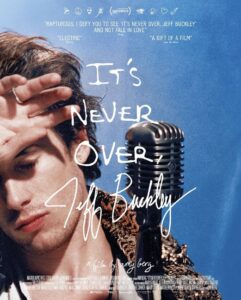
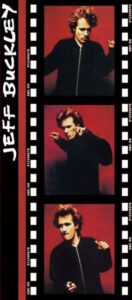 Another thing about this documentary is how they are still trying to play off his death as normal. It isn’t normal and it certainly doesn’t add up. They say in the documentary that they believe he was mentally ill suffering from a manic-depressive disorder much like Jimi Hendrix and other artists during the time, but the disorder wasn’t well studied at the time therefore they couldn’t have known he had this disorder. I see it as playing it off trying to pin it on something that could happen and that is normal, but spoiler alert it was anything but normal. His last girlfriend, Joan Wasser, a fellow songwriter and musician was also in the documentary and gave a few stories about jeff but one that stook out to me was a story they told about Jeff’s later years. It was maybe a couple of months before he passed. He supposedly told her that he was seeing visions of the devil and had a dream that he had a brain tumor and died but while they were telling these stories the camera cuts back to Joan Wasser who says Jeff told her about seeing visions and talking to the devil but when she says this her face curls into an unusual and odd facial expression one that seemed like she was almost happy, like a smirk but more devious and odd, especially since she was talking about the death of her boyfriend. My theory about this wasn’t really clear at first and then I found out about Duper’s Delight. It is a condition when certain people involuntarily smile, smirk, or laugh while lying. The micro expression is brief and a brief second uncontrollable movement that in turn reveals true emotion. Sometimes they feel this smile or muscle movement happen and try to hide it by biting their lips or tightening their mouth which only makes the movement look like a guilty smirk. It comes from the dopamine someone gets from lying and then in turn getting away with it. The condition is also often associated with narcissism which is an interesting correlation especially in this circumstance.